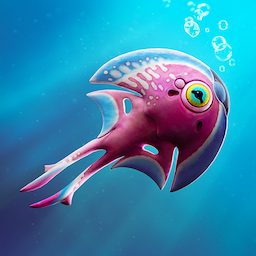
Fauna
Tutte le creature: statistiche, comportamento e habitat.
- Fauna
- 86
- Predatori
- 23
- Sessile
- 38
- Punti di generazione
- 11070
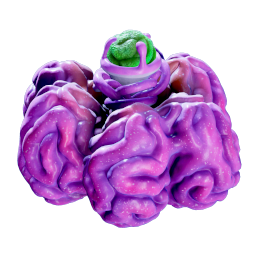
*Raion carbonica*. A colony of worms living inside a shared membrane, probably a sponge. Uses weak acid to digest prey. 1. Raion An organism defined as a sponge occupied by a colony of cloned predatory worms. This sponge is chambered, akin to Earth's extinct sphinctozoans; the chambers grow around a central pump. 2. Pressurized acid The raion's worms secrete weak acid as a digestive factor and defense mechanism. This acid is held under pressure by a plug in the raion's central pump. To avoid unwanted acid release, cut away the chambers before disturbing the central pump. 3. Volcanic origin? The acid raion may have originally evolved near a cold seep or a volcanic caldera. Acid-friendly biochemistry gave it a useful defense mechanism and feeding strategy to colonize other waters. 4. Medical gel The raion's central pump is partially plugged by a mass of worm residue; this keeps the pressure in the chambers high. This residue contains useful clotting factors and broad-spectrum antibiotics. Recommend collection. 5. Problematic genetics Spectrogenetic analysis indicates the host sponge and the resident worms contain partial copies of each others' genomes. This is a biological impossibility on Earth, and suggests that genetic inheritance functions differently on this world. Assessment: useful source of weak acid for batteries. Central plug contains medically relevant gel. Cut away chambers before removing central plug. Consult with your Noetic Advisor system to research optimum search areas.
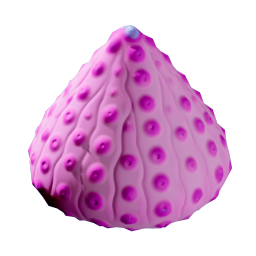
A glowing sponge (tentatively *Symphon aeroshell*) that resembles the cone of a heat shield on atmospheric entry. 1. Predation strategy The aeroshell feeds on microorganisms attracted to light, especially in dark caves where it can be mistaken for the sun. 2. Light source Instead of relying on symbiotic bacteria, the aeroshell generates its own light through oxygen-fueled reactions. This light is piped throughout its tissue by glassy fibers resembling those grown by Earth's glassy sponges - among the longest living animals known. 3. Symbiotic partner Often found associated with shootroots (hard-surfaced starfish-like organisms that burrow into the seafloor). The exact dynamics of the symbiosis are unknown. Await further updates. Assessment: useful light source in dark water. May provide interesting bio-optics reference.
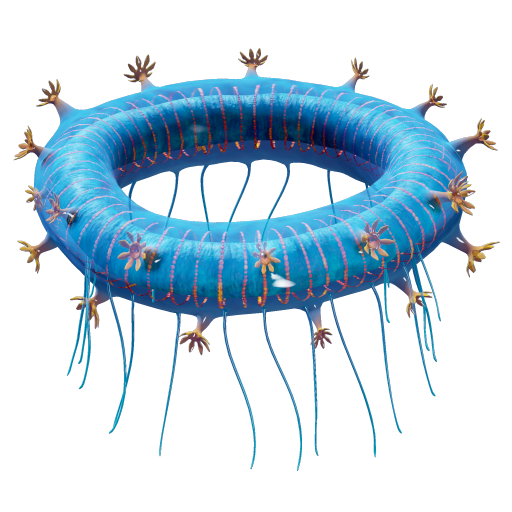
Anello di gelatina (provvisoriamente *Thermodont sufganiyah*, ciambella gelatinosa assorbi-calore). Non è una medusa, ma è pieno di gelatina. Si nutre del calore e del flusso chimico delle sorgenti idrotermiche.
Anello di gelatina (provvisoriamente *Thermodont sufganiyah*, ciambella gelatinosa assorbi-calore). Non è una medusa, ma è pieno di gelatina. Si nutre del calore e del flusso chimico delle sorgenti idrotermiche.
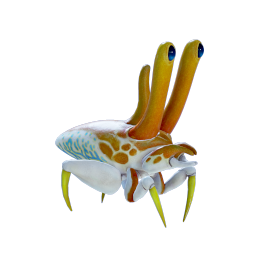
*Ostrakonskelos periskopion*, periscopio dalle zampe robuste. Un granchio sociale che trova rifugio tra gli anemoni urticanti.
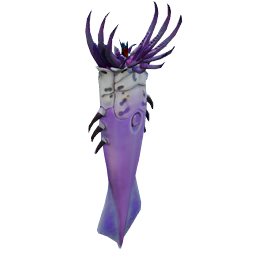
Sandspear Juvenile è una grande fauna predatrice catalogata in Axum Ruins, Coral Gardens, Overgrown Ruins e 1 altro. I registri attuali elencano 20 punti di spawn confermati in 4 biomi, all'interno della zona principale, con l'ammasso centrato vicino a -2899/4209/-102. La messa a punto della creatura registrata elenca 1000 HP e 500 velocità di nuoto massima. I dati di movimento contengono 6 righe di comportamento.
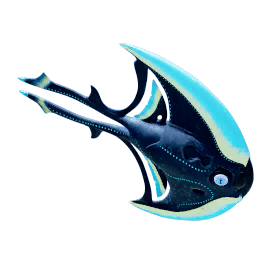
Waxmoon è la fauna predatrice catalogata nelle Rovine di Axum, nel Bunker dei coloni, nei Giardini di corallo e in 1 altro. I registri attuali elencano 15 punti di spawn confermati in 4 biomi, all'interno della zona principale, con l'ammasso centrato vicino a -2341/4282/-143. A questa voce non è allegato alcun blocco delle statistiche di combattimento, quindi il profilo wiki si concentra sull'habitat strutturato e sui dati di spawn disponibili. I dati di movimento contengono 6 righe di comportamento.
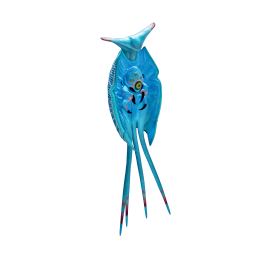
"I nostri PDA osservano organismi come il cerateco ed esclamano 'ecco: questa è la strada che non è stata mai seguita'.
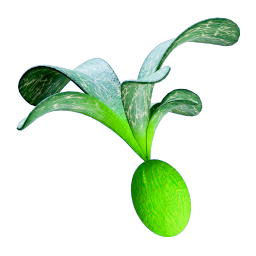
*Rotsac cherimoya*. A tunicate-like animal which collects alcohol from decaying matter to produce a creamy, flavorful mucus. 1. Cherimoya Named for its resemblance to the terrestrial cherimoya fruit (or custard apple). It can be eaten whole or sucked on through a straw; the exterior tunic is soft but the heart, nervous system, and other organs should be spat out. The rotsac contains mercury sulfide, which will eventually accumulate to dangerous levels in the human body. 2. Peculiar metabolism As a rough inverse of the lucifer rotsac, the cherimoya rotsac converts alcohols to sugars rather than decomposing sugars to alcohols. The cherimoya achieves this with a chemical pathway that does not occur on Earth. Aqueous cinnabar provides a source of mercury to oxidize alcohols into simple sugars. The cherimoya has no other behaviors: it simply stores sugars as it grows into a taut, full adult. 3. Symbiotic partner Because of its plentiful stored sugars, the cherimoya is a common symbiotic partner for organisms like the cage gorgon. 4. Enteric reproduction The cherimoya rotsac is gonochoric - either male or female. However, it does not release eggs or sperm into the seawater. Instead, its reproductive cells are eaten by organisms feeding on the cherimoya. They seek out other cherimoya rotsacs' gametes in the digestive tract of the host. The fertilized embryos are then expelled by the host organism, providing them with nutritious waste to bootstrap their growth. Assessment: edible. Your digestive tract may briefly become pregnant.
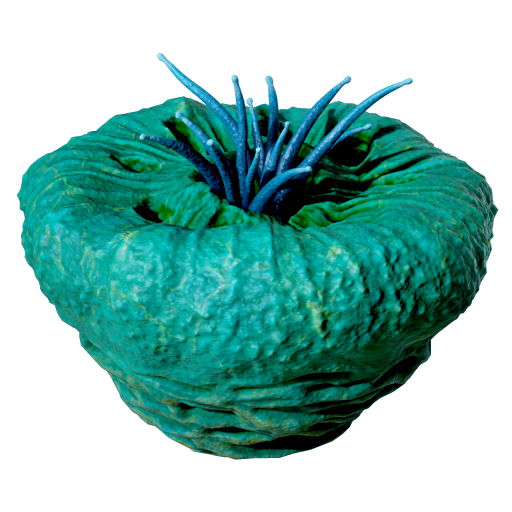
An organism (tentatively *Raion donut*) that resembles an Earthly anemone or ceriantherian, but is actually a sponge occupied by a colony of predatory worms. 1. Raion An organism defined as a sponge occupied by a colony of cloned predatory worms. 2. Hunting strategy The worms live in the sponge's jelly (called the mesohyl), protruding from its anus (the osculum) to sting passing prey with sticky cells and draw them into the sponge. 3. Puzzling genetics Spectrogenetic analysis indicates the host sponge and the resident worms contain partial copies of each others' genomes. This is a biological impossibility on Earth, and suggests that genetic inheritance functions differently on this world. Assessment: minor sting hazard — do not insert fingers. Important scientific discovery.
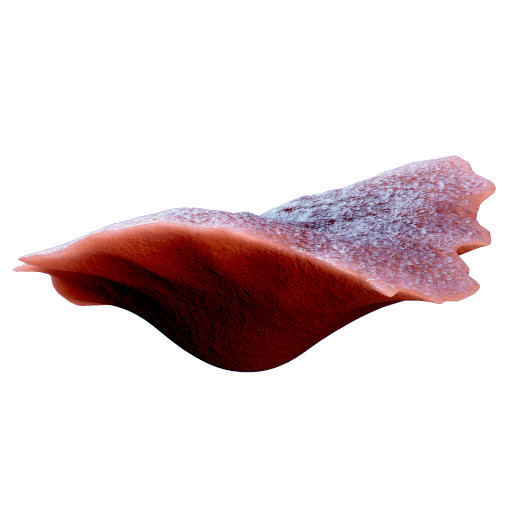
Un corallo duro che cresce spesso nelle sorgenti idrotermiche. Sfrutta la variazione di temperatura tra la base ancorata e il bordo nell'acqua fredda per attivare le reazioni metaboliche.
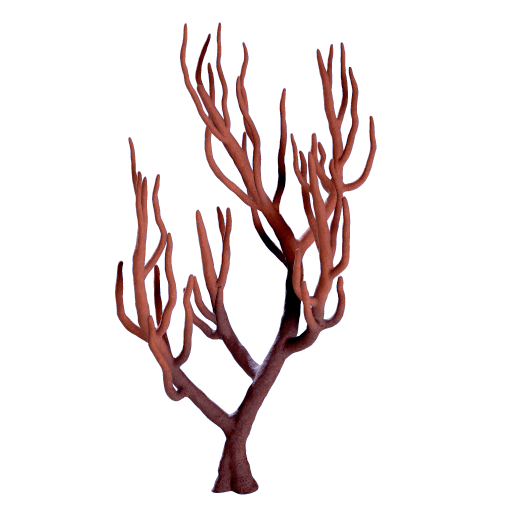
Nahema, registro vocale, vai. Questo è un tipico corallo di Proteus, ma funziona in modo diverso rispetto al corallo terrestre. Sì, la morfologia ricorda alla lontana un albero con i suoi rami, come le specie estinte di Acropora... ma se ci guardi dentro, le cose prendono una strana piega. Sulla Terra i coralli sono piccole meduse che si sono costruite delle case di pietra. Su Proteus... è come se si fossero trasferiti in un complesso residenziale. Una spugna. I polipi corallini vivono nei suoi pori... e pagano l'affitto facendo le pulizie e fornendo protezione. Col tempo alcune specie di spugne si sono indurite e sono diventate simili a rocce, come le sclerospongie della Terra. Se ho ragione, dovremmo vedere altre coppie corallo-spugna che hanno sviluppato un tipo diverso di contratto, ognuno dei quali adatto a una particolare nicchia ecologica. La vera domanda è... cosa sta succedendo a livello genetico?
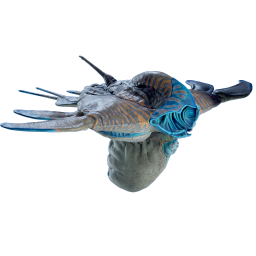
*Titanotagmatapterya amalthea*, la titanica cornucopia dalle ali segmentate. Un leviatano artropode con un enorme e potente becco, e una enorme massa adiposa che sfrutta sia per nutrirsi sia per proteggere le sue uova.
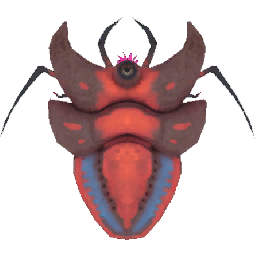
Crimson Shrimp è la fauna passiva catalogata in Coral Gardens. I registri attuali elencano 5 punti di spawn confermati in 1 bioma, all'interno della zona principale, con l'ammasso centrato vicino a -3538/4267/-46. A questa voce passiva non sono allegate statistiche di combattimento, quindi il profilo wiki si concentra sul posizionamento dell'habitat, sulle osservazioni di spawn e sulla classificazione delle minacce.
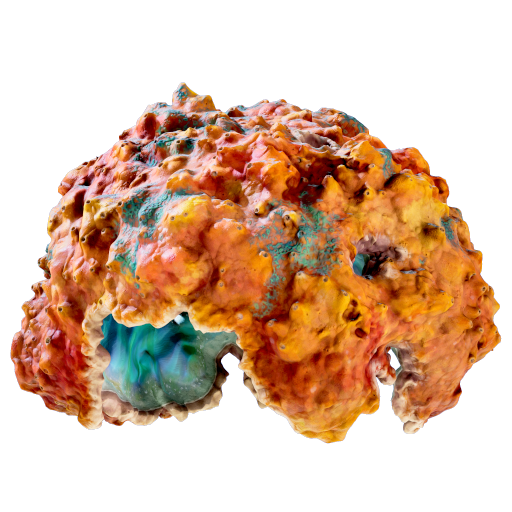
*Coral geodesica*. The defining feature of its shallow biome. 1. Coral analog Like Earthly coral, the dome is a colony of polyps, small jellyfish-like animals that secrete a limestone skeleton. This process uses dissolved carbon dioxide from the seawater: corals are therefore an important method of climate regulation, since they transform atmospheric carbon into hard limestone. 2. Dual feeding strategy The dome's outer surface feeds on sunlight, using photosynthetic symbiotes known as zooxanthellae. As the dome grows, the colony clears its interior, recycling the limestone for reuse. Polyps on the inside of the dome hunt with stinging tentacles. 3. Mineral expulsion As the dome grows, it collects and expels mineral waste, creating nodes of quartz. 4. Critical ecosystem element The dome corals help regulate global climate and provide a breakwater, reducing erosion in their shallow surroundings. The domes capture nutritious sediments from sea currents. Pioneers should prioritize a survey of coral health. Assessment: critical source of quartz. Vital to the local ecosystem.
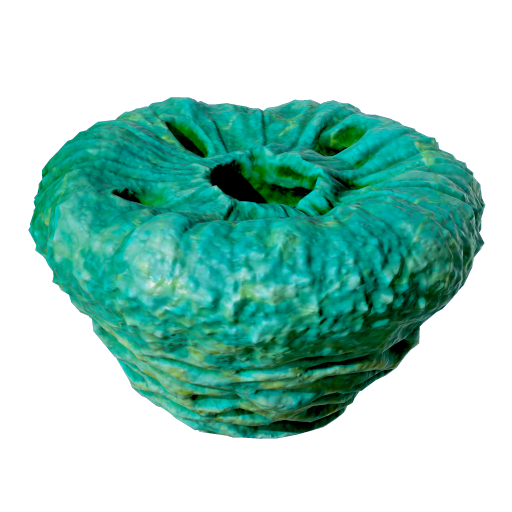
Donut of worms (tentatively *Raion donut*) without visible worms. 1. Normal state Just as terrestrial corals contain photosynthetic partners called zooxanthella, the donut contains a population of predatory worms. 2. Disturbed state Just as terrestrial corals sometimes expel their partners when under stress, this donut raion has discharged or killed its population of worms. (Alternatively, they have left in search of a better host.) This may be a reproductive strategy, a defensive reaction to the worms turning on and feeding upon the sponge, or a response to environmental stress. Assessment: unclear how long the donut can survive without its primary food supply. Terrestrial corals survive only days to weeks after bleaching.
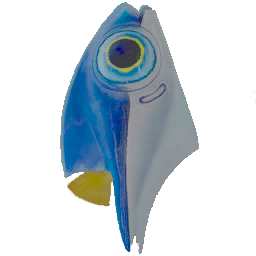
Fish School Flutter Tail è fauna passiva catalogata nel Colonist Bunker, Coral Gardens, Graveyard e altri 3. I registri attuali elencano 213 punti di spawn confermati in 6 biomi, tra Devmap predefinita, Main, PCG Zoo e altre 2 zone, con il cluster centrato vicino a -1906/2502/-26. A questa voce passiva non sono allegate statistiche di combattimento, quindi il profilo wiki si concentra sul posizionamento dell'habitat, sulle osservazioni di spawn e sulla classificazione delle minacce.
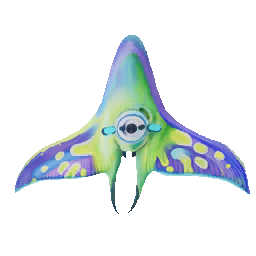
Fish School Mirrorhalfmoon è fauna passiva catalogata in Colonist Bunker, Coral Gardens, Plateaus e 1 altro. I record attuali elencano 186 punti di spawn confermati in 4 biomi, tra Devmap predefinita, Gameplayzoo Stimuli, Principale e altre 3 zone, con il cluster centrato vicino a -1628/2060/-20. A questa voce passiva non sono allegate statistiche di combattimento, quindi il profilo wiki si concentra sul posizionamento dell'habitat, sulle osservazioni di spawn e sulla classificazione delle minacce.

Geordie (provvisoriamente *Salpapod geordie*). Un onnivoro con propulsione a getto, evoluto da un organismo somigliante a un polpo osseo. 1. Radula Le parti dure della bocca del geordie possono spazzar via le alghe dalle rocce, frantumare piccoli crostacei, estrarre esche dal corallo e tagliare la laminaria a mazzi. 2. Quattro pinne Forse derivate da arti ossuti, guidano il geordie e ospitano i suoi quattro stomaci. 3. Stomaci diverticolari Ogni pinna-arto contiene una tasca digestiva con batteri specializzati in porzioni di dieta della creatura. Il nuoto aiuta il moto legato alle attività digestive. 4. Propulsore centrale Il canale centrale è foderato di cellule urticanti, che uccidono la piccola fauna marina. Non inserire dita. Gli impulsi muscolari spingono il geordie tramite moto a propulsione. 5. Fascia "spinale" a ciambella La fascia nervosa del geordie è avvolta intorno al canale del propulsore a mo' di ciambella. Le strutture del cervello toroidale potrebbero presentare interessanti conseguenze in organismi più grandi. Valutazione: edibile a dispetto dell'alto contenuto di metalli e cere. Si consiglia una cottura accurata con il fabbricatore.
Geordie elettrico (provvisoriamente *Salpapod geordiwangi*). Un parente o derivato del geordie comune. Attirato dalla corrente elettrica. 1. Elettrotropismo I geordie elettrici cercano attivamente la corrente elettrica. Tollerano amperaggi sorprendenti, cosa che li rende pericolosi da rimuovere a mano o anche con strumenti. I cortocircuiti possono mettere in pericolo sia il geordie sia il sistema elettrico. 2. Stomaci gelatinosi I diverticoli del geordie elettrico sono colmi di un idrogel simile al muco recettivo delle ampolle di Lorenzini (un organo usato per rilevare campi elettrici). Questi diverticoli possono rilevare i campi elettrici di prede nascoste, o cercare fibre batteriche conduttrici nel limo marino. Correnti elettriche artificiali possono costituire un super-stimolo: un richiamo irresistibile. 3. Metabolismo elettrico È implausibile, ma non impossibile, che il geordie si sia evoluto per metabolizzare corrente elettrica. Il metabolismo organico è fondamentalmente un processo di trasporto di elettroni e l'elettrofilia è stata osservata su pianeti con tempeste permanenti e nel vuoto. Valutazione: un animale nocivo per i sistemi elettrici e di comunicazione. Potrebbero essere necessarie esche per contenere l'infestazione.
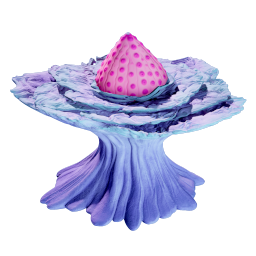
*Shootroot cabbage*. A robust bottom-dwelling organism anatomically similar to a plastic starfish, or to an opened variety of Earth's extinct blastoids. 1. Animal anatomy The cabbage shootroot's upwards-facing mouth is surrounded by outstretched arms. These arms are hard, tightly grouped, partly calcified, and covered in a tough biopolymer characteristic of other shootroots (tentative name: polyproteovinyl). These arms produce the cabbage-leaf texture that gives the shootroot its name. 2. Seabed burrowing A second set of arms uses ribbons of the same tough biopolymer to dig into the seabed, stirring up sediment and expanding cracks in rock. This is a difficult and metabolically expensive process, but it is a niche with little competition. 3. Symbiote kiss The cabbage shootroot does not use its mouth to eat, or its hard leaflike arms to feed. These surfaces seem to be reserved for a symbiotic partner. The cabbage shootroot uses its mouth to transfer nutrients gathered by its roots to the symbiote, and to receive a trickle of food or chemistry in exchange. 4. Circular nerve cord Like all shootroots, the cabbage shootroot is notable for its expression of a circular nerve cord. Assessment: do not sit. You may receive nutrients.
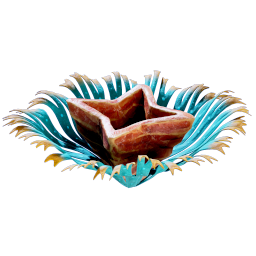
A basket-shaped organism (tentatively *shootroot cunabulum*) with no clear Earthly analog. Anatomically similar to a plastic starfish, or to an opened variety of Earth's extinct blastoids. 1. Animal anatomy The flattened, fibrous 'leaves' are the arms of an animal loaded with photosynthetic symbiotes. The central structure houses a digestive system and a hard, sticky cradle (the cunabulum). A second ring of arms grows into the seabed, seeking crevices in the rock. 2. Preferred symbiote The cradle is an exchange site with a symbiotic partner (such as the lucifer rotsac). Spectrogenetic analysis suggests the cradle shootroot is younger than the rotsac. It may have originally parasitized free-floating lucifer rotsacs, before evolving a niche as an anchor: providing a refuge and minerals to the rotsac in exchange for a share of the rotsac's fermented food. 3. Plastic fibers Although it lacks the true cell walls of Earth plants, the cradle shootroot strengthens its tissues with bioplastic fibers. Too tough to cut by hand, they could be severed by a cutting tool. Assessment: tough fibers could be used to synthesize fabric, possibly food.
Giant Tube Salp is fauna catalogued from the current creature data. No combat stat block is attached to this entry, so the wiki profile focuses on the structured habitat and spawn facts available.
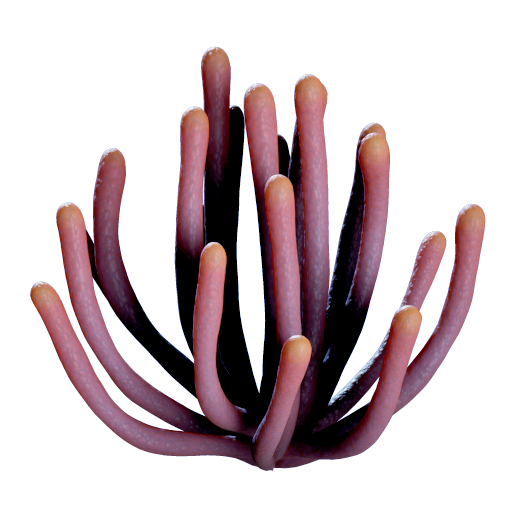
*Gorgon Kryphakous* or Listening Gorgon. A soft coral with dull olive filaments. A predatory filter feeder that sways with the current like kelp. Not known to be hostile or harmful to humans, but remains under observation (see notes below). 1. Sound sensitive Dissecting the Listening Gorgon's basal filaments reveals a web of vibration-sensitive cilia hidden in its soft, gelatinous core. These can detect movement through water at resolutions not seen except in the airflow sensors of clip-winged gnats on Kepler-22b - enough to pick up the swish of a tail through miles of water. 2. Reactive orientation At first the listening gorgon appeared inert, but its movement is simply too slow to be perceived. It has been observed to orient itself over time to specific low-frequency vibrations. It will do this even if food is less abundant in that direction. 3. Silent. The Gorgon kryphakous has no vibration-producing organs. It emits no detectable signals - no chemical plumes nor bioluminescence. It is essentially silent across all known communication spectra. ASSESSMENT: Requires further analysis. One leading hypothesis suggests that the Listening Gorgon once tracked the low-frequency vibrations of a massive, slow-moving marine species - now possibly extinct, or still undetected in the deeper zones of Proteus’s oceans. If so, the open question is whether this trait evolved in response to an ecological partner... or a threat
Noon gorgon (tentatively *Gorgonian meridiem).* A predatory soft coral that lures prey by mimicking the sun in the dark. The brightest noon gorgon in a cave will attract the majority of the prey, creating an arms race to be as bright as possible. Noon gorgons feed much of their energy to their symbiotic light-producing lucifer rotsac. The ancestral noon gorgon may have evolved to grow towards or around lucifer rotsacs, using them as bait. Eventually, a symbiotic partnership developed. Expect noon gorgons to modify their spectrum in different depths and biomes.
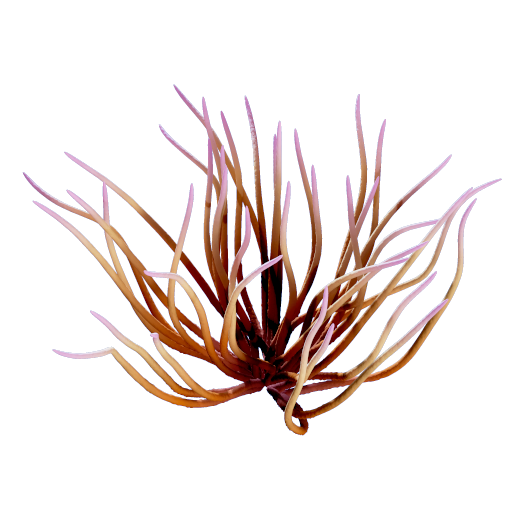
*Gorgon mastix*, the whip gorgon. A soft coral similar to the earthly gorgonians — it lacks the hard limestone shell of a true reefbuilding coral. 1. Earthly namesake Named for the extinct *Leptogorgia virulata*, Earth's sea whip. Like the sea whip it is a predator, and it must defend its soft body from parasites and predation. 2. Spine defenses Unlike the terrestrial sea whip, which developed a chemical arsenal to repel unwanted contact, the whip gorgon colony has developed specialized 'soldier' polyps which migrate to the surface and develop a brittle spine. When disturbed, this spine snaps off, releasing the soldier's payload of toxins. It is impossible to project the effects of this sting on colonists, but mechanical similarities to the infamous Australian gympie-gympie plant suggest negative outcomes ranging from chronic agony to total sleep deprivation lasting weeks to years. 3. Carnivorous diet 'Civilian' polyps in the whip gorgon use their stings to kill and digest microscopic prey. They lack the brittle spine and powerful toxins of the soldier polyp. ASSESSMENT: Avoid contact. Consider pruning back with hand tools.
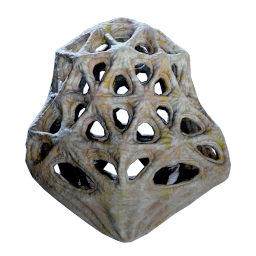
*Gorgon thalamiskos*. A predatory soft coral named for its resemblance to Earth's gorgonians. 1. Sponge-coral moiety Like hard corals on this world, gorgons are sponges inhabited by cnidarian polyps — tiny jellyfish like organisms which live within the sponge and direct its growth. Unlike hard corals, they do not produce a limestone structure or host photosynthetic microbes. They are pure predators. 2. Caged friend The cage gorgon specializes in capturing and protecting a symbiotic partner, which attracts prey for the gorgon to sting and eat. The cage gorgon larva probably adheres to a partner (such as a cherimoya rotsac) and then grows around it, eventually fastening the partner to the seafloor. 3. Duplex larva The free-swimming reproductive stage of the cage gorgon carries cells of a host sponge, like seeds. These seeds are genetically distinct from other sponges in the ecosystem, suggesting the cage gorgon is monogamous with only a single host sponge. Assessment: cutting open the cage gorgon allows access to the symbiotic partner and carries no risk of inflicting pain or suffering. The cage may attract a new partner before healing, or survive while empty.
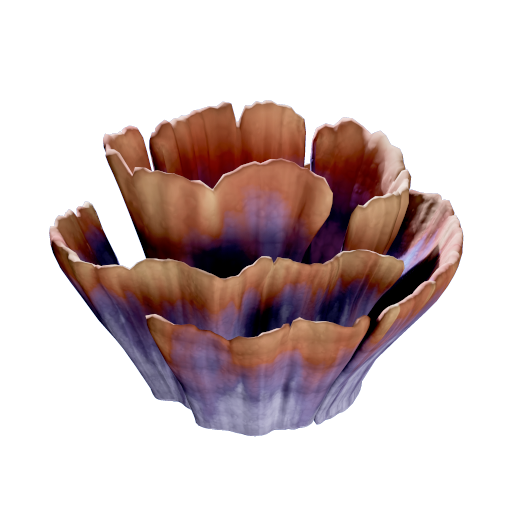
*Gorgon aulaia*. A soft, predatory coral akin to Earth's gorgonians, especially the Venus fan. 1. Sponge-coral moiety Like Earth's brown tube sponges (*Agelas schmidti*), soft corals on this world are a colony of coral polyps growing within a matrix of sponge tissue. In this specimen it is very difficult to distinguish the sponge's jellylike inner tissue (or mesohyl) from the soft coenenchyme which connects the coral polyps. 2. Ribbons of tissue The curtain gorgon forms a long, low-lying fan of tissue which catches prey. The curtain gorgon is an obligate predator and cannot survive on sunlight, but some specimens are colonized by chemotrophic bacteria which may provide the gorgon with extra energy. 3. Plasticized skeleton The gorgon's skeleton is chemically similar to PVC (polyvinyl chloride, an obsolete industrial plastic). Assessment: indicates the presence of plankton and other small sea life.
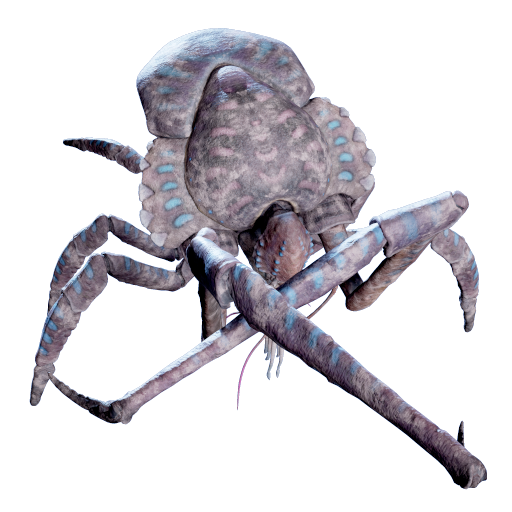
Un enorme granchio (provvisoriamente *Ostrakonskelos anaktoraphore*, portatore di palazzo dalle gambe dure) che si nasconde tra le cupole di corallo. 1. Forma del corpo simile al granchio Gli arti anteriori rastrellano il fondo e scavano per cercare cibo che viene raccolto da lunghi maxillipedi morbidi intorno alla bocca. Per crescere, il granchio deve fare la muta del guscio. 2. Cupola di corallo Una cupola di corallo vivente, tagliata dal suo supporto e indossata. Fornisce mimetizzazione, protezione e forse una nursery per la progenie del granchio. Usano la stessa cupola per tutta la vita o la cambiano man mano che crescono? 3. Implicita presenza di un predatore Le difese e il comportamento implicano l'esistenza di un predatore abbastanza forte e abile da estrarre il granchio dalla sua cupola e penetrare la sua pesante armatura. 4. Attività virale Il genoma contiene ripetuti inserti retrovirali di grandi dimensioni, compresi fattori di crescita nervosa e pigmentazioni del guscio. L'orologio molecolare suggerisce che siano di recente introduzione. Le cellule sul dorso del granchio contengono grandi segmenti del genoma dei polipi della cupola di corallo. 5. Grandi cervelli Il granchio corallo non ha una treccia nervosa spinale. Un cervello di grandi dimensioni posto sopra agli occhi gestisce i sensi e la pianificazione del comportamento, mentre un gruppo secondario di nervi controlla le zampe e il sistema digestivo. 6. Comunicazione attraverso il fondo marino I granchi corallo battono sul fondo marino per comunicare fra di loro. Anche la chiusura rapida delle chele potrebbe essere un segno di intensa eccitazione o agitazione. Alcuni granchi terrestri cercano partner con cui accoppiarsi prima della muta, un comportamento noto come 'tenersi per mano'. Ritrovare un comportamento simile su questo pianeta potrebbe essere emotivamente gratificante. 7. Segni di stress ecologico Le carenze di minerali e le infezioni fungine sono sintomi di stress ambientale. Valutazione: probabilmente ha paura di te più di quanto tu abbia paura di lui. Mantenere un comportamento cauto e rispettoso. È intelligente almeno quanto un gorilla. Potrebbe essere una fonte utile di risorse presenti nei fondali marini. Proposta di ricerca: determinare se il granchio trasporta la sua cupola in zone soleggiate o ricche di sostanze nutrienti per l'alimentazione.
*Ostrakonskelos periskopion*, periscopio dalle zampe robuste. Un granchio sociale che trova rifugio tra gli anemoni urticanti.
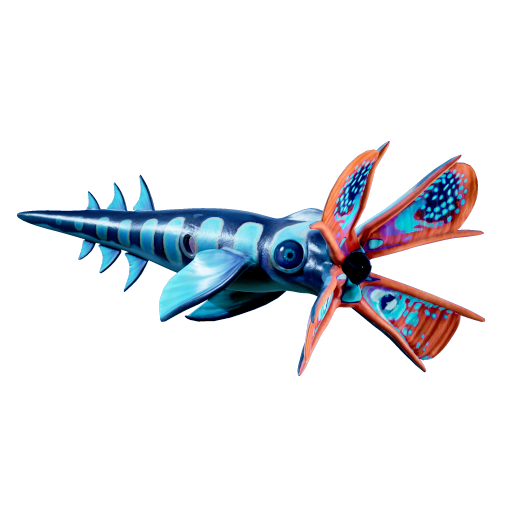
Houndgar (provvisoriamente *Teuthis courser*). Un calamaro che abbaglia la preda per favorire l'imboscata di uno spaccamidollo. 1. Forma del corpo da calamaro Condivide la struttura del corpo con il calamaro terrestre: una testa dotata di becco, otto tentacoli, un lungo corpo molle e una coppia di pinne. La struttura delle pinne molto sviluppata suggerisce una storia evolutiva diversa rispetto al calamaro molle terrestre. Due spiracoli fanno passare l'acqua verso le branchie interne. 2. Mimetizzazione Gli otto arti dell'houndgar sono collegati da quattro membrane che l'animale mostra alla preda. Milioni di cromatofori (pixel biologici) creano schemi di mimetismo dinamico per nascondere il suo avvicinamento. 3. Collaborazione con gli spaccamidollo Gli houndgar sono la preda ideale degli spaccamidollo, ma le due specie cacciano insieme. L'houndgar stana le prede nascoste, poi le distrae e attira su di loro l'attenzione dello spaccamidollo, che è dotato di una visione scarsa. L'houndgar ottiene i resti della caccia: più grande è la preda, più l'houndgar ci guadagna. 4. Becco potente Il becco robusto, simile a quello di un pappagallo, può fare a pezzi carne coriacea: questo è un aspetto importante, perché tutto quello che l'animale inghiotte passa attraverso il centro del suo cervello. 5. Ipotesi di struttura sociale Squadre di houndgar devono avvistare buone prede per i loro spaccamidollo o rischiano di diventare prede essi stessi; gli spaccamidollo devono essere in grado di attirare houndgar efficienti cedendo loro una parte adeguata del cibo catturato. Gli houndgar spingono gli spaccamidollo ad attaccare prede sempre più grandi. Questo contratto costantemente rinegoziato fra houndgar e spaccamidollo ricorda il motto di Alterra Alms: 'Abbiamo tutti bisogno di essere necessari'. Valutazione: la presenza di houndgar potrebbe segnalare un attacco imminente di spaccamidollo. Forse intelligenti, è possibile che si possano addestrare.
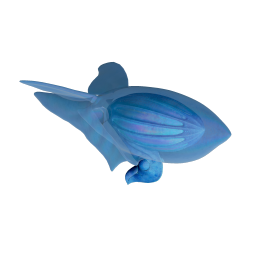
*Hycean hycean*, uno straordinario predatore volante che prende il nome dai pianeti che ospitano cieli d'idrogeno e oceani d'acqua.
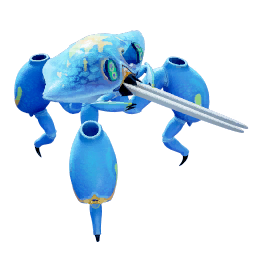
Jetocaris (provvisoriamente *Tripod phrontiscaris*). Un crostaceo sociale a tre zampe che esibisce un comportamento genitoriale. 1. Forma del corpo a tripode A causa dell'evoluzione della simmetria bilaterale in tempi antichissimi, sulla Terra non esistono organismi a tre gambe. Le zampe del jetocaris potrebbero essersi formate dalla fusione di sei arti precedenti, tre su ogni lato. I piccoli arti anteriori sono rimasti indipendenti. 2. Propulsori Evoluti a partire da branchie, su ogni zampa sono presenti propulsori a reazione che permettono al jetocaris di muoversi nell'acqua. Nelle simulazioni, la fusione delle zampe raddoppia le dimensioni di ogni branchia-propulsore e ne migliora l'efficienza. 3. Lingue per la ricerca del cibo Il jetocaris è munito di due lunghe radulae flessibili (forse l'evoluzione di maxillipedi già utilizzati per la manipolazione del cibo). Gli arti anteriori puliscono e curano le radulae. Queste appendici sono sensibili, ma capaci di rigenerarsi. Questo suggerisce che il jetocaris possa far ricrescere i propri nervi... e che sul fondo del mare ci sia qualcosa a cui piace morderle. 4. Comportamento genitoriale Il jetocaris trasporta e protegge i piccoli della specie; l'espressivo linguaggio del corpo suggerisce una ricca vita sociale. L'analisi spettrogenetica indica che alcuni giovani sono adottati, ovvero non discendenti genetici dell'individuo che li accudisce. L'adozione è stata osservata in molte specie, sebbene da un punto di vista meramente adattativo rappresenti un errore. Può essere un segno di comportamento istintivo. Forse una volta i jetocaris vivevano in gruppi eusociali, in cui una sola regina si riproduceva e molti individui operai si prendevano cura dei piccoli. Valutazione: per lo più innocuo. Può fornire benefici emotivi.
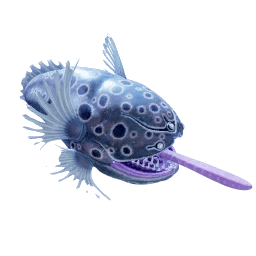
*Postpanoplia epicurean*, il vorace pesce privo di corazza. Imprevedibile e affamato, specie quando è sotto l'influenza di un parassita.
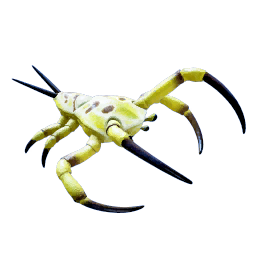
*Ostrakonskelos glossaklept*, il ladro di lingue dalle zampe dure. Un granchio parassita o pidocchio che vive in bocca, provocando una sensazione intensa e incessante di fame.
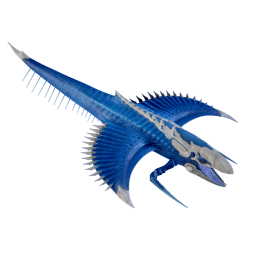
"La biosfera è, per la maggior parte, vuota. Un deserto umido, profondo cinquemila metri. La vita sulla superficie è scandita dal ciclo vita-morte. I morti fioccano sul fondo e alimentano strane forme di vita.
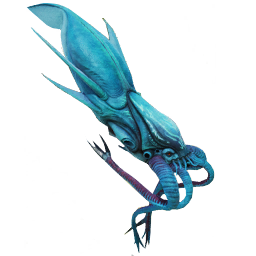
Enorme predatore cefalopode (provvisoriamente *Tyrannoteuthis phobocoeus*, calamaro tiranno dalla paurosa curiosità). Si nutre di prede corazzate a conchiglia dura. Solitario ma molto intelligente. Probabilmente una creatura degli abissi. 1. Struttura del corpo a calamaro Il suo corpo ricorda quello del calamaro terreste: un lungo mantello e diversi arti attaccati direttamente alla testa. Il mantello è ricoperto da un'armatura plastica. A differenza del calamaro terrestre, ha quattro lunghi tentacoli predatori con potenti artigli. Le sue otto braccia sono piccole e raggruppate intorno al becco. 2. Propulsione potente Due grandi sfiatatoi alimentano un propulsore posteriore. Questi sfiatatoi sono separati dalle quattro branchie della testa, permettendogli di separare il suo ritmo respiratorio dalla velocità propulsiva. Due cuori secondari pompano sangue dalle branchie verso il cuore principale. 3. Prede dure Un enorme becco (in grado di rompere il titanio) e quattro possenti tentacoli, le cui punte sono dotate di affilati artigli in biovetro, gli consentono di attaccare e squarciare prede ben corazzate. Possibili prede animali includono il granchio corallo e il mascellone. Il bisogno di sconfiggere vittime attive e corazzate può aver stimolato un atteggiamento di curiosità e aggressività. 4. Organo trasmittente Questo grande organo a camere è un sonar a schiera di fase biologico. I suoi molti "altoparlanti" e "orecchie" gli permettono di emettere impulsi multipartiti. La densa innervazione collega quest'organo al cervello toroidale; le sequenze di bioluminescenza potrebbero essere un riflesso diretto dell'attività cerebrale della creatura. 5. Pupilla a forma di W Alla luce diretta, la pupilla prende la forma di una W. Questo tratto era presente nei cefalopodi terrestri, ma non è stata determinata la sua funzione prima del Collasso dell'Olocene 6. Gigantismo abissale Gli organismi degli abissi sono spesso molto grandi, un fenomeno noto come "gigantismo abissale". Valutazione: cacciatori con diete varie e difficili sono spesso dotati di intelligenza e curiosità. Quest'ultima può risultare, agli occhi della preda, come nient'altro che tortura ingiustificata. Ogni habitat o piccolo veicolo sottomarino è prone a suscitare l'interesse del raccoglitore.
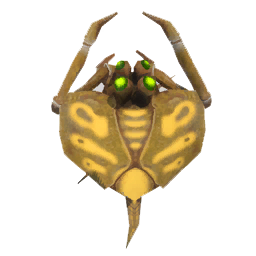
La locusta è una fauna passiva catalogata nelle Rovine di Axum, nei Giardini di corallo, nel Cimitero e in 1 altro. I registri attuali elencano 137 punti di spawn confermati in 4 biomi, all'interno della zona principale, con l'ammasso centrato vicino a -2908/4516/-147. A questa voce passiva non sono allegate statistiche di combattimento, quindi il profilo wiki si concentra sul posizionamento dell'habitat, sulle osservazioni di spawn e sulla classificazione delle minacce.
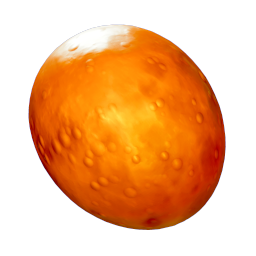
Tentatively *Rotsac lucifer*, the light-bringing rotsac. A tunicate-like animal which ferments decomposing biomatter inside its body. 1. Hidden body The rotsac's larval swimming body transforms into a spherical adult form. Because fermentation does not require oxygen, the rotsac actually stops breathing as it matures. 2. Swollen with hydrocarbons The rotsac contains isoprene, useful for fabricating rubber and lubricant. High diacetyl levels give the rotsac a strong caramel funk. 3. Bioluminescence Glow may attract animals (especially sun-seeking microorganisms) to defecate or die on the rotsac. Bioluminescence seems to play an important role in this world's ecology. Regular experiments with light reactions are advised. 4. Symbiote Often found glued to the cradle shootroot, an unrelated species of starfish-like bottom-dweller that provides the rotsac with an anchor while it grows. Assessment: useful source of organic polymers for rubber and oil. Consult your Noetic Advisor to research optimal search areas.
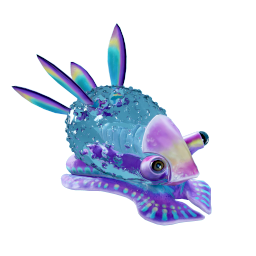
Lumaca di mare (provvisoriamente *Seaslug hydroclast*). Un enigma biologico che converte acqua salata in acqua dolce potabile. 1. Cella energetica microbiologica La rimozione del sale dall'acqua di mare è un processo che richiede molta energia. Tuttavia la lumaca di mare ci riesce, forse come sottoprodotto di una reazione innescata dei microbi al suo interno che si nutrono dei rifiuti presenti nell'acqua marina. 2. Riserva d'acqua dolce Un bulbo plastico idrofobico che protegge la lumaca dalla rapida disidratazione causata dall'acqua salata. 3. Allevamento di plancton Il bulbo pieno d'acqua della lumaca ospita una specie di plancton altamente efficiente che trasforma la luce in cibo. È possibile che l'acqua dolce sia necessaria per la chimica del plancton, oppure potrebbe essere una prigione: un modo per impedire al plancton di uscire. 4. Aura di vampirismo Il becco della lumaca di mare è molto affilato. Possibile storia evolutiva come parassita o commensale che prelevava il sangue da un ospite e ne filtrava le tossine. Valutazione: unica fonte vicina di acqua potabile. Prima di bere si consiglia la depurazione al fabbricatore. In caso di problemi ai reni, considerare la possibilità di consentire alla lumaca di nutrirsi del proprio sangue.
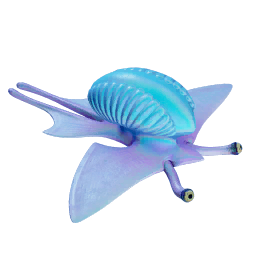
*Seaslug kleptopharos*, la lumaca lanterna rubata. Un nuotatore libero luminescente, parente della lumaca di mare ma con con tratti chimerici appartenenti a una specie completamente diversa.
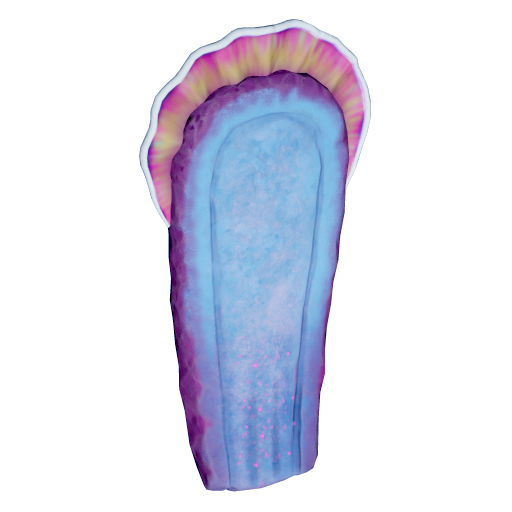
*Symphon macaron*. A sponge that has developed a disc of flagellated feeding cells. Named for the dessert sandwich cookie (not available in current fabricator settings). 1. Hardened plates Instead of a sponge's normal inner and outer layers, the macaron develops two hard plates of pinacoderm. These anchor the feeding disc to a holdfast. 2. Feeding disc The sponge's mesohyl (internal jelly) has specialized into feeding disc, with tentacled cells that pull particles from the surrounding seawater. This leaves the delicate jelly vulnerable to predators and parasites. 3. Hostage exchange The feeding disc hosts the larvae of sponge-eating organisms in its pores. By providing a shelter and habitat for their young, the macaron may buy itself a degree of safety and defense. (These larvae are themselves tempting prey for many species.) 4. Unusual protein expression Many of the cells in the feeding disc express proteins also found in the hosted larvae. This may be a recognition signal to attract the desired species. ASSESSMENT: Inedible despite name. Await further updates.

*Mango cestro*, lo squalo che lancia le proprie zanne. Predatore territoriale capace di scagliare zanne con punta d'uranio a una velocità che può raggiungere i venti metri al secondo.
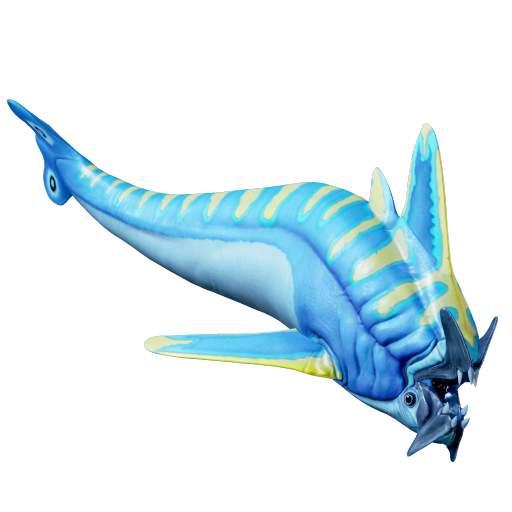
Mango morsicatore (provvisoriamente *Mango tructa*). Un fastidioso onnivoro che si alimenta per raschiamento. Ben contento di fare uno spuntino con pesci, spugne, laminarie e arti umani.
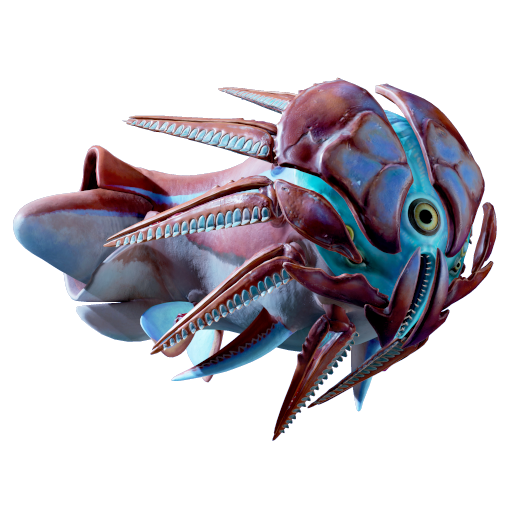
Martello (provvisoriamente *Panoplia hammerhead*). Un erbivoro territoriale e sociale con un potente attacco. 1. Testa a martello Sfida gli intrusi che sconfinano nel suo territorio, soprattutto gli altri martelli. Mostra le pinne pettorali e chiude lo scudo fontale prima di attaccare. 2. Propulsione a getto Spiracoli posti dietro gli occhi alimentano un canale dotato di branchie interne. Il getto gli permette di sferrare attacchi improvvisi e potenti. 3. Grande cervello Galleggia all'interno di una cisti protettiva. L'occhio centrale vede i colori, mentre due piccoli occhi sensibili al movimento guidano gli attacchi. 4. Mascella da erbivoro La robusta mascella verticale suggerisce una dieta a base di spugne, laminarie, tunicati e forse anche corallo frantumato. La necessità di proteggere l'area di pascolo può essere la causa del comportamento territoriale del martello. 5. Allenamento? I martelli speronano le cupole di corallo. I motivi non sono chiari: forse serve a irrobustire lo scudo. Si consiglia cautela, soprattutto a bordo dei veicoli. Possono avere comportamenti sociali paragonabili ai grandi ungulati terrestri, alcuni dei quali erano estremamente pericolosi per gli esseri umani. Le zone di speronamento (chiamate "lek") sono tra le principali fonti di rumore nell'oceano.
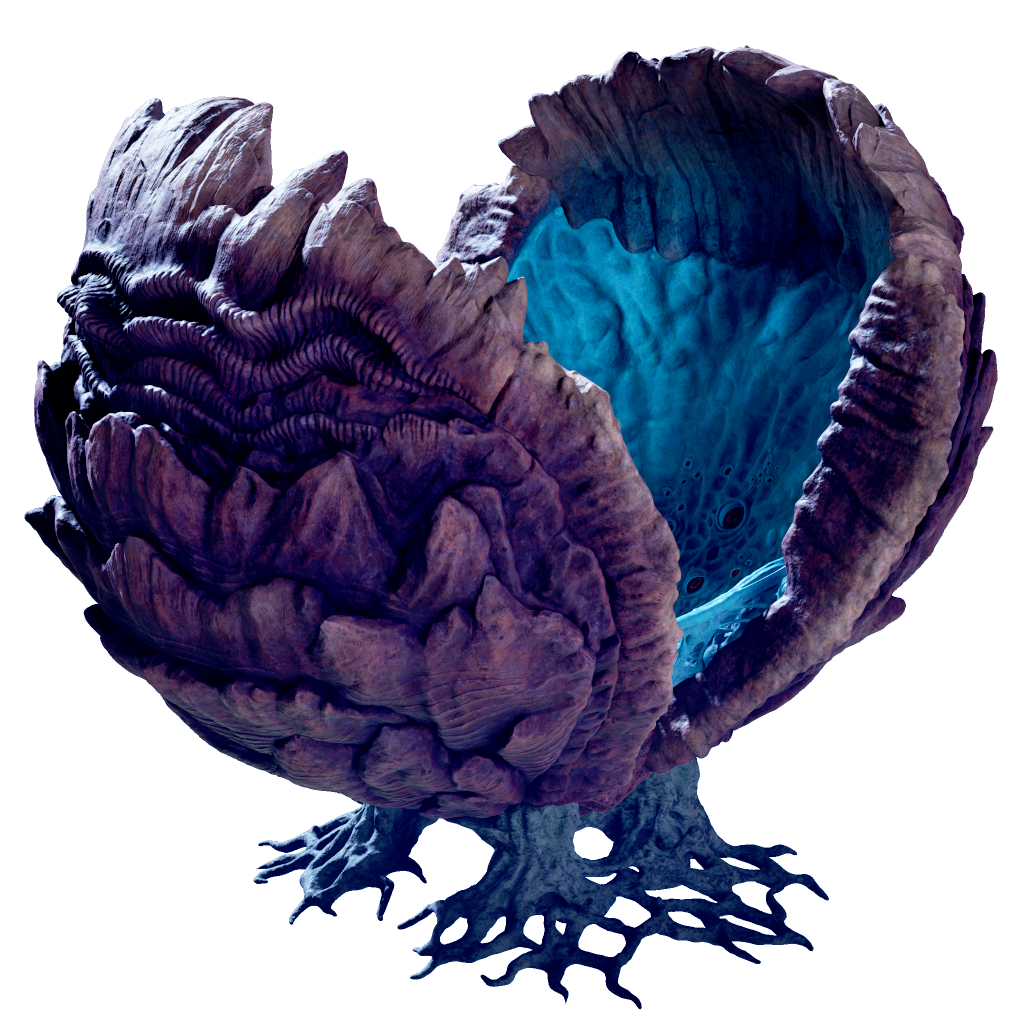
Mascellone (provvisoriamente *Megamya sudacna*, grande vongola divoratrice). Un'enorme vongola onnivora con una pericolosa strategia alimentare/difensiva.
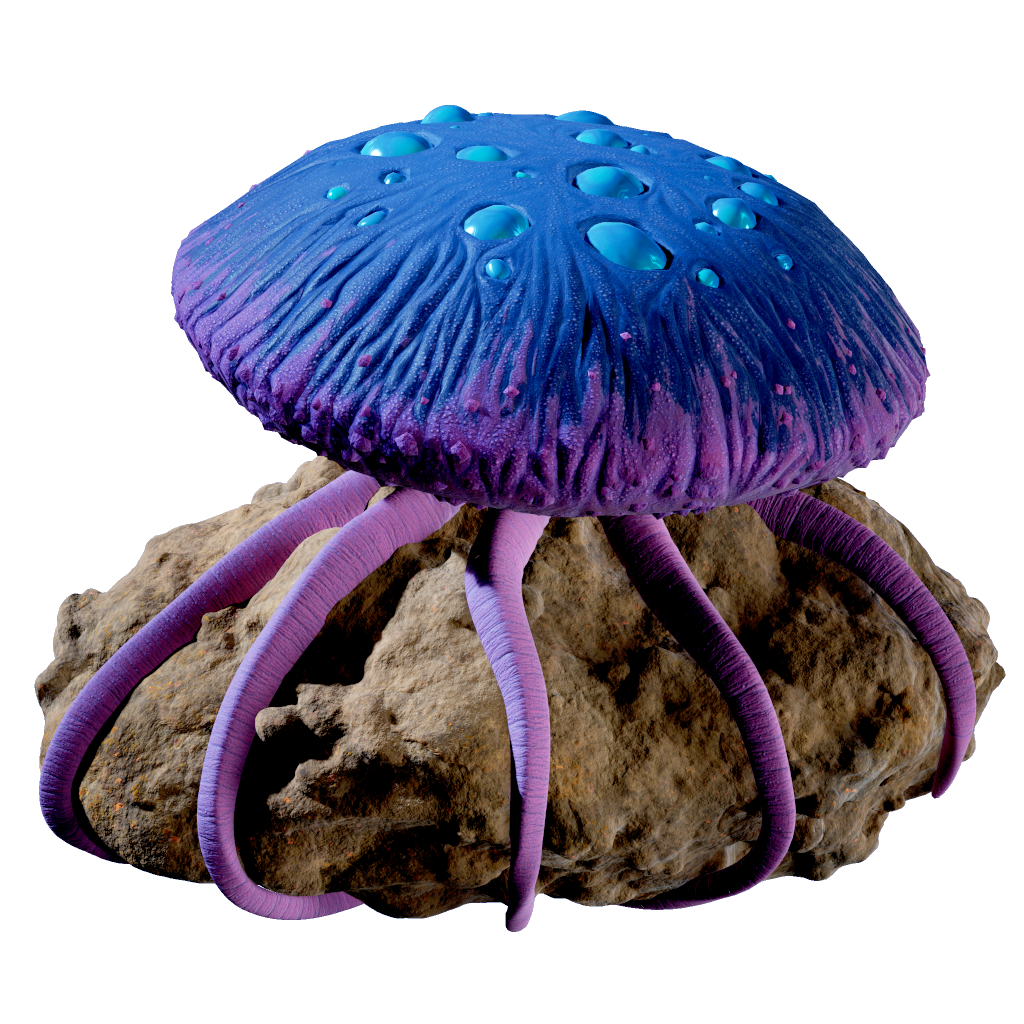
*Dactylbrachia gigas*, la colossale medusa dalle braccia affusolate. Non ha una specie terrestre analoga.
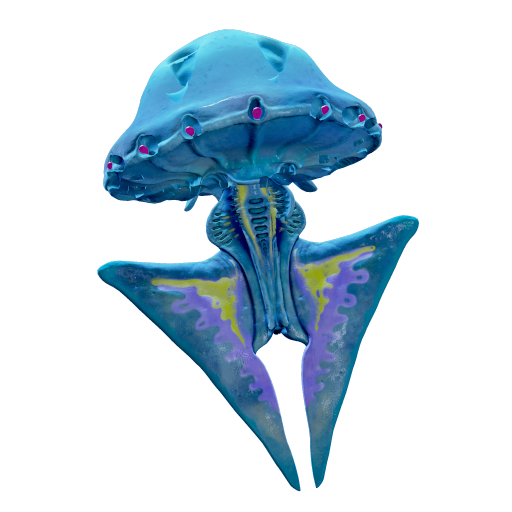
Medusa elettrica (provvisoriamente *Staurobrachia capacitor*). Medusa grande e complessa che caccia le prede con scosse elettriche. 1. Animale singolo A differenza degli organismi coloniali come la caravella portoghese, la medusa elettrica è un singolo animale con tessuti specializzati, molto più complessa e specializzata delle meduse terrestri. Nome proposto per la classe: staurobrachia (braccia ad asta). 2. Struttura interna complessa La campana esterna è cosparsa di organi sensoriali chiamati ropali. Una rete nervosa coordina il movimento della campana per lo spostamento e la ricerca delle prede. La struttura interna visibile è il sistema digerente. 3. Alimentazione La medusa conserva uno stelo, elemento vestigiale della sua crescita all'interno di una schiera di cloni, che usa per assorbire le sostanze nutrienti. 4. Pinne elettrificate Due pinne rigide contengono elettrociti simili a cavi, probabile evoluzione di tentacoli ancestrali. Questi organi accumulano tensione per stordire o uccidere le prede. La potenza misurata, che varia da 400 a 1.000 volt a 1 ampere, è sufficiente per uccidere un essere umano. 5. Peculiari viaggiatrici Tracce di radioattività, cere formate ad alta temperatura e acido solforico suggeriscono il contatto con una sorgente idrotermica. La composizione dei tessuti della medusa suggerisce che sia originaria delle profondità oceaniche. 6. Aspetti sociali? Le meduse vicine comunicano attraverso i campi elettrici. Che ogni medusa abbia un proprio nome e che il loro linguaggio sia dotato di una vera grammatica rimane pura speculazione. In ogni caso, specifici schemi potrebbero essere appresi e insegnati, forse addirittura tramandati da una generazione all'altra. Valutazione: pericolosa in un incontro ravvicinato. Affascinante oggetto di ricerca, a una certa distanza.
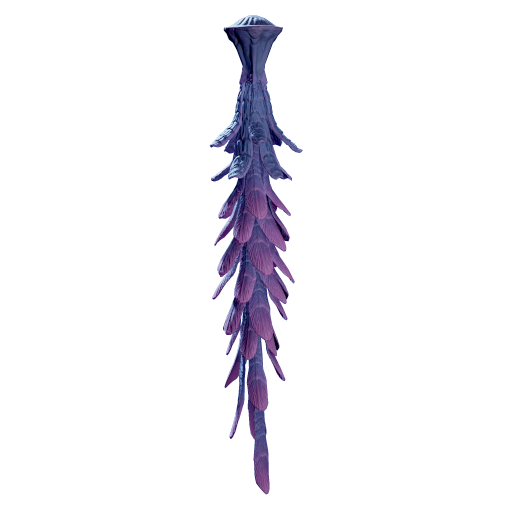
*Anthobrachia hebesoros*, the young stack of flower arms. Reproductive stage of a flower-like jelly. 1. Polyp Despite its resemblance to a kelp, the jelly lei prefers to hang underneath surfaces—where it cannot photosynthesize. It is the rooted polyp phase of a jellyfish's life cycle. The chain of 'flowers' growing beneath the polyp are larval jellyfish, called ephyra. The stalk itself is called a scyphistome. 2. Ephyral traits The budding larvae have broad, flat petals which will eventually merge into the adult jelly's bell. These petals already host photosynthetic symbiotes—it is possible the adult jelly will seek light sources to grow, akin to the terrestrial upside-down jelly. Note the purple color produced by photosynthetic retinal, the same molecule your eyes use to detect light. 3. Heat stress The jelly lei's growth cycle has been accelerated by heat stress. The stalked parent may release its larvae early to allow them to swim clear of hot, oxygen-depleted water. Assessment: sign of ecological crisis.
*Mephit ceryneian.* A stack of cloned clams adapted to life in very hot water. The central stalk that connects them appears to be a symbiotic worm worm worm worm worm 1. Clamclone Clam stack clone stack! Jelly lei like. Connect on worm like coins on spindle. Monitoring PDA bad output. 2. Genderstack All clone female. Worm forms antlers: emit male cell. Why worm help clam? No more worm. Worm taken over by clam cancer. 3. Hot hot hot! Clams evolve shut forever. Too hot! Never open...but then starve? A ha, eat with tissue fans, withdraw if nibble burn. Starvation solved. 4. Namepun Stack sounds like stag and stack has antlers and stag has antlers. Stagged. Name for hot water living clam? Mephit. Stagged mephit. Assessment: bad output stop.
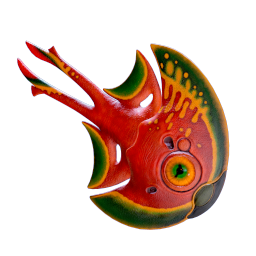
Mezzaluna (provvisoriamente *Moliform luna*). Grosso pesce foraggio che filtra il plancton dall'acqua marina e bruca piccoli germogli. 1. Preda Fonte principale di cibo per i predatori, ha evoluto diversi comportamenti per fuggire e nascondersi. Commestibile, ma è raccomandata la cottura nel fabbricatore. 2. Canali separati Un becco rigido protegge due valvole che aspirano l'acqua di mare per il nutrimento. Spiracoli posti dietro agli occhi conducono l'acqua verso branchie interne per la respirazione. 3. Notevole agilità Il corpo è pieno di neuromasti che rilevano il flusso dell'acqua. Le pinne anteriori sono dotate di fenestrae (fori) che aiutano a invertire rapidamente la direzione. Potrebbe essersi evoluto per manovrare in spazi ristretti o in densi banchi di esemplari. 4. Sistema nervoso peculiare Manca di cancellazione della reafferenza: non può distinguere gli stimoli causati dai propri movimenti dai cambiamenti che si verificano nel mondo circostante. Facilmente affascinato da luci brillanti: potrebbe addirittura percepire se stesso come fonte della luce. Talvolta si comporta come se fosse disorientato, nuotando in direzione laterale senza beneficio apparente. Valutazione: fonte di cibo accettabile.
*Anthobrachia necrolei*. A clonal stalk of large jellies, similar to Earth's stauromedusae. Each jelly remains moored to the stalk, rather than maturing into a free-swimming medusa. 1. Enormous size and hunger Rather than feeding on prey, the necrolei gathers dead matter from the seawater. The size and height of the stalk are directly related to the rate of death and decay up-current. 2. Acid-yielding metabolism The necrolei has adapted to low-oxygen seawater. It ferments much of the matter it collects in a central 'basket' stomach, a process which requires no oxygen and yields strong acids. The necrolei concentrates these acids around its eggs as a defense. Assessment: large numbers of necrolei in this region indicate a bloom, a population explosion caused by a flood of nutrients. This is a poor sign for the health of the ecosystem and perhaps for the state of the global climate. Produces egg clusters that can be processed into strong acid.
*Mango cestro*, lo squalo che lancia le proprie zanne. Predatore territoriale capace di scagliare zanne con punta d'uranio a una velocità che può raggiungere i venti metri al secondo.
Lo squalo mordicchiatore è una grande fauna predatrice catalogata nel Colonist Bunker, Coral Gardens, Plateaus e 1 altro. I registri attuali elencano 13 punti di spawn confermati in 4 biomi, all'interno della zona principale, con l'ammasso centrato vicino a -3348/4197/-29. La messa a punto della creatura registrata elenca 100 HP e 500 velocità di nuoto massima. I dati di movimento contengono 8 righe di comportamento.
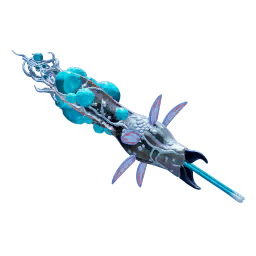
Un cefalopode senza arti e con il becco (simile al calamaro) che si nutre di sangue e fluidi corporei. Infettato estensivamente da un grande virus RNA (nome generato: Proteavirus beta), che ne altera il comportamento.
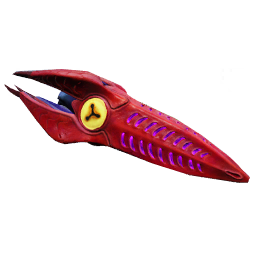
Un predatore velocissimo che vive in sciami, si nasconde nelle grotte e si nutre di organismi bioluminescenti per attirare il partner. Iniziano a cacciare attirati dalla luce e dal suono. Non presenti in EA1
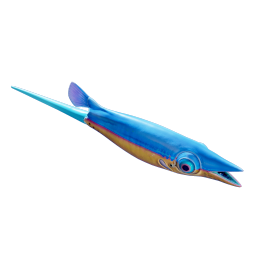
Pesce commestibile ma trascurabile. Difficile da catturare a causa della sua particolare propulsione elettromagnetica.
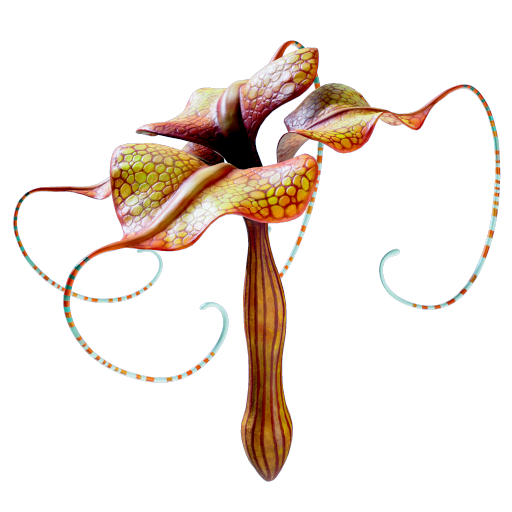
Tentatively *Pyloraptor mimic*. A predatory animal disguised as a leafy kelp. Discharges electrical shock when disturbed. 1. Cephalopod-like body Resembles an octopus or squid planted mantle-down in the seabed, with its arms spread to mimic kelp. Pouches of symbiotic bacteria between the arms allow it to photosynthesize. A beak at the center of its arms is plugged with mucus. 2. Electrical hunting The four arms contain electrocytes, organs which build up an electrical charge. When disturbed by prey, the electrocysts discharge, causing paralysis or death. It is unclear if the prey are directly eaten, or if they decompose in a garden around the mimic pylon. (Organisms which feed on external decay are known as saprotrophs.) 3. Implies kelp The pylon's cryptic aggressive mimicry of leafy kelp implies that kelp must exist on this world. Most species in Earths' oceans eat to survive, with primary production (the conversion of sunlight into biomass) carried out by plankton and algae. Leafy kelp were a late evolutionary development. 4. Cave mouth strategy Mimic pylons tend to cluster around sea cave entrances, perhaps to feed on organisms entering or leaving the caves. Alternately (and speculatively) they may have been planted there by another species to control access. Assessment: avoid contact to prevent injury. May mark cave mouths.
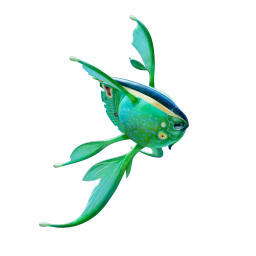
Un pesce preda che imita le aerocisti di una specie di alga ignota.
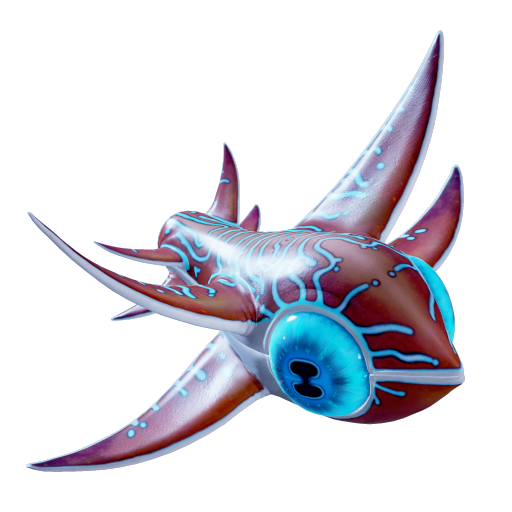
Quattrocchi (*Morokotoform duplex*). Un pesce predatore che nasce sempre in coppia con un fratello gemello omozigote. I gemelli si collegano al livello del ventre e condividono i loro sistemi digestivi e nervosi per formare un singolo organismo.
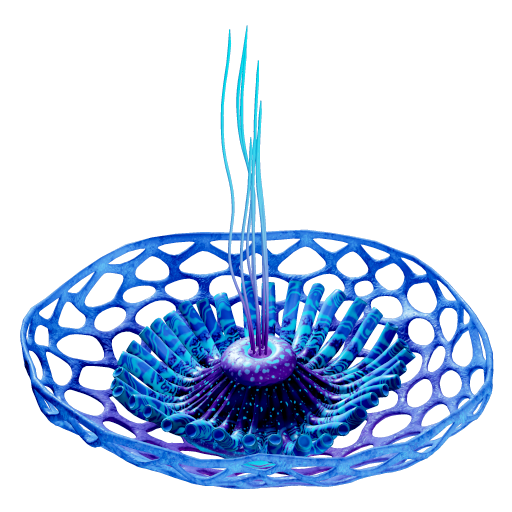
*Raion calix*. A puzzling combination of worm colony (the raion) and slime mold. 1. Feeding strategy Feeds on drifting matter, though the worms also sting and kill meiofauna (small sea life between 45 nm and 1 mm in size). 2. Glassy central structure The central structure is a glasy spicule similar to those found in Earth's glass sponges. The worms live in this structure, creating a raion — a sponge inhabited by worms. 3. "Tripe bowl" The ‘tripe bowl’ around the base is a single enormous cell, similar to Earth’s syncytial slime molds. The structure resembles the lining of a cow’s stomach, although this Voronoi pattern is common to self-organizing structures in many exobiologies. Its function is unclear. In terrestrial analogs, syncytial structures can be found in both healthy tissues like muscles and in tissues infected by certain viruses. Optogenetic analysis cannot determine the tripe bowl's genetic ancestry. Assessment: biological enigma. Await further updates.
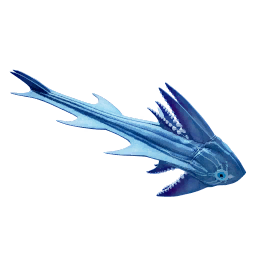
*Sitaroid gemini*, la razza gemella che assomiglia a un sitar. Un elettropredatore delle profondità spinto verso la superficie dagli sconvolgimenti ecologici.
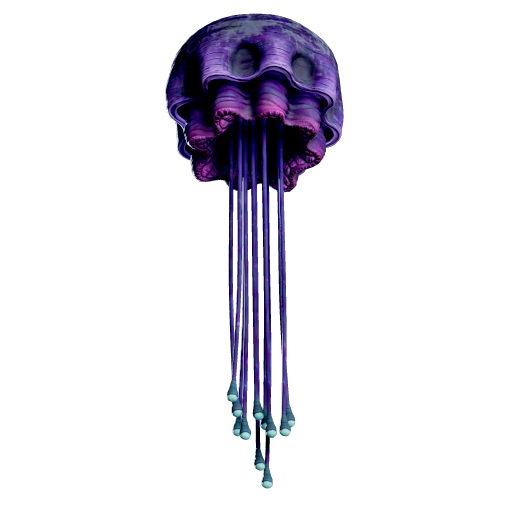
*Salp pendulous*. A sticky, suspension-feeding predator that captures organisms from the current. 1. Salp-like biology Like Earth's salps, this is a colony of zooids — tiny, cloned animals (in this case tunicates) — that form a long, tube-like pump. The salp draws in water to filter for plankton. 2. Hard holdfast The holdfast that anchors the feeding string is secreted by the same zooids that make up the rest of the organism. Spectrogenetic analysis detects proteins similar to those expressed by reefbuilding sponges and corals. 3. Bloom response Terrestrial salps can reproduce very quickly, allowing them to grow with—and devour—sudden blooms of algae. If the algae bloom is too dense, the salps may clog. Assessment: may be a useful indicator of ecological stress. Await further updates.

Scourge Hive is fauna catalogued from the current creature data. No combat stat block is attached to this entry, so the wiki profile focuses on the structured habitat and spawn facts available.
*Skythopterygion atropos*, il killer con pinne a falce. Il maschio di una specie di predatori leviatani sessualmente dimorfici, che vive in mare aperto e attacca in banchi.
Snorkleback (Adult) is fauna catalogued from the current creature data. No combat stat block is attached to this entry, so the wiki profile focuses on the structured habitat and spawn facts available.
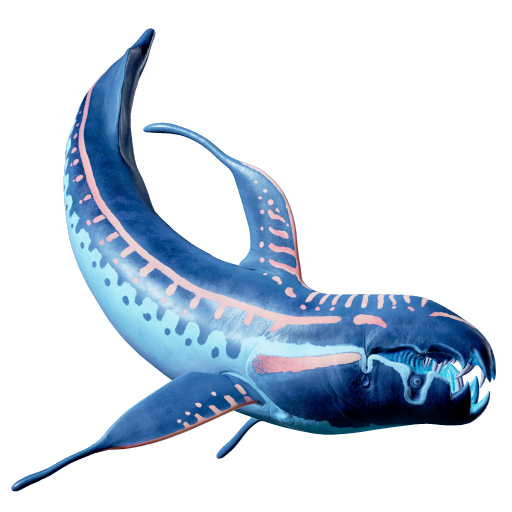
Spaccamidollo (provvisoriamente *Mango marrowbreach*).
Marrowbreach Giant è una fauna passiva catalogata nel Cimitero. I registri attuali elencano 1 punto di spawn confermato in 1 bioma, all'interno della zona principale, con l'ammasso centrato vicino a -2919 / 4469 / -68. A questa voce passiva non sono allegate statistiche di combattimento, quindi il profilo wiki si concentra sul posizionamento dell'habitat, sulle osservazioni di spawn e sulla classificazione delle minacce.
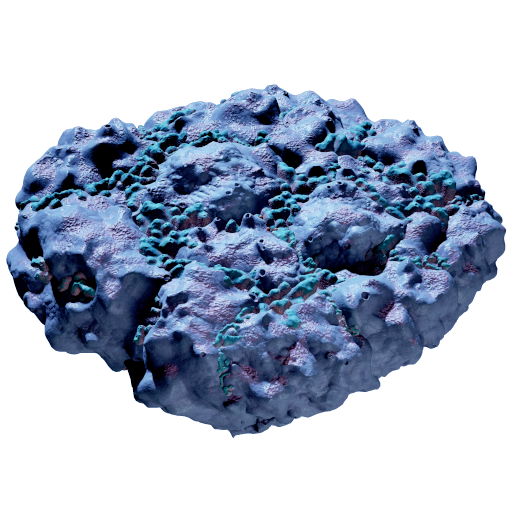
*Sporal psephos*. A moiety (two paired species) of a sponge and a coral. Possibly a single chimeric organism. 1. Reefbuilding Reefbuilding on this world seems to be carried out by a range of sponge-coral pairings. In hard corals, the sponge has lost its ability to feed independently and provides a hard shell for the corals. In this organism, the relationship is reversed: the coral polyps grow a hard surface shell, while the sponges continue to pump water. Because the hard shell blocks the sponges' pores, they work in pairs, with one inhaling through its osculum and one exhaling. 2. Dome coral association Frequently found on the surface of the larger dome coral, blocking patches of its surface from receiving sunlight. This may be an opportunistic/parasitic relationship. 3. Confusing genetics Both coral polyps and sponge cells seem to carry the full genome of both organisms, blurring the definition of a species. It is unknown how a single organism can contain genomes for two biologically distinct species; the two cannot reproduce sexually to combine their genes. Assessment: interesting data point.
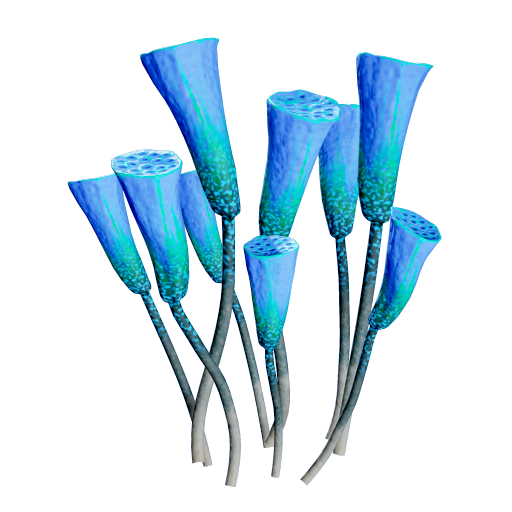
*Spraion flagon*. Databank generation alert: known scientific theory inadequate to explain specimen. Interpretation and improvisation may lead to error. 1. Sponge-worm hybrid Like the raions, this is a sponge occupied by worms. The sponge pumps seawater, while the worms feed on meioafauna in the current. In this 'spraion' the two organisms have become genetically entwined: each can give birth to the other. This defies conventional evolutionary theory, which uses reproductive barriers to define species. 2. Alternating generations Some of the sponge's germ cells undergo a transformation into worm embryos. This transformation involves the activation and expression of stored genetic material from the worm genome. Adult worms leave the sponge, swim to a new anchor site, and die. Their bodies provide food to a newborn flagon sponge. 3. Possible explanations The simplest explanation is that these are two alternating generations of the same organism — like the polyp and medusa stages of the jellyfish life cycle. But spectrogenetic analysis suggest the flagon sponge and its resident worms evolved tens of millions of years apart. Exactly how the reproductive cells of one organism can yield an adult of another species is unknown. Assessment: advise further investigation. May yield insight into genetic adaptations specific to this world. Await further updates.
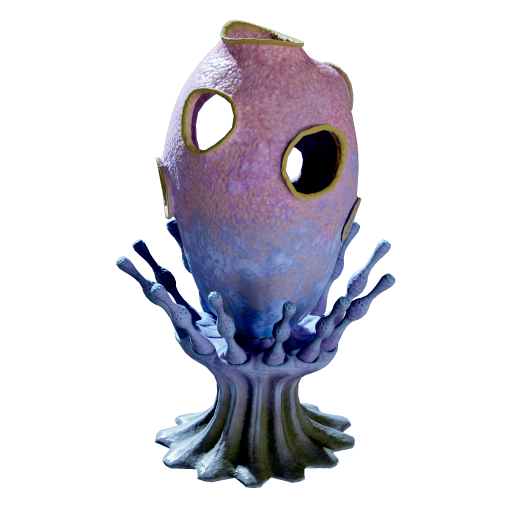
*Symphon amphora*. A sponge adapted to colonize — and create — air pockets. 1. Amphora-shaped structure Like all sponges, the amphora requires constant flow through its pores to survive, but it pumps air rather than water. Contraction and expansion forces moist air through the sponge's pores. Absorbent surfaces harvest water and carbon dioxide from the air. Waxy coating helps prevent water loss. 2. Radiolytic metabolism The soft blue glow of the sponge is bioluminescence fueled by radioactive minerals in the sponge's vanes (the structures growing from the anchoring rhizoid). This radiation splits water into hydrogen and oxygen. The gases gather in the cave ceilings the amphora prefers to colonize, creating pockets of knallgass (unmixed hydrogen and oxygen). Though breathable, this air is highly flammable and an explosion risk. The sponge's symbiotic bacteria feed on the hydrogen and oxygen, producing energy and water. The sponge uses this energy to fix carbon from the air and grow, as an Earth plant would. Assessment: a remarkable step. The amphora sponge may evolve an entire lineage of dry-land sponges, colonizing niches filled by plants and fungi on Earth. Indicates the presence of an air pocket. Swim up to breathe. Do not ignite flares or discharge electrical devices in the pocket.
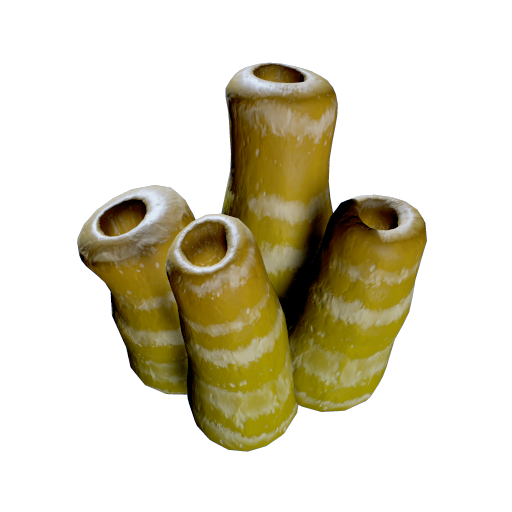
*Symphon apokalupsis*. An unassuming button-shaped sponge that may be an omen of mass extinction. 1. Simplicity Among the earliest animal forms on Earth, sponges are a group of cells that live between two membranes and work together to pump water. Sponges on this world are similarly elegant. 2. Tolerance Due to this simplicity, sponges tolerate low oxygen and high temperatures better than many other organisms. They also benefit from elevated death rates, which floods the water with decaying matter. 3. Role in mass extinction Biospheres dominated by sponges may be an indicator of a recent or ongoing mass extinction. After Earth's first major die-off during the Ordovician period, some 85% of species went extinct, leaving a world ruled by sponges. The popular existential terror franchise "Life Is Only Pulse" is set in a fictionalized version of this time period. Assessment: possibly a warning sign of planetwide ecological collapse. Possibly not.
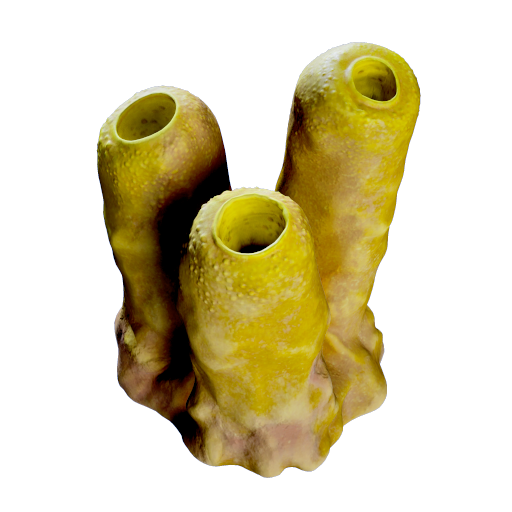
Nahema, registro vocale, vai. L'ultimo grande uomo della Terra ha detto scherzosamente che il Creatore deve adorare le stelle e gli scarafaggi, visto che ne ha fatti così tanti. Duecento anni dopo abbiamo trovato molta vita aliena, ma non molti scarafaggi. Mi spiace, Jack. Però guarda, il tuo Creatore ha una chiara preferenza. Ovunque metta mano, a quanto pare, inizia sempre con una spugna.
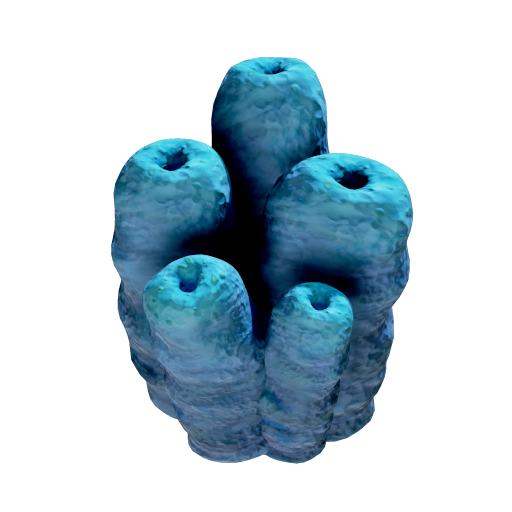
A hateful and malicious sponge. Assessing PDA neural temperature. Reducing output subjectivity. *Symphon achlys*, sponge of dying mist. A dangerous semi-predatory sponge that acts as the central node in a necrobiome. 1. Bacterial arsenal Sponges cultivate bacteria which secrete helpful chemicals. At some point in its history the toxic sponge was infected by a bacterial symbiote which generated a powerful antibiotic (akin to the human Streptomyces). The bacterium used this antibiotic to extinguish competition, then began an internal power struggle to evolve compounds that could destroy rival strains of its own species. The result is a sponge flush with an antibiotic so concentrated it causes skin burns and nerve damage. 2. Touch based hunting strategy When brushed, the sponge contracts sharply, expelling a cloud of antibiotic toxin. Microorganisms are killed, and larger species may enter convulsions and die nearby. The dead matter decomposes, releasing nutrients upon which the sponge feeds. 3. Animal gene fragments The toxic sponge's genetic code contains fragment of an animal genome: likely a crustacean. Assessment: avoid. Keep medical supplies on hand to treat chemical burns and nerve damage.
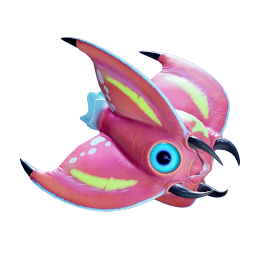
Squadrato (provvisoriamente *Salpapod tetragnatha*). Un carnivoro imparentato al geordie comune. 1. Somiglianze con il geordie Condivide la forma base del corpo, ma al posto della radula del geordie ha quattro denti appuntiti. 2. Dieta carnivora Lo squadrato si fa strada nella carne viva per nutrirsi di sangue e liquido sieroso. È difficile rimuoverlo senza ferire l'ospite. Considerare l'applicazione di luce o calore per indurre lo squadrato a staccarsi volontariamente. 3. Enzima vampirico Un anticoagulante, simile alla draculina, la glicoproteina secreta dal famoso pipistrello vampiro terrestre, impedisce che il sangue della preda si rapprenda. Questo enzima è identico a quello trovato nella lumaca di mare. Forse trasferito da un retrovirus. 4. Sovrappopolazione di squadrati Attualmente gli squadrati hanno un impatto notevole sull'ecosistema locale, il che suggerisce la riduzione o l'estinzione di specie che una volta ne limitavano la popolazione. Alternativamente può essere che i geordie, impossibilitati a trovare cibo, si stiano trasformando in squadrati in cerca di nuove fonti di nutrimento. Valutazione: se rimane attaccato può causare una disidratazione grave, anche fatale. Rimuovere con il metodo più sicuro disponibile. Considerare la possibilità di staccare gli squadrati dagli organismi incontrati per verificare eventuali risposte sociali.
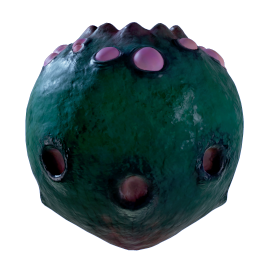
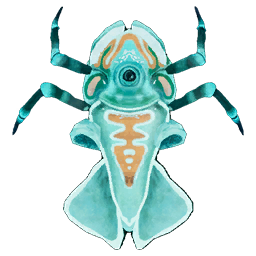
Teal Cycloplet è la fauna passiva catalogata in Coral Gardens. I registri attuali elencano 29 punti di spawn confermati in 1 bioma, all'interno della zona principale, con l'ammasso centrato vicino a -3462/3982/-49. A questa voce passiva non sono allegate statistiche di combattimento, quindi il profilo wiki si concentra sul posizionamento dell'habitat, sulle osservazioni di spawn e sulla classificazione delle minacce.
The titan-class organism on the eastern horizon pushes the boundaries of planetbound life.
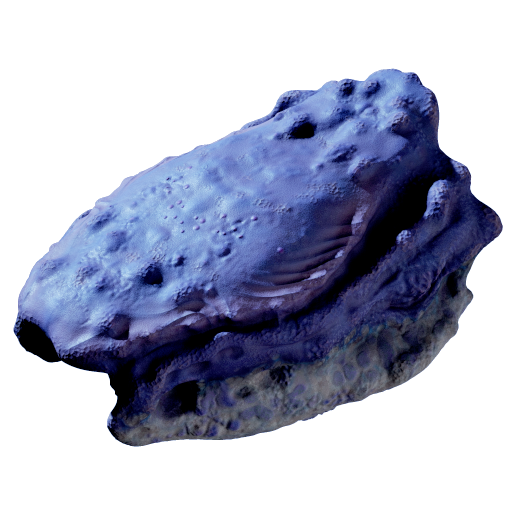
La trivella titanica (Lithodont titanicae) condivide alcuni tratti biologici con il grande organismo all'orizzonte. Dato che la dimensione dell'organismo richiede enormi quantità di cibo, la trivella titanica potrebbe essere una radice o una conduttura che si ricollega alla torre centrale.
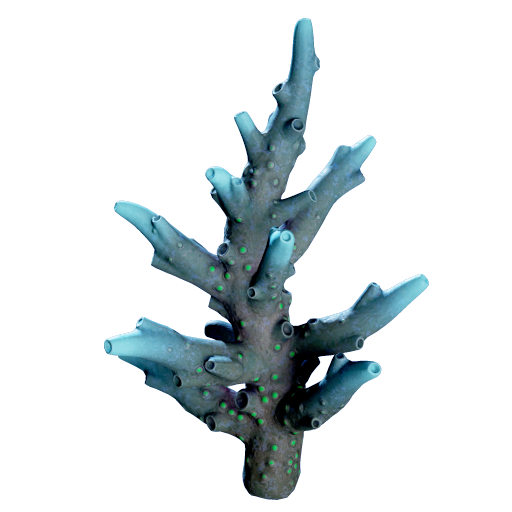
*Hecaton tunic*. Named for the hundred-handed hecatoncheires of Greek myth. A complex of animals undergoing competitive sex differentiation. 1. Anatomy Each pore on the surface of the hecaton is the mouth of a tunic, a complex filter-feeding animal. The colony's branching structure allows each tunicate acces to the water so it can breathe and eat. Each tunic grows a flexible, semi-hard polyvinyl shell which merges with the neighbors' tunics, defending the entire colony. 2. Growth patterns Analysis suggests the colony begins as a single stem of identical tunicates cloned from an embryo. More successful tunicates become large and sexually mature, starting new arms of the colony and developing their own eggs. Less successful tunicates are driven to the ends of the arms, where they shrink and develop a teal bioluminescence. 3. Viral reproduction The less successful tunicates do not release sperm. Instead, they are heavily infected by a strain of large RNA virus in the seawater. The majority of the tunic's genome consists of copies of this virus insert by retroviral action. How the hecaton tunic fertilizes eggs is therefore unclear—it seems to lack sperm cells. Assessment: reproductive enigma. Await further updates.
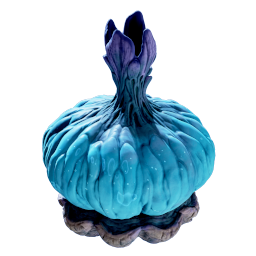
*Tunic aeolian*. A bizarre animal that splits seawater into hydrogen (on which it feeds) and oxygen (which it releases). 1. Tunic Like Earthly tunicates, this is a complex animal with a heart, nerve chord, and a flexible exterior shell (the tunic). 2. Radiolytic metabolism At the heart of the oxygen tunic is a nugget of radioactive metal such as uranium, radium, or thorium. Radiation from this nugget splits water into hydrogen and oxygen through radiolysis. The oxygen tunic retains the hydrogen to feed an internal colony of sulfur-reducing bacteria, and releases the excess oxygen. 3. Blue glow Cherenkov radiation from the core excites radioluminescent pigments in the tunic, producing a distinctive blue glow. This may be a warning to would-be predators that the oxygen tunic releases poisonous quantities of oxygen. 4. Implications for life on this world The oxygen tunic's metabolism suggests that this world has an energetic geology and a biosphere adapted to use radiation as a food source. It also has interesting implications for life without sunlight. On Earth, even deep-sea vents depend on oxygen produced by photosynthesis. No such dependency exists here. Assessment: emergency oxygen source for divers. Beware that repeated use could lead to radon buildup, with serious health risks including cancer.
Veps Defender is fauna catalogued from the current creature data. No combat stat block is attached to this entry, so the wiki profile focuses on the structured habitat and spawn facts available.
Veps Sensor is fauna catalogued from the current creature data. No combat stat block is attached to this entry, so the wiki profile focuses on the structured habitat and spawn facts available.
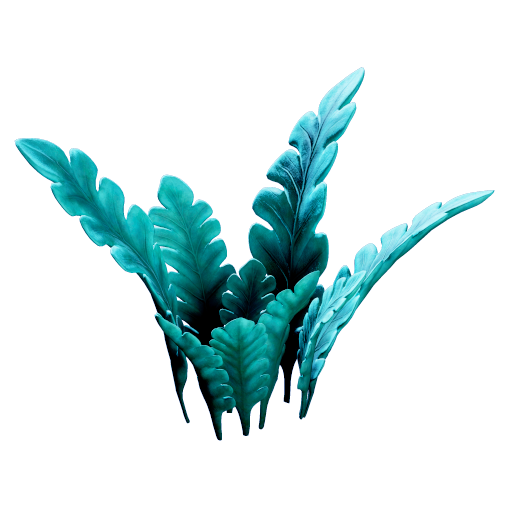
*Ventworm cryocthonian*, the vent worm that brings cold from below. 1. Vent worm The fridge worm's body plan is familiar from terrestrial analogs — a tubular body with a protruding gill. The body hosts a colony of symbiotic bacteria in a chamber called the trophosome ("feeding body"). These bacteria help the worm survive extreme environments. 2. Cold water emitter The cryocthonian lives in colonies along geothermal gradients—from hot to cold. It exploits the flow of energy and minerals through the rock to feed. Colonies pumps deep, cold brine (usually at 4 degrees C) to the worms exposed to hot water, helping regulate their temperature. 3. Sulfur-based metabolism The symbiotic bacteria in the fridge worm feed on sulfur and other dissolved minerals. The fridge worm uses cold deep-sea brine to trigger chemical reactions which help collect minerals from the hot vent water. Assessment: Produces pockets of cold water. May attract life that cannot tolerate the surrounding heat.
Verme-spiga (*Ventworm awn*). Prospera nelle acque calde e ricche di minerali, dove le sue appendici raccolgono idrogeno solforato e altri minerali dall'ambiente. Può sopravvivere a temperature vicine all'ebollizione.