фауна
Все существа: статистика, поведение и среда обитания.
- фауна
- 86
- Хищники
- 23
- сидячий
- 38
- Точки появления
- 11070
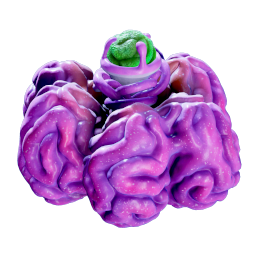
*Raion carbonica*. A colony of worms living inside a shared membrane, probably a sponge. Uses weak acid to digest prey. 1. Raion An organism defined as a sponge occupied by a colony of cloned predatory worms. This sponge is chambered, akin to Earth's extinct sphinctozoans; the chambers grow around a central pump. 2. Pressurized acid The raion's worms secrete weak acid as a digestive factor and defense mechanism. This acid is held under pressure by a plug in the raion's central pump. To avoid unwanted acid release, cut away the chambers before disturbing the central pump. 3. Volcanic origin? The acid raion may have originally evolved near a cold seep or a volcanic caldera. Acid-friendly biochemistry gave it a useful defense mechanism and feeding strategy to colonize other waters. 4. Medical gel The raion's central pump is partially plugged by a mass of worm residue; this keeps the pressure in the chambers high. This residue contains useful clotting factors and broad-spectrum antibiotics. Recommend collection. 5. Problematic genetics Spectrogenetic analysis indicates the host sponge and the resident worms contain partial copies of each others' genomes. This is a biological impossibility on Earth, and suggests that genetic inheritance functions differently on this world. Assessment: useful source of weak acid for batteries. Central plug contains medically relevant gel. Cut away chambers before removing central plug. Consult with your Noetic Advisor system to research optimum search areas.
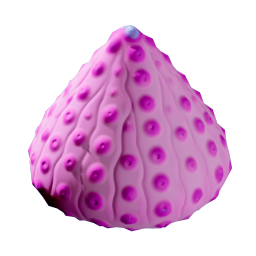
A glowing sponge (tentatively *Symphon aeroshell*) that resembles the cone of a heat shield on atmospheric entry. 1. Predation strategy The aeroshell feeds on microorganisms attracted to light, especially in dark caves where it can be mistaken for the sun. 2. Light source Instead of relying on symbiotic bacteria, the aeroshell generates its own light through oxygen-fueled reactions. This light is piped throughout its tissue by glassy fibers resembling those grown by Earth's glassy sponges - among the longest living animals known. 3. Symbiotic partner Often found associated with shootroots (hard-surfaced starfish-like organisms that burrow into the seafloor). The exact dynamics of the symbiosis are unknown. Await further updates. Assessment: useful light source in dark water. May provide interesting bio-optics reference.
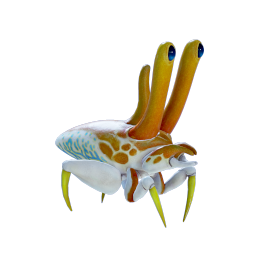
*Ostrakonskelos periskopion*, стебельчатоглазое членистоногое. Социальный донный организм, живущий в симбиозе с морскими стрекающими.
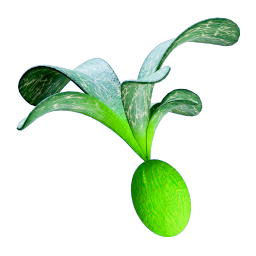
*Rotsac cherimoya*. A tunicate-like animal which collects alcohol from decaying matter to produce a creamy, flavorful mucus. 1. Cherimoya Named for its resemblance to the terrestrial cherimoya fruit (or custard apple). It can be eaten whole or sucked on through a straw; the exterior tunic is soft but the heart, nervous system, and other organs should be spat out. The rotsac contains mercury sulfide, which will eventually accumulate to dangerous levels in the human body. 2. Peculiar metabolism As a rough inverse of the lucifer rotsac, the cherimoya rotsac converts alcohols to sugars rather than decomposing sugars to alcohols. The cherimoya achieves this with a chemical pathway that does not occur on Earth. Aqueous cinnabar provides a source of mercury to oxidize alcohols into simple sugars. The cherimoya has no other behaviors: it simply stores sugars as it grows into a taut, full adult. 3. Symbiotic partner Because of its plentiful stored sugars, the cherimoya is a common symbiotic partner for organisms like the cage gorgon. 4. Enteric reproduction The cherimoya rotsac is gonochoric - either male or female. However, it does not release eggs or sperm into the seawater. Instead, its reproductive cells are eaten by organisms feeding on the cherimoya. They seek out other cherimoya rotsacs' gametes in the digestive tract of the host. The fertilized embryos are then expelled by the host organism, providing them with nutritious waste to bootstrap their growth. Assessment: edible. Your digestive tract may briefly become pregnant.
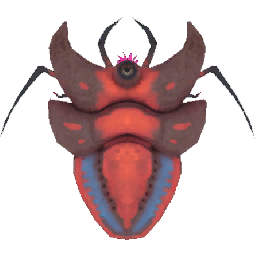
Багровые креветки — пассивная фауна, занесенная в каталог Коралловых садов. В текущих записях указано 5 подтвержденных точек появления в 1 биоме, в пределах Главной зоны, с центром кластера около -3538/4267/-46. К этой пассивной записи не прилагается никакой боевой статистики, поэтому профиль вики фокусируется на размещении мест обитания, наблюдениях за появлением и классификации угроз.
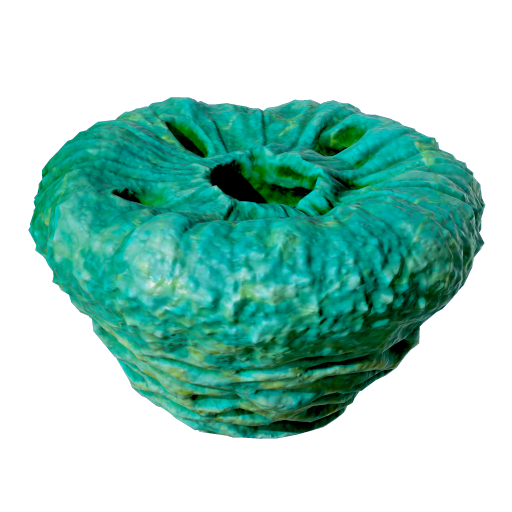
Donut of worms (tentatively *Raion donut*) without visible worms. 1. Normal state Just as terrestrial corals contain photosynthetic partners called zooxanthella, the donut contains a population of predatory worms. 2. Disturbed state Just as terrestrial corals sometimes expel their partners when under stress, this donut raion has discharged or killed its population of worms. (Alternatively, they have left in search of a better host.) This may be a reproductive strategy, a defensive reaction to the worms turning on and feeding upon the sponge, or a response to environmental stress. Assessment: unclear how long the donut can survive without its primary food supply. Terrestrial corals survive only days to weeks after bleaching.
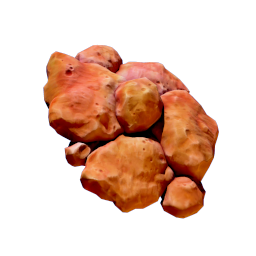
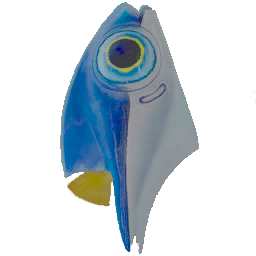
Рыбий косяк Flutter Tail — это пассивная фауна, занесенная в каталоги «Колонистский бункер», «Коралловые сады», «Кладбище» и еще 3. Текущие записи включают 213 подтвержденных точек появления в 6 биомах, в Default Devmap, Main, PCG Zoo и еще в 2 зонах, с центром кластера около -1906/2502/-26. К этой пассивной записи не прилагается никакой боевой статистики, поэтому профиль вики фокусируется на размещении мест обитания, наблюдениях за появлением и классификации угроз.
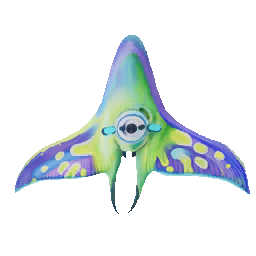
Рыбий косяк Mirrorhalfmoon — это пассивная фауна, каталогизированная в Бункере колонистов, Коралловых садах, Плато и еще 1. В списке текущих рекордов 186 подтвержденных точек появления в 4 биомах, на карте разработчика по умолчанию, в Gameplayzoo Stimuli, в основной и еще в 3 зонах, с центром кластера в районе -1628/2060/-20. К этой пассивной записи не прилагается никакой боевой статистики, поэтому профиль вики фокусируется на размещении мест обитания, наблюдениях за появлением и классификации угроз.
Giant Tube Salp is fauna catalogued from the current creature data. No combat stat block is attached to this entry, so the wiki profile focuses on the structured habitat and spawn facts available.
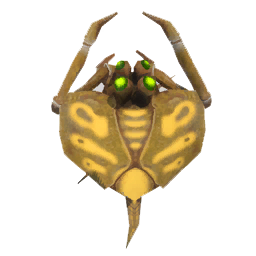
Саранча — это пассивная фауна, занесенная в руины Аксума, Коралловые сады, кладбище и еще 1 место. Текущие записи включают 137 подтвержденных точек появления в 4 биомах в пределах Главной зоны, с центром кластера около -2908/4516/-147. К этой пассивной записи не прилагается никакой боевой статистики, поэтому профиль вики фокусируется на размещении мест обитания, наблюдениях за появлением и классификации угроз.

Tentatively *Rotsac lucifer*, the light-bringing rotsac. A tunicate-like animal which ferments decomposing biomatter inside its body. 1. Hidden body The rotsac's larval swimming body transforms into a spherical adult form. Because fermentation does not require oxygen, the rotsac actually stops breathing as it matures. 2. Swollen with hydrocarbons The rotsac contains isoprene, useful for fabricating rubber and lubricant. High diacetyl levels give the rotsac a strong caramel funk. 3. Bioluminescence Glow may attract animals (especially sun-seeking microorganisms) to defecate or die on the rotsac. Bioluminescence seems to play an important role in this world's ecology. Regular experiments with light reactions are advised. 4. Symbiote Often found glued to the cradle shootroot, an unrelated species of starfish-like bottom-dweller that provides the rotsac with an anchor while it grows. Assessment: useful source of organic polymers for rubber and oil. Consult your Noetic Advisor to research optimal search areas.
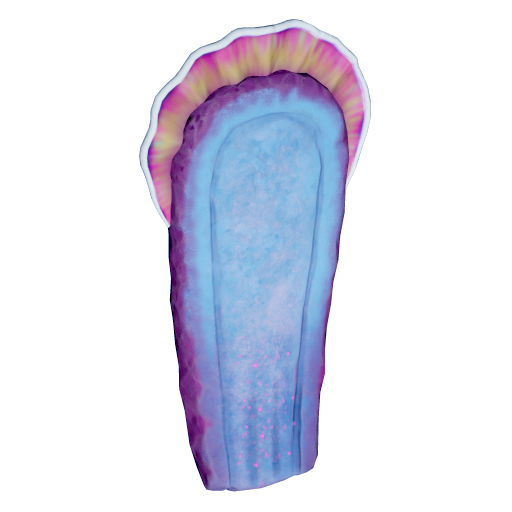
*Symphon macaron*. A sponge that has developed a disc of flagellated feeding cells. Named for the dessert sandwich cookie (not available in current fabricator settings). 1. Hardened plates Instead of a sponge's normal inner and outer layers, the macaron develops two hard plates of pinacoderm. These anchor the feeding disc to a holdfast. 2. Feeding disc The sponge's mesohyl (internal jelly) has specialized into feeding disc, with tentacled cells that pull particles from the surrounding seawater. This leaves the delicate jelly vulnerable to predators and parasites. 3. Hostage exchange The feeding disc hosts the larvae of sponge-eating organisms in its pores. By providing a shelter and habitat for their young, the macaron may buy itself a degree of safety and defense. (These larvae are themselves tempting prey for many species.) 4. Unusual protein expression Many of the cells in the feeding disc express proteins also found in the hosted larvae. This may be a recognition signal to attract the desired species. ASSESSMENT: Inedible despite name. Await further updates.

*Mango kestros* («метающая дротики акула»). Территориальный хищник, выстреливающий клыками с урановыми наконечниками со скоростью до двадцати метров в секунду.
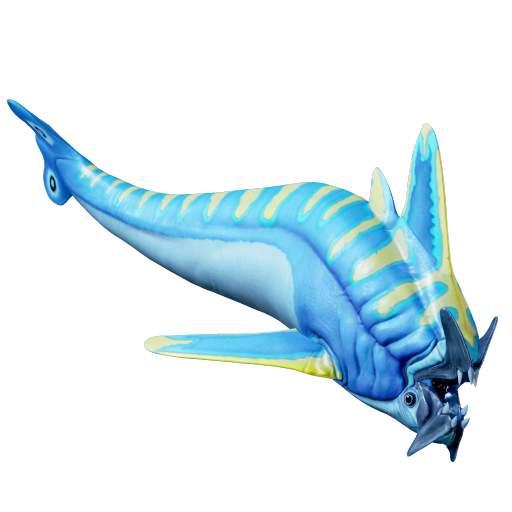
Акула-ниблер — это крупная хищная фауна, занесенная в каталоги Колонистского бункера, Коралловых садов, Плато и еще одного места. В текущих записях указано 13 подтвержденных точек появления в 4 биомах в пределах Главной зоны, с центром кластера около -3348/4197/-29. Записанная настройка существа включает 100 HP и максимальную скорость плавания 500. Данные о движении содержат 8 строк поведения.

Scourge Hive is fauna catalogued from the current creature data. No combat stat block is attached to this entry, so the wiki profile focuses on the structured habitat and spawn facts available.
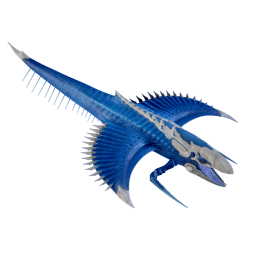
*Skythopterygion atropos* («беспощадный губитель с серповидными плавниками»). Самец диморфного вида плотоядных левиафанов, обитающих в открытой воде и нападающих стаями.
Snorkleback (Adult) is fauna catalogued from the current creature data. No combat stat block is attached to this entry, so the wiki profile focuses on the structured habitat and spawn facts available.
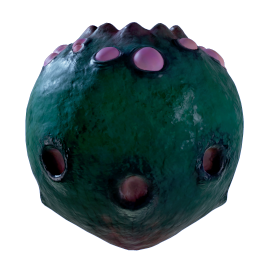
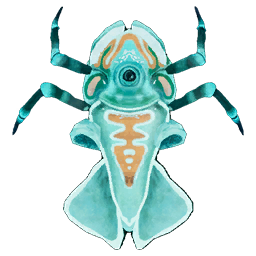
Бирюзовый циклоплет — пассивная фауна, занесенная в каталог Коралловых садов. В текущих записях указано 29 подтвержденных точек появления в 1 биоме, в пределах Главной зоны, с центром кластера около -3462/3982/-49. К этой пассивной записи не прилагается никакой боевой статистики, поэтому профиль вики фокусируется на размещении мест обитания, наблюдениях за появлением и классификации угроз.
The titan-class organism on the eastern horizon pushes the boundaries of planetbound life.
*Mango kestros* («метающая дротики акула»). Территориальный хищник, выстреливающий клыками с урановыми наконечниками со скоростью до двадцати метров в секунду.
Акула-кусач (предлагаемое название: *Mango tructa*). Надоедливая всеядная хрящевая рыба, приспособившаяся к питанию отбросами. С готовностью хватает всё подряд: рыб, губок, водоросли, конечности ныряльщиков.
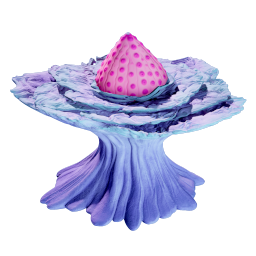
*Shootroot cabbage*. A robust bottom-dwelling organism anatomically similar to a plastic starfish, or to an opened variety of Earth's extinct blastoids. 1. Animal anatomy The cabbage shootroot's upwards-facing mouth is surrounded by outstretched arms. These arms are hard, tightly grouped, partly calcified, and covered in a tough biopolymer characteristic of other shootroots (tentative name: polyproteovinyl). These arms produce the cabbage-leaf texture that gives the shootroot its name. 2. Seabed burrowing A second set of arms uses ribbons of the same tough biopolymer to dig into the seabed, stirring up sediment and expanding cracks in rock. This is a difficult and metabolically expensive process, but it is a niche with little competition. 3. Symbiote kiss The cabbage shootroot does not use its mouth to eat, or its hard leaflike arms to feed. These surfaces seem to be reserved for a symbiotic partner. The cabbage shootroot uses its mouth to transfer nutrients gathered by its roots to the symbiote, and to receive a trickle of food or chemistry in exchange. 4. Circular nerve cord Like all shootroots, the cabbage shootroot is notable for its expression of a circular nerve cord. Assessment: do not sit. You may receive nutrients.
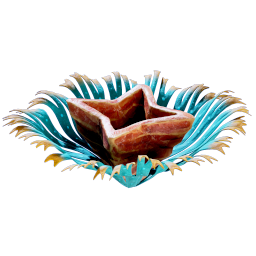
A basket-shaped organism (tentatively *shootroot cunabulum*) with no clear Earthly analog. Anatomically similar to a plastic starfish, or to an opened variety of Earth's extinct blastoids. 1. Animal anatomy The flattened, fibrous 'leaves' are the arms of an animal loaded with photosynthetic symbiotes. The central structure houses a digestive system and a hard, sticky cradle (the cunabulum). A second ring of arms grows into the seabed, seeking crevices in the rock. 2. Preferred symbiote The cradle is an exchange site with a symbiotic partner (such as the lucifer rotsac). Spectrogenetic analysis suggests the cradle shootroot is younger than the rotsac. It may have originally parasitized free-floating lucifer rotsacs, before evolving a niche as an anchor: providing a refuge and minerals to the rotsac in exchange for a share of the rotsac's fermented food. 3. Plastic fibers Although it lacks the true cell walls of Earth plants, the cradle shootroot strengthens its tissues with bioplastic fibers. Too tough to cut by hand, they could be severed by a cutting tool. Assessment: tough fibers could be used to synthesize fabric, possibly food.
*Mephit ceryneian.* A stack of cloned clams adapted to life in very hot water. The central stalk that connects them appears to be a symbiotic worm worm worm worm worm 1. Clamclone Clam stack clone stack! Jelly lei like. Connect on worm like coins on spindle. Monitoring PDA bad output. 2. Genderstack All clone female. Worm forms antlers: emit male cell. Why worm help clam? No more worm. Worm taken over by clam cancer. 3. Hot hot hot! Clams evolve shut forever. Too hot! Never open...but then starve? A ha, eat with tissue fans, withdraw if nibble burn. Starvation solved. 4. Namepun Stack sounds like stag and stack has antlers and stag has antlers. Stagged. Name for hot water living clam? Mephit. Stagged mephit. Assessment: bad output stop.
Veps Defender is fauna catalogued from the current creature data. No combat stat block is attached to this entry, so the wiki profile focuses on the structured habitat and spawn facts available.
Veps Sensor is fauna catalogued from the current creature data. No combat stat block is attached to this entry, so the wiki profile focuses on the structured habitat and spawn facts available.
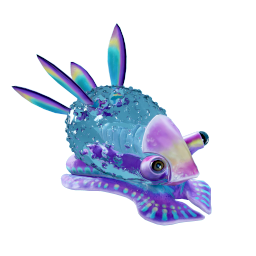
Водный слизень (предлагаемое название: *Marilimax hydroclast*). Животное-загадка, преобразующее морскую воду в питьевую пресную. 1. Микробный топливный элемент Удаление соли из морской воды – энергозатратный процесс. Тем не менее, водный слизень осуществляет его – возможно, как побочный эффект работы внутреннего реактора из микробов, питающихся отходами в морской воде. 2. Источник пресной воды Гидрофобный пластиковый «мешок» защищает водного слизня от обезвоживания через контакт с солёной морской водой. 3. Ферма планктона В мешке с водой обитает чрезвычайно плодовитый планктон, преобразующий свет в пищу. Запас пресной воды, возможно, нужен для самой реакции – либо же он служит для планктона тюрьмой, не позволяя покинуть хозяина. 4. Вампирские атрибуты Развитой клюв водного слизня снабжён острой режущей поверхностью. Возможно, что предки водного слизня были паразитам или комменсалами: отсасывали кровь хозяина и фильтровали из неё токсины. Оценка: Единственный легкодоступный источник пресной воды. Перед употреблением рекомендуется обрабатывать в изготовителе. В случае развития проблем с почками можете предложить водному слизню попить у вас кровь.
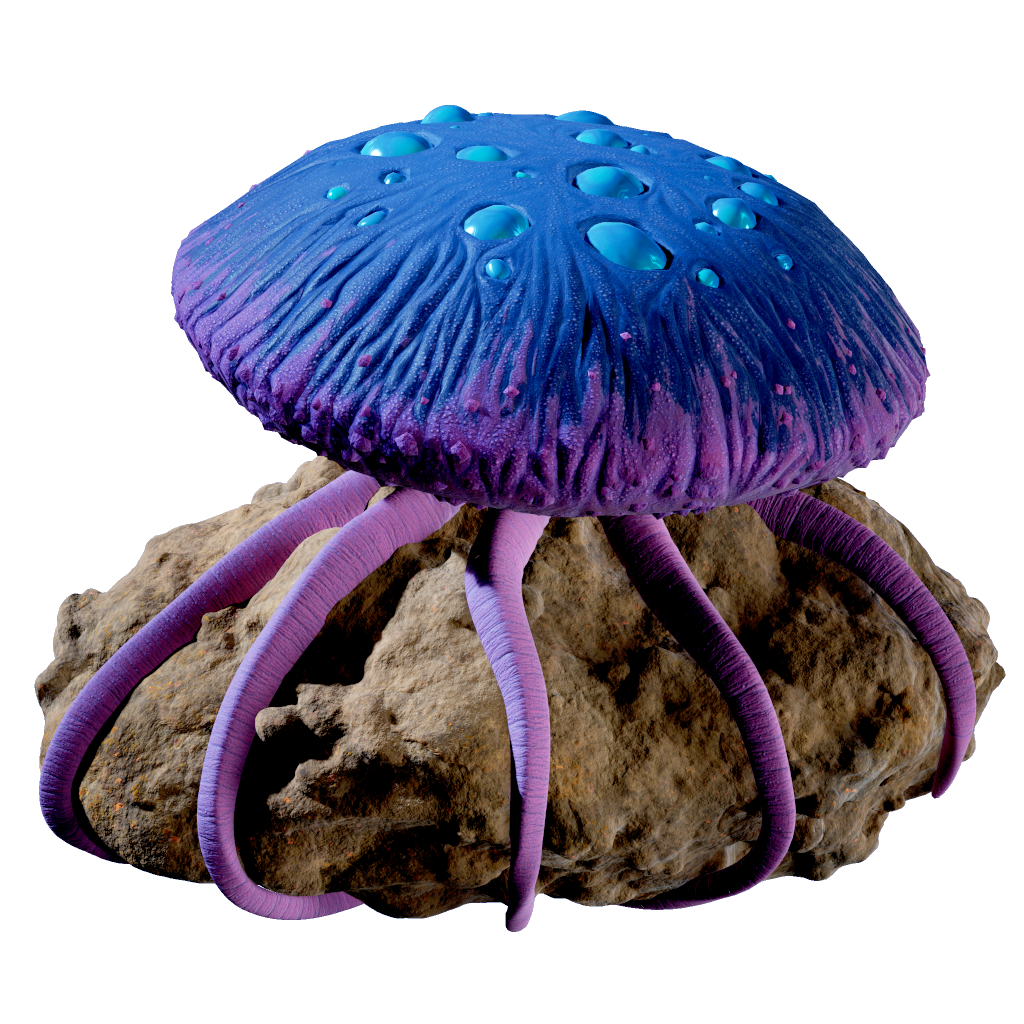
*Dactylbrachia gigas* («гигантская десятипалая медуза»). Массивный вид, не имеющий земных аналогов.
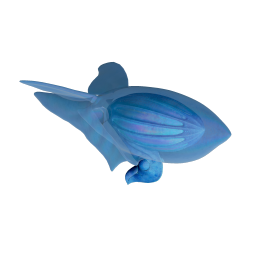
*Hycean hycean*, крайне необычный летучий хищник, получивший имя в честь планет с океаном и водородной атмосферой.
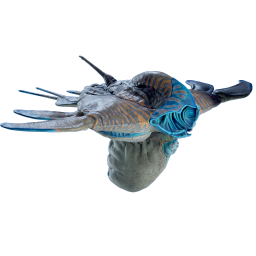
*Titanotagmatapterya amalthea*, жесткокрылый исполинский кормилец всего и вся. Огромный членистоногий левиафан с мощным разрывающим клювом и жировыми отложениями, которые образованы как для пропитания, так и для защиты икры.
Noon gorgon (tentatively *Gorgonian meridiem).* A predatory soft coral that lures prey by mimicking the sun in the dark. The brightest noon gorgon in a cave will attract the majority of the prey, creating an arms race to be as bright as possible. Noon gorgons feed much of their energy to their symbiotic light-producing lucifer rotsac. The ancestral noon gorgon may have evolved to grow towards or around lucifer rotsacs, using them as bait. Eventually, a symbiotic partnership developed. Expect noon gorgons to modify their spectrum in different depths and biomes.
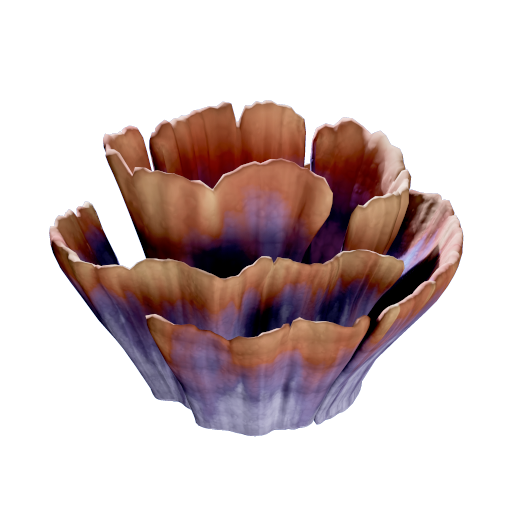
*Gorgon aulaia*. A soft, predatory coral akin to Earth's gorgonians, especially the Venus fan. 1. Sponge-coral moiety Like Earth's brown tube sponges (*Agelas schmidti*), soft corals on this world are a colony of coral polyps growing within a matrix of sponge tissue. In this specimen it is very difficult to distinguish the sponge's jellylike inner tissue (or mesohyl) from the soft coenenchyme which connects the coral polyps. 2. Ribbons of tissue The curtain gorgon forms a long, low-lying fan of tissue which catches prey. The curtain gorgon is an obligate predator and cannot survive on sunlight, but some specimens are colonized by chemotrophic bacteria which may provide the gorgon with extra energy. 3. Plasticized skeleton The gorgon's skeleton is chemically similar to PVC (polyvinyl chloride, an obsolete industrial plastic). Assessment: indicates the presence of plankton and other small sea life.
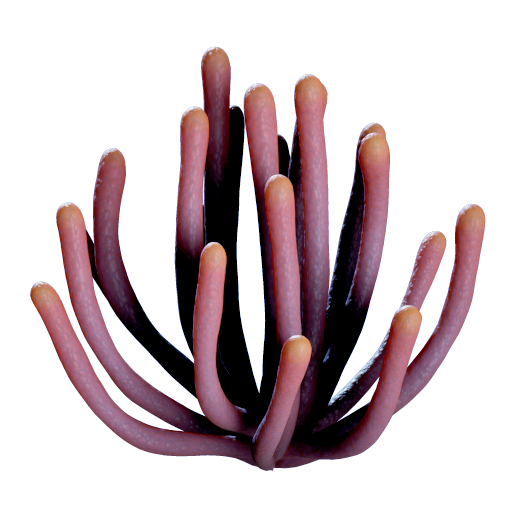
*Gorgon Kryphakous* or Listening Gorgon. A soft coral with dull olive filaments. A predatory filter feeder that sways with the current like kelp. Not known to be hostile or harmful to humans, but remains under observation (see notes below). 1. Sound sensitive Dissecting the Listening Gorgon's basal filaments reveals a web of vibration-sensitive cilia hidden in its soft, gelatinous core. These can detect movement through water at resolutions not seen except in the airflow sensors of clip-winged gnats on Kepler-22b - enough to pick up the swish of a tail through miles of water. 2. Reactive orientation At first the listening gorgon appeared inert, but its movement is simply too slow to be perceived. It has been observed to orient itself over time to specific low-frequency vibrations. It will do this even if food is less abundant in that direction. 3. Silent. The Gorgon kryphakous has no vibration-producing organs. It emits no detectable signals - no chemical plumes nor bioluminescence. It is essentially silent across all known communication spectra. ASSESSMENT: Requires further analysis. One leading hypothesis suggests that the Listening Gorgon once tracked the low-frequency vibrations of a massive, slow-moving marine species - now possibly extinct, or still undetected in the deeper zones of Proteus’s oceans. If so, the open question is whether this trait evolved in response to an ecological partner... or a threat
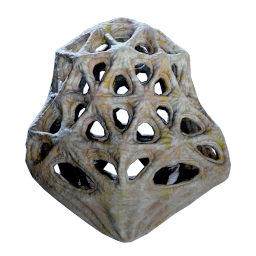
*Gorgon thalamiskos*. A predatory soft coral named for its resemblance to Earth's gorgonians. 1. Sponge-coral moiety Like hard corals on this world, gorgons are sponges inhabited by cnidarian polyps — tiny jellyfish like organisms which live within the sponge and direct its growth. Unlike hard corals, they do not produce a limestone structure or host photosynthetic microbes. They are pure predators. 2. Caged friend The cage gorgon specializes in capturing and protecting a symbiotic partner, which attracts prey for the gorgon to sting and eat. The cage gorgon larva probably adheres to a partner (such as a cherimoya rotsac) and then grows around it, eventually fastening the partner to the seafloor. 3. Duplex larva The free-swimming reproductive stage of the cage gorgon carries cells of a host sponge, like seeds. These seeds are genetically distinct from other sponges in the ecosystem, suggesting the cage gorgon is monogamous with only a single host sponge. Assessment: cutting open the cage gorgon allows access to the symbiotic partner and carries no risk of inflicting pain or suffering. The cage may attract a new partner before healing, or survive while empty.
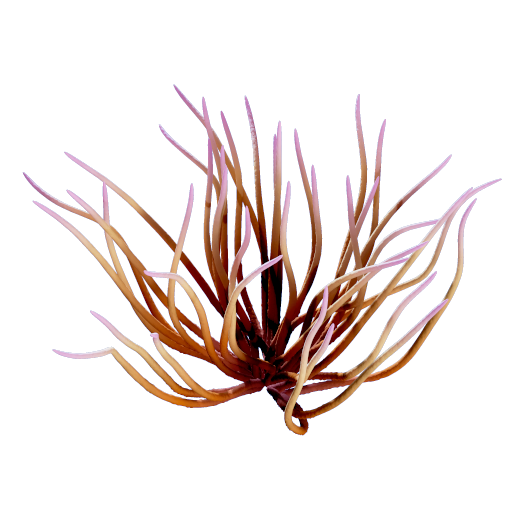
*Gorgon mastix*, the whip gorgon. A soft coral similar to the earthly gorgonians — it lacks the hard limestone shell of a true reefbuilding coral. 1. Earthly namesake Named for the extinct *Leptogorgia virulata*, Earth's sea whip. Like the sea whip it is a predator, and it must defend its soft body from parasites and predation. 2. Spine defenses Unlike the terrestrial sea whip, which developed a chemical arsenal to repel unwanted contact, the whip gorgon colony has developed specialized 'soldier' polyps which migrate to the surface and develop a brittle spine. When disturbed, this spine snaps off, releasing the soldier's payload of toxins. It is impossible to project the effects of this sting on colonists, but mechanical similarities to the infamous Australian gympie-gympie plant suggest negative outcomes ranging from chronic agony to total sleep deprivation lasting weeks to years. 3. Carnivorous diet 'Civilian' polyps in the whip gorgon use their stings to kill and digest microscopic prey. They lack the brittle spine and powerful toxins of the soldier polyp. ASSESSMENT: Avoid contact. Consider pruning back with hand tools.
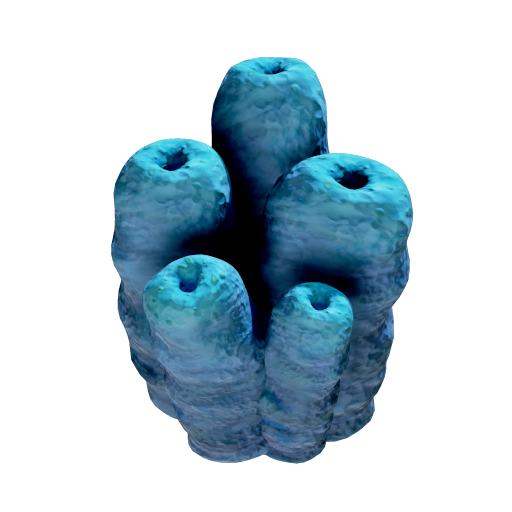
A hateful and malicious sponge. Assessing PDA neural temperature. Reducing output subjectivity. *Symphon achlys*, sponge of dying mist. A dangerous semi-predatory sponge that acts as the central node in a necrobiome. 1. Bacterial arsenal Sponges cultivate bacteria which secrete helpful chemicals. At some point in its history the toxic sponge was infected by a bacterial symbiote which generated a powerful antibiotic (akin to the human Streptomyces). The bacterium used this antibiotic to extinguish competition, then began an internal power struggle to evolve compounds that could destroy rival strains of its own species. The result is a sponge flush with an antibiotic so concentrated it causes skin burns and nerve damage. 2. Touch based hunting strategy When brushed, the sponge contracts sharply, expelling a cloud of antibiotic toxin. Microorganisms are killed, and larger species may enter convulsions and die nearby. The dead matter decomposes, releasing nutrients upon which the sponge feeds. 3. Animal gene fragments The toxic sponge's genetic code contains fragment of an animal genome: likely a crustacean. Assessment: avoid. Keep medical supplies on hand to treat chemical burns and nerve damage.
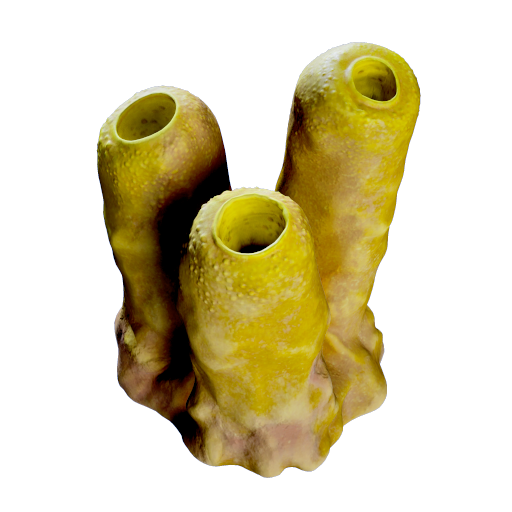
Журнал Наимы. Последний из великих землян шутил, что Создатель, видимо, обожает звёзды и жуков, потому что сотворил их великое множество. С тех пор прошло две сотни лет. Мы открыли массу инопланетных видов. И что бы вы думали? Среди них почти не было жуков! Прости, Чарльз. Хотя у твоего Создателя по-прежнему есть любимчики: везде, где Он творит жизнь, всё начинается с губок.
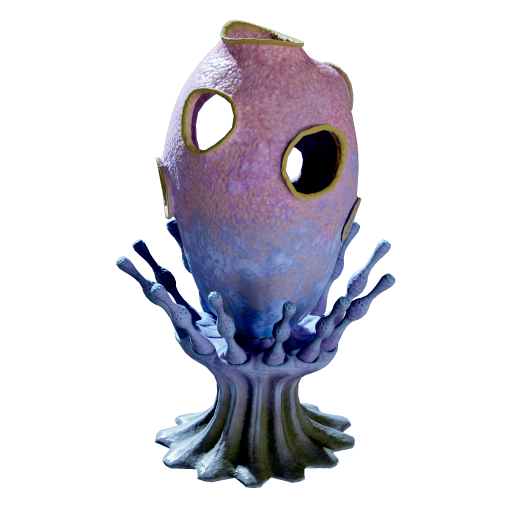
*Symphon amphora*. A sponge adapted to colonize — and create — air pockets. 1. Amphora-shaped structure Like all sponges, the amphora requires constant flow through its pores to survive, but it pumps air rather than water. Contraction and expansion forces moist air through the sponge's pores. Absorbent surfaces harvest water and carbon dioxide from the air. Waxy coating helps prevent water loss. 2. Radiolytic metabolism The soft blue glow of the sponge is bioluminescence fueled by radioactive minerals in the sponge's vanes (the structures growing from the anchoring rhizoid). This radiation splits water into hydrogen and oxygen. The gases gather in the cave ceilings the amphora prefers to colonize, creating pockets of knallgass (unmixed hydrogen and oxygen). Though breathable, this air is highly flammable and an explosion risk. The sponge's symbiotic bacteria feed on the hydrogen and oxygen, producing energy and water. The sponge uses this energy to fix carbon from the air and grow, as an Earth plant would. Assessment: a remarkable step. The amphora sponge may evolve an entire lineage of dry-land sponges, colonizing niches filled by plants and fungi on Earth. Indicates the presence of an air pocket. Swim up to breathe. Do not ignite flares or discharge electrical devices in the pocket.
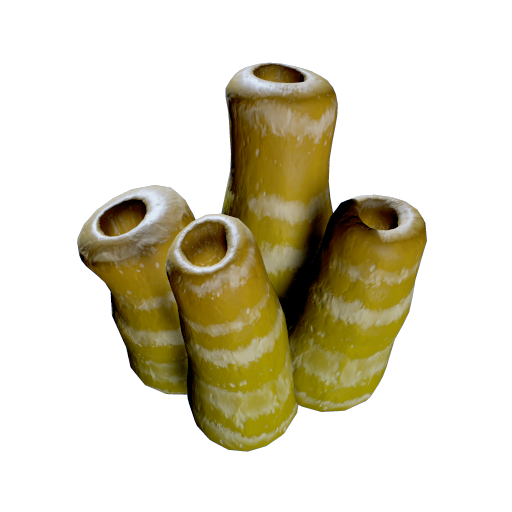
*Symphon apokalupsis*. An unassuming button-shaped sponge that may be an omen of mass extinction. 1. Simplicity Among the earliest animal forms on Earth, sponges are a group of cells that live between two membranes and work together to pump water. Sponges on this world are similarly elegant. 2. Tolerance Due to this simplicity, sponges tolerate low oxygen and high temperatures better than many other organisms. They also benefit from elevated death rates, which floods the water with decaying matter. 3. Role in mass extinction Biospheres dominated by sponges may be an indicator of a recent or ongoing mass extinction. After Earth's first major die-off during the Ordovician period, some 85% of species went extinct, leaving a world ruled by sponges. The popular existential terror franchise "Life Is Only Pulse" is set in a fictionalized version of this time period. Assessment: possibly a warning sign of planetwide ecological collapse. Possibly not.
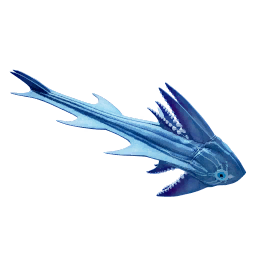
*Sitaroides gemini* («двойной скат, напоминающий ситар»). Охотящийся с помощью электричества глубоководный хищник, вследствие нарушения экологического равновесия вытесненный ближе к поверхности.

Джорди (предлагаемое название: *Salpapod geordie*). Всеядное существо, напоминающее осьминога с костями и передвигающееся при помощи реактивной тяги. 1. Рот-тёрка Твёрдые челюсти джорди способны соскребать водоросли со скал, перемалывать мелких ракообразных, выковыривать фрагменты кораллов и обгрызать бурые водоросли. 2. Четыре плавника Плавники джорди, возможно, являются видоизменёнными конечностями. Они направляют движения джорди и вмещают в себе четыре его желудка. 3. Дивертикулярные желудки Каждая конечность-плавник содержит внутри пищеварительный мешок с бактериями, специализированными на той или иной части многообразного рациона питания джорди. Двигая плавниками при движении, джорди перемешивает и переваривает в них пищу. 4. Центральная воронка Стенки этого канала выстланы стрекающими клетками, способными убивать морскую фауну; не пробуйте залезть туда пальцем. Сокращения мышц этого канала выталкивают из воронки воду, создавая реактивную тягу. 5. Бубликообразный «спинной мозг» Нервный шнур джорди имеет форму бублика и обёрнут вокруг центральной воронки. Тороидальное строение мозга сообщать более крупным видам любопытные свойства. Оценка: джорди съедобны, хотя и напичканы металлами и восками. Рекомендована тщательная обработка в изготовителе.
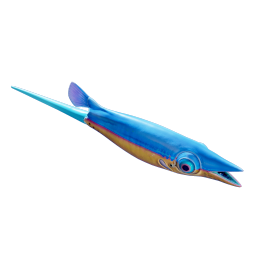
Съедобная, но не очень сытная рыба. Её трудно поймать из-за уникального пропульсионного способа передвижения.
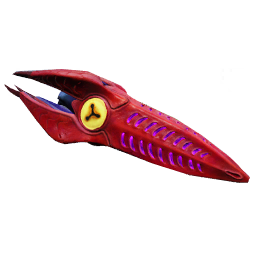
Высокомобильный стайный хищник, обитающий в пещерах и охотящийся на виды, избравшие в качестве стратегии привлечения самок/самцов биолюминесценцию. Охотится, ориентируясь на свет и звук. Не входит в билд EA1
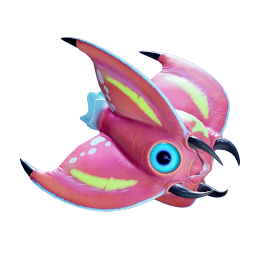
Клыкач (предлагаемое название: *Salpapod tetragnatha*). Хищный родственный вид либо морфа джорди обыкновенного. 1. Сходства с джорди Строение тела похоже на джорди, однако вместо рта-тёрки имеет четыре острых клыка. 2. Хищник Клыкач вгрызается в мясо жертв, чтобы питаться кровью и сывороткой, после чего от него нелегко избавиться, не нанеся жертве дополнительных ран. Как вариант, клыкача можно попытаться заставить самого отпустить жертву при помощи света или жара. 3. «Вампирский» фермент Специальный антикоагулянт не даёт крови жертвы сворачиваться – примерно как дракулин, впрыскиваемый земными летучими мышами-вампирами. По составу идентичен содержащемуся в водном слизне. Возможно, переносится ретровирусом. 4. Переизбыток особей Клыкачи оказывают на локальные экосистемы непропорционально высокую нагрузку, что даёт основания предполагать уменьшение поголовья или полное исчезновение особей, прежде регулировавших их численность. Альтернативная гипотеза: клыкачи – другая фаза джорди, вынужденных искать иные формы пропитания. Оценка: впившийся надолго клыкач может вызвать тяжёлую или даже смертельную степень обезвоживания. Постарайтесь найти наиболее нетравматичный способ его отцепить. Предложение: попробуйте убирать клыкачей с других организмов и смотрите, не вызовет ли это социальной реакции.
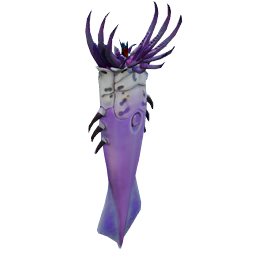
Молодь песчаного копья — крупная хищная фауна, занесенная в каталоги Руин Аксума, Коралловых садов, Заросших руин и еще 1. В текущих записях указано 20 подтвержденных точек появления в 4 биомах в пределах Главной зоны, с центром кластера около -2899/4209/-102. Записанная настройка существа включает 1000 HP и максимальную скорость плавания 500. Данные о движении содержат 6 строк поведения.
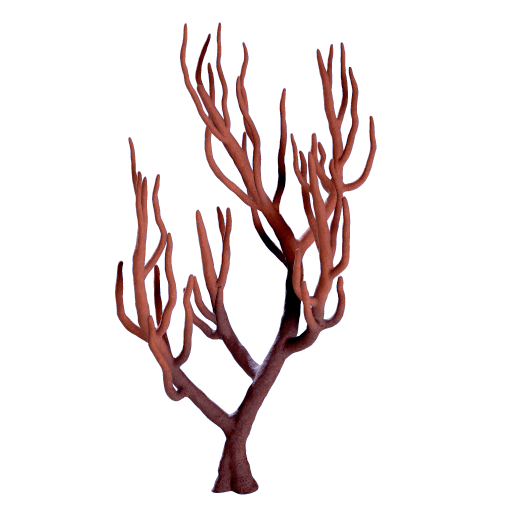
Журнал Наимы. Это типичный протейский коралл, но по *земным* меркам он нетипичен. Ну да, морфология напоминает вымершие виды Acropora, но внутреннее устройство... Наши кораллы – это, в сущности, крошечные медузы, строящие каменные дома. На Протее же они, скорее всего, вселились в уже готовый дом – губку. Они жили в порах и платили губке «ренту», защищая её и чистя. В конце концов некоторые губки покрылись каменистой оболочкой – как наши Sclerospongiae. Если я права, то мы встретим на Протее и другие пары коралл-губка, основанные на других принципах и встроившиеся каждая в свою экологическую нишу. Важнее другое: что за чертовщина происходит у них с ДНК?
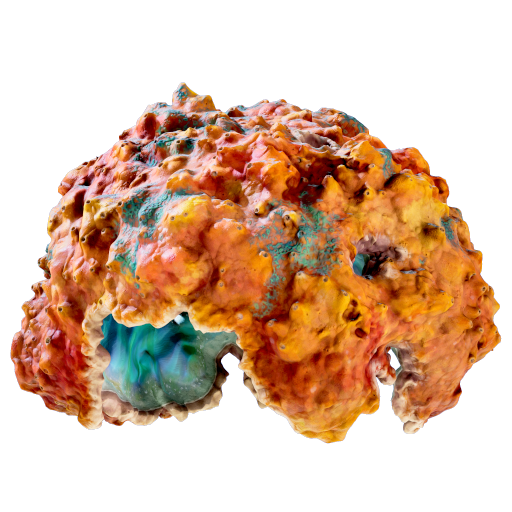
*Coral geodesica*. The defining feature of its shallow biome. 1. Coral analog Like Earthly coral, the dome is a colony of polyps, small jellyfish-like animals that secrete a limestone skeleton. This process uses dissolved carbon dioxide from the seawater: corals are therefore an important method of climate regulation, since they transform atmospheric carbon into hard limestone. 2. Dual feeding strategy The dome's outer surface feeds on sunlight, using photosynthetic symbiotes known as zooxanthellae. As the dome grows, the colony clears its interior, recycling the limestone for reuse. Polyps on the inside of the dome hunt with stinging tentacles. 3. Mineral expulsion As the dome grows, it collects and expels mineral waste, creating nodes of quartz. 4. Critical ecosystem element The dome corals help regulate global climate and provide a breakwater, reducing erosion in their shallow surroundings. The domes capture nutritious sediments from sea currents. Pioneers should prioritize a survey of coral health. Assessment: critical source of quartz. Vital to the local ecosystem.
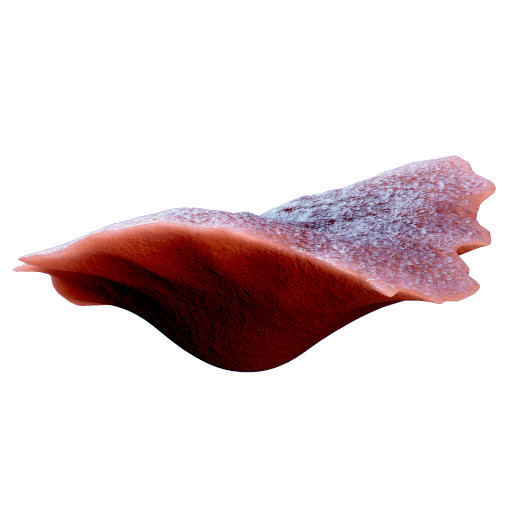
Твёрдый коралл, часто растущий на выходах гидротермальных источников. Использует перепад температур между подошвой и верхним кончиком для запуска метаболических процессов.
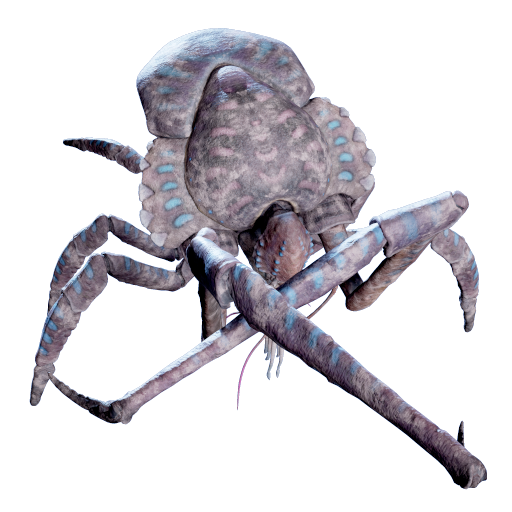
Гигантское ракообразное (предлагаемое название: *Ostrakonskelos anaktoraphore*, «жёстконогий носитель чертога»), маскирующееся среди коралловых куполов. 1. Крабообразное туловище Передние конечности вскапывают грунт в поисках пищи, подбираемой затем расположенными у рта более гибкими максиллами (пищевыми конечностями). Рост происходит путём линьки. 2. Коралловый купол Живой коралловый купол, срезанный со дна и помещённый на спину. Он обеспечивает своему хозяину маскировку, защиту, а также, возможно, полость для выращивания детёнышей. Носят ли крабы всю жизнь один и тот же купол или меняют их по мере роста? 3. Предполагаемый хищник Мощная защита и особенности поведения позволяют предположить существование хищника, обладающего достаточной силой и ловкостью, чтобы выковырять краба из его купола и расколоть крепкий панцирь. 4. Вирусная активность Геном кораллового краба содержит множественные протяжённые вставки ретровируса, в т.ч. управляющие факторами роста нервных клеток и пигментацией панциря. Анализ по методу молекулярных часов указывает на то, что это – относительно позднее изменение. Клетки на спинке панциря краба содержат многочисленные заимствования из генома полипов кораллового купола. 5. Крупный мозг Спинномозговой шнур у кораллового краба отсутствует. Массивный мозг, расположенный над глазами, отвечает за органы чувств и планирование. Ногами и пищеварительной системой управляет дополнительный нервный узел. 6. Придонная коммуникация Коралловые крабы обмениваются сигналами, барабаня по дну. Пощёлкивание клешней, скорее всего, указывает на нервное возбуждение. Некоторые виды земных крабов специально выискивают самок для спаривания в период перед линькой (в обиходе это называют «держатся за руки»). Наличие на этой планете схожего поведения наверняка принесёт наблюдателю чувство удовлетворения. 7. Признаки экологического стресса Случаи нехватки минералов и грибковые инфекции указывают на наличие неблагоприятно воздействующих на окружающую среду факторов. Оценка: потенциальный источник донных ресурсов. По уровню развития интеллекта сравнимы как минимум с гориллами. Наверняка боятся вас больше, чем вы их. Рекомендовано осторожное и уважительное поведение. Предложение: пронаблюдать, кормит ли краб свой купол, посещая хорошо освещённые или богатые питательными веществами участки дна.
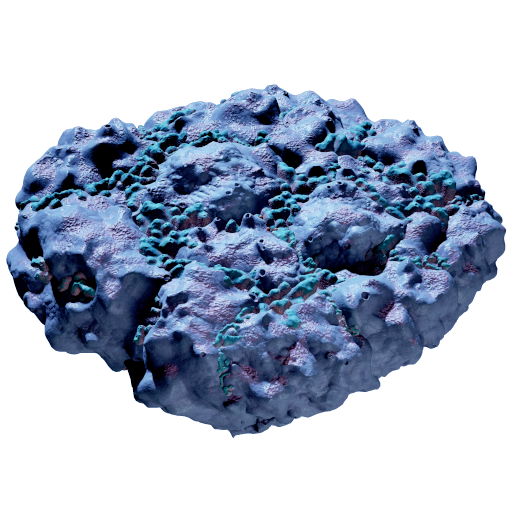
*Sporal psephos*. A moiety (two paired species) of a sponge and a coral. Possibly a single chimeric organism. 1. Reefbuilding Reefbuilding on this world seems to be carried out by a range of sponge-coral pairings. In hard corals, the sponge has lost its ability to feed independently and provides a hard shell for the corals. In this organism, the relationship is reversed: the coral polyps grow a hard surface shell, while the sponges continue to pump water. Because the hard shell blocks the sponges' pores, they work in pairs, with one inhaling through its osculum and one exhaling. 2. Dome coral association Frequently found on the surface of the larger dome coral, blocking patches of its surface from receiving sunlight. This may be an opportunistic/parasitic relationship. 3. Confusing genetics Both coral polyps and sponge cells seem to carry the full genome of both organisms, blurring the definition of a species. It is unknown how a single organism can contain genomes for two biologically distinct species; the two cannot reproduce sexually to combine their genes. Assessment: interesting data point.
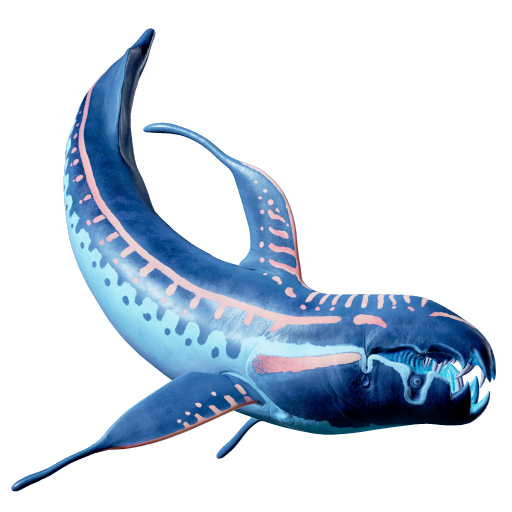
Костолом (предлагаемое название: *Mango medullictis*).
Marrowbreach Giant — это пассивная фауна, занесенная в каталог на Graveyard. Текущие записи включают 1 подтвержденную точку появления в 1 биоме, в пределах Главной зоны, с центром кластера около -2919/4469/-68. К этой пассивной записи не прилагается никакой боевой статистики, поэтому профиль вики фокусируется на размещении мест обитания, наблюдениях за появлением и классификации угроз.
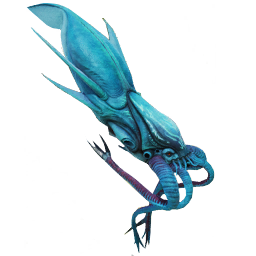
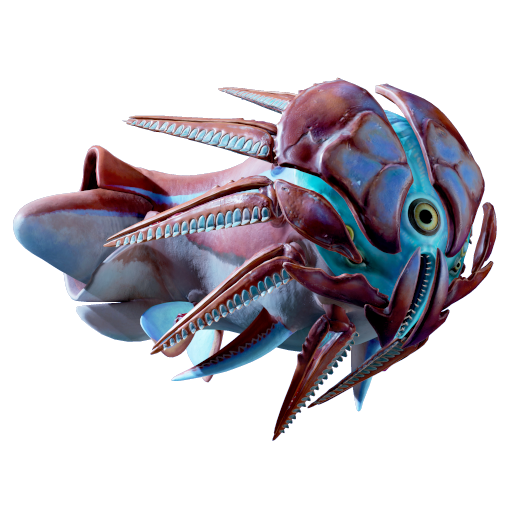
Гигантский головоногий хищник (предлагаемое название: *Tyrannoteuthis phobocoeus*, «страшно любознательный кальмар-тиран»). Охотится на бронированную, хорошо защищённую добычу. Ведёт обособленный образ жизни, однако обладает высокоразвитым интеллектом. Предполагаемое место обитания: глубоководье. 1. Кальмарообразное строение тела Анатомически собиратель похож на земных кальмаров: длинная голова и множественные крепящиеся прямо к ней щупальца. Голова покрыта пластифицированной бронёй. В отличие от земных кальмаров, у собирателя имеются четыре подвижных длинных щупальца с когтями, которые он использует для охоты, и восемь более коротких «рук», расположенных в районе клюва. 2. Мощное реактивное движение Два больших сифона собирателя сообщаются с воронкой на задней оконечности туловища. Эти сифоны не связаны с четырьмя жаберными щелями у него на голове, позволяя собирателю развивать скорость независимо от ритма дыхания. Обогащённая кислородом кровь поступает к главному сердцу при помощи двух вспомогательных. 3. Бронированная добыча. Гигантский клюв, способный пробивать листы титана, и четыре подвижных щупальца с острыми когтями из биостекла дают основания полагать, что собиратель вскрывает или разрывает тяжелобронированную добычу. Возможный список видов включает в себя кораллового краба и устрицу-живоглота. Необходимость сражаться с хорошо защищённой и подвижной добычей, вероятно, обусловила любознательность и агрессивность. 4. Орган коммуникации Этот массивный многокамерный орган представляет собой биосонар с фазированной антенной-решёткой. Множественные «динамики» и «уши» позволяют собирателю транслировать сложные многосоставные звуковые импульсы. Множественные нервы связывают этот орган с тороидальным головным мозгом; характерные биолюминесцентные сигналы, возможно, сопровождают его деятельность. 5. Зрачок в форме буквы W При ярком свете зрачок коллекционера сжимается, напоминая букву W. Подобная стратегия присутствовала и у земных головоногих, однако в период, предшествовавший голоценовому коллапсу, её назначение не было определено. 6. Глубоководный гигантизм Виды, обитающие на глубоководье, зачастую вырастают до очень крупных размеров – проявление так называемого глубоководного гигантизма. Оценка: хищники с разнообразным и требующим приложения усилий рационом питания часто обладают развитым интеллектом, а охотничье любопытство с точки зрения жертвы может выглядеть как неоправданная жестокость. Внимание собирателя рискуют привлечь любые небольшие подводные аппараты и базы.
«Бóльшая часть океана – это бездна. Бесплодная водная толща глубиной пять километров. Вся жизнь у поверхности, погревшись в лучах солнца, гибнет и снегопадом сыплется во глубь, на корм для жизни донной, необыкновенной.
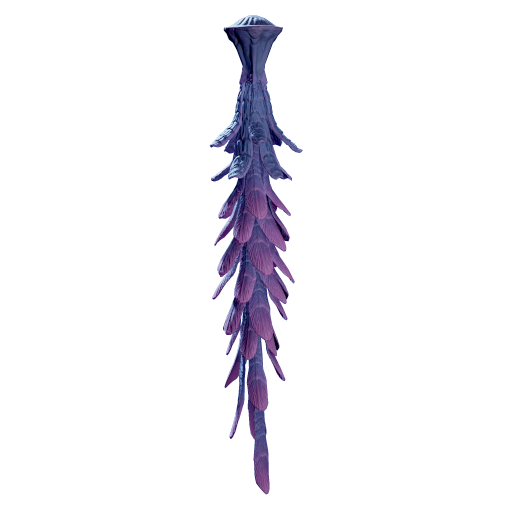
*Anthobrachia hebesoros*, the young stack of flower arms. Reproductive stage of a flower-like jelly. 1. Polyp Despite its resemblance to a kelp, the jelly lei prefers to hang underneath surfaces—where it cannot photosynthesize. It is the rooted polyp phase of a jellyfish's life cycle. The chain of 'flowers' growing beneath the polyp are larval jellyfish, called ephyra. The stalk itself is called a scyphistome. 2. Ephyral traits The budding larvae have broad, flat petals which will eventually merge into the adult jelly's bell. These petals already host photosynthetic symbiotes—it is possible the adult jelly will seek light sources to grow, akin to the terrestrial upside-down jelly. Note the purple color produced by photosynthetic retinal, the same molecule your eyes use to detect light. 3. Heat stress The jelly lei's growth cycle has been accelerated by heat stress. The stalked parent may release its larvae early to allow them to swim clear of hot, oxygen-depleted water. Assessment: sign of ecological crisis.
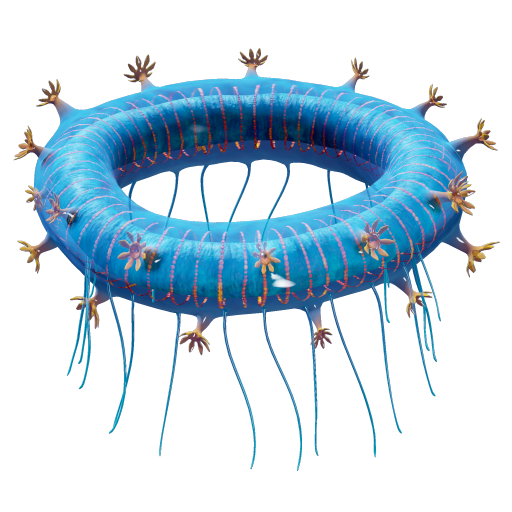
Медуза-кольцо (предлагаемое название: *Thermodont sufganiyah*, «теплоядная медуза-пончик» – хотя по форме она может быть классифицирована как пышка, внутри, тем не менее, содержится «начинка» из желе).
Медуза-кольцо (предлагаемое название: *Thermodont sufganiyah*, «теплоядная медуза-пончик» – хотя по форме она может быть классифицирована как пышка, внутри, тем не менее, содержится «начинка» из желе).
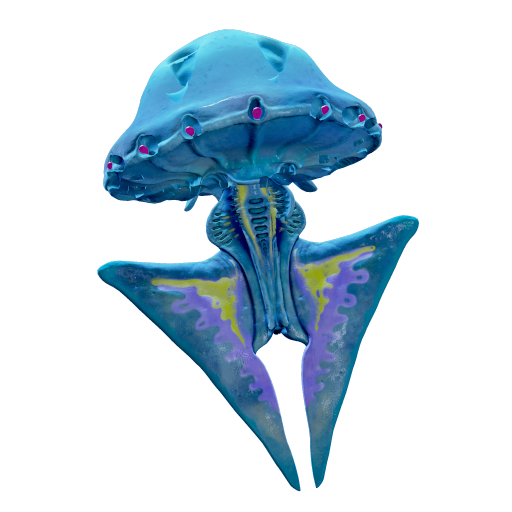
Медуза-шокер (предлагаемое название: *Staurobrachia capacitor*). Крупное сложноразвитое медузообразное, использующее электрические разряды при охоте. 1. Унитарный организм В отличие от колониальных организмов вроде португальского кораблика, медуза-шокер – унитарный организм со специализированными тканями, намного более сложными и специализированными, чем у земных медуз. Предлагаемая классификация: staurobrachiae («столборукие»). 2. Сложное внутреннее строение Кромку внешнего купола обрамляют чувствительные органы, называемые ропалиями. Сеть нервных клеток координирует движения «медузы». Просматривающийся в центре орган – это её кишечник. 3. Пищеварительная система У медузы-шокера имеется полая ножка, на которой она крепилась в стробиле. Эта ножка позволяет ей всасывать питательные вещества. 4. Электрические плавники Два жёстких плавника пронизаны похожими на провода электроцитами (вероятно, развившимися из щупалец). Эти органы способны накапливать заряд, чтобы оглушать либо убивать добычу. Наблюдаемое напряжение колеблется в пределах от 400 до 1000 вольт при силе тока в 1 ампер. Этого достаточно, чтобы убить человека. 5. Необычные следы Следы радиоактивных веществ, а также высокотемпературных восков и серной кислоты указывают на то, что медузы-шокеры взаимодействуют с гидротермальными источниками. Строение тканей даёт основания полагать, что медузы-шокеры произошли от глубоководного предка. 6. Одичавший вид? Проплывающие рядом медузы-шокеры общаются посредством электрических полей. Отзываются ли они на имена и имеют ли язык со своей грамматической системой – вопрос открытый, однако некоторые проявления медуз-шокеров могут быть усвоенным в ходе дрессуры или приобретённым и унаследованным поведением. Оценка: Представляют некоторую опасность при близком контакте; вызывают неподдельный интерес при наблюдении со стороны.
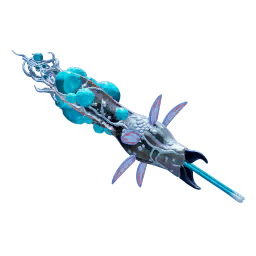
Кальмаровидный головоногий моллюск с клювом. Питается кровью и телесными жидкостями добычи. Организм сильно поражён крупным РНК-вирусом (предлагаемое название: Proteavirus beta), изменяющим его поведение.
*Anthobrachia necrolei*. A clonal stalk of large jellies, similar to Earth's stauromedusae. Each jelly remains moored to the stalk, rather than maturing into a free-swimming medusa. 1. Enormous size and hunger Rather than feeding on prey, the necrolei gathers dead matter from the seawater. The size and height of the stalk are directly related to the rate of death and decay up-current. 2. Acid-yielding metabolism The necrolei has adapted to low-oxygen seawater. It ferments much of the matter it collects in a central 'basket' stomach, a process which requires no oxygen and yields strong acids. The necrolei concentrates these acids around its eggs as a defense. Assessment: large numbers of necrolei in this region indicate a bloom, a population explosion caused by a flood of nutrients. This is a poor sign for the health of the ecosystem and perhaps for the state of the global climate. Produces egg clusters that can be processed into strong acid.
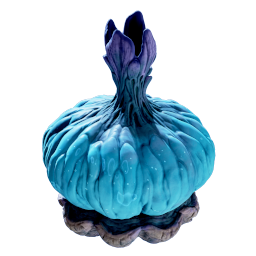
*Tunic aeolian*. A bizarre animal that splits seawater into hydrogen (on which it feeds) and oxygen (which it releases). 1. Tunic Like Earthly tunicates, this is a complex animal with a heart, nerve chord, and a flexible exterior shell (the tunic). 2. Radiolytic metabolism At the heart of the oxygen tunic is a nugget of radioactive metal such as uranium, radium, or thorium. Radiation from this nugget splits water into hydrogen and oxygen through radiolysis. The oxygen tunic retains the hydrogen to feed an internal colony of sulfur-reducing bacteria, and releases the excess oxygen. 3. Blue glow Cherenkov radiation from the core excites radioluminescent pigments in the tunic, producing a distinctive blue glow. This may be a warning to would-be predators that the oxygen tunic releases poisonous quantities of oxygen. 4. Implications for life on this world The oxygen tunic's metabolism suggests that this world has an energetic geology and a biosphere adapted to use radiation as a food source. It also has interesting implications for life without sunlight. On Earth, even deep-sea vents depend on oxygen produced by photosynthesis. No such dependency exists here. Assessment: emergency oxygen source for divers. Beware that repeated use could lead to radon buildup, with serious health risks including cancer.
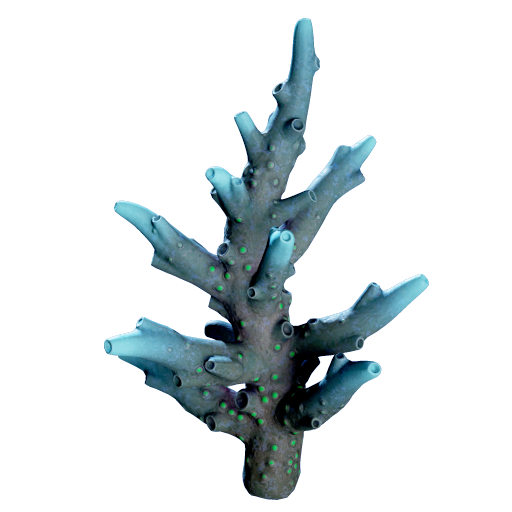
*Hecaton tunic*. Named for the hundred-handed hecatoncheires of Greek myth. A complex of animals undergoing competitive sex differentiation. 1. Anatomy Each pore on the surface of the hecaton is the mouth of a tunic, a complex filter-feeding animal. The colony's branching structure allows each tunicate acces to the water so it can breathe and eat. Each tunic grows a flexible, semi-hard polyvinyl shell which merges with the neighbors' tunics, defending the entire colony. 2. Growth patterns Analysis suggests the colony begins as a single stem of identical tunicates cloned from an embryo. More successful tunicates become large and sexually mature, starting new arms of the colony and developing their own eggs. Less successful tunicates are driven to the ends of the arms, where they shrink and develop a teal bioluminescence. 3. Viral reproduction The less successful tunicates do not release sperm. Instead, they are heavily infected by a strain of large RNA virus in the seawater. The majority of the tunic's genome consists of copies of this virus insert by retroviral action. How the hecaton tunic fertilizes eggs is therefore unclear—it seems to lack sperm cells. Assessment: reproductive enigma. Await further updates.
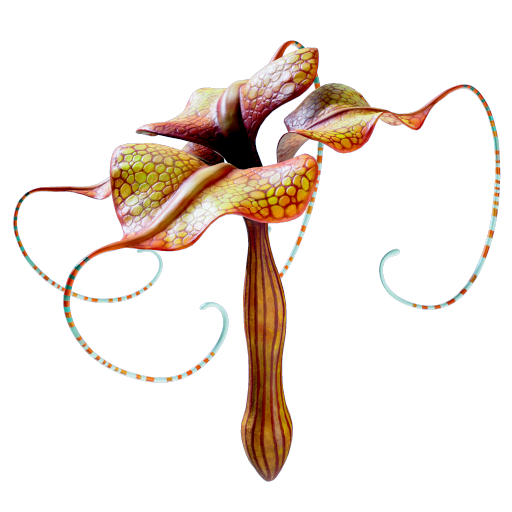
Tentatively *Pyloraptor mimic*. A predatory animal disguised as a leafy kelp. Discharges electrical shock when disturbed. 1. Cephalopod-like body Resembles an octopus or squid planted mantle-down in the seabed, with its arms spread to mimic kelp. Pouches of symbiotic bacteria between the arms allow it to photosynthesize. A beak at the center of its arms is plugged with mucus. 2. Electrical hunting The four arms contain electrocytes, organs which build up an electrical charge. When disturbed by prey, the electrocysts discharge, causing paralysis or death. It is unclear if the prey are directly eaten, or if they decompose in a garden around the mimic pylon. (Organisms which feed on external decay are known as saprotrophs.) 3. Implies kelp The pylon's cryptic aggressive mimicry of leafy kelp implies that kelp must exist on this world. Most species in Earths' oceans eat to survive, with primary production (the conversion of sunlight into biomass) carried out by plankton and algae. Leafy kelp were a late evolutionary development. 4. Cave mouth strategy Mimic pylons tend to cluster around sea cave entrances, perhaps to feed on organisms entering or leaving the caves. Alternately (and speculatively) they may have been planted there by another species to control access. Assessment: avoid contact to prevent injury. May mark cave mouths.
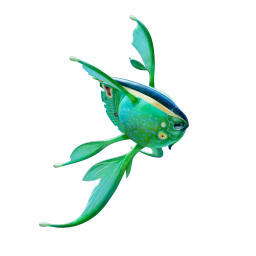
Кормовая рыба, мимикрирующая под воздушные пузыри на стеблях неопознанных водорослей.
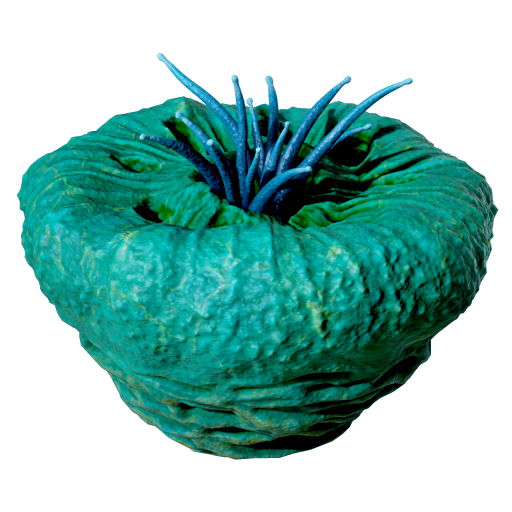
An organism (tentatively *Raion donut*) that resembles an Earthly anemone or ceriantherian, but is actually a sponge occupied by a colony of predatory worms. 1. Raion An organism defined as a sponge occupied by a colony of cloned predatory worms. 2. Hunting strategy The worms live in the sponge's jelly (called the mesohyl), protruding from its anus (the osculum) to sting passing prey with sticky cells and draw them into the sponge. 3. Puzzling genetics Spectrogenetic analysis indicates the host sponge and the resident worms contain partial copies of each others' genomes. This is a biological impossibility on Earth, and suggests that genetic inheritance functions differently on this world. Assessment: minor sting hazard — do not insert fingers. Important scientific discovery.
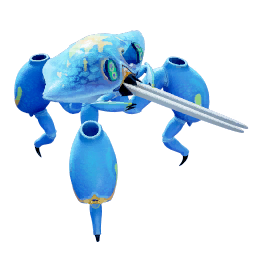
Рак-брызгун (предлагаемое название: *Tripous phrontiscaris*). Трёхногое социальное ракообразное с выраженным родительским поведением. 1. Трисимметричное строение тела В силу того, что эволюция на Земле рано пошла по пути билатеральности, там неизвестны трёхногие существа. Ноги брызгуна, возможно, возникли из сращенных попарно шести протоконечностей (по три с каждой стороны). Более мелкие передние конечности остались самостоятельными. 2. Ноги с сифонами Развившиеся из жабр на ногах сифоны на ногах позволяют брызгуну плавать и зависать на одном месте. Моделирование показывает, что сращивание ног для увеличения размеров отдельных жабр-сифонов даёт прирост в подвижности. 3. Языки Рак-брызгун находит пищу при помощи двух длинных подвижных радул (возможно, видоизменённых максилл). Передние конечности служат для чистки и ухода за радулами. Радулы – нежные, однако способные к регенерации органы, что даёт основание полагать, что брызгун способен отращивать утраченные нервные ткани – и что некие придонные обитатели их обгрызают. 4. Родительское поведение Рак-брызгун носит на себе и защищает молодняк, а выразительная жестикуляция указывает на насыщенную социальную жизнь. Спектрогенетический анализ показывает, что часть молодняка является приёмными детьми (генетически – не потомками конкретной особи). Подобное наблюдается у многих видов, хотя и не должно расцениваться как сознательный выбор. Возможно, речь идёт об инстинктивном поведении – или же раки-брызгуны в прошлом были общественными животными, у которых особь-матка рожала потомство, а особи-рабочие заботились о них. Оценка: Практически безвреден. Может служить источником умиления.
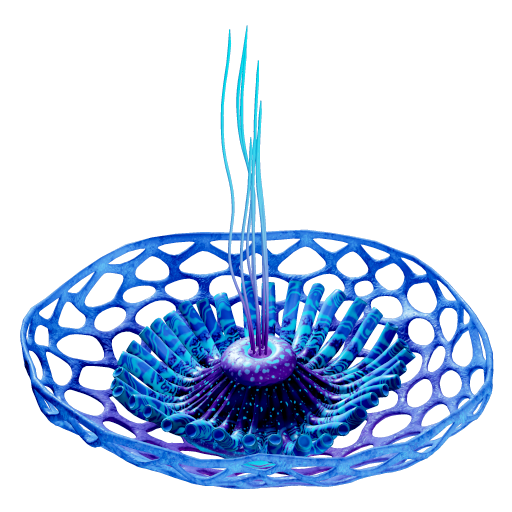
*Raion calix*. A puzzling combination of worm colony (the raion) and slime mold. 1. Feeding strategy Feeds on drifting matter, though the worms also sting and kill meiofauna (small sea life between 45 nm and 1 mm in size). 2. Glassy central structure The central structure is a glasy spicule similar to those found in Earth's glass sponges. The worms live in this structure, creating a raion — a sponge inhabited by worms. 3. "Tripe bowl" The ‘tripe bowl’ around the base is a single enormous cell, similar to Earth’s syncytial slime molds. The structure resembles the lining of a cow’s stomach, although this Voronoi pattern is common to self-organizing structures in many exobiologies. Its function is unclear. In terrestrial analogs, syncytial structures can be found in both healthy tissues like muscles and in tissues infected by certain viruses. Optogenetic analysis cannot determine the tripe bowl's genetic ancestry. Assessment: biological enigma. Await further updates.
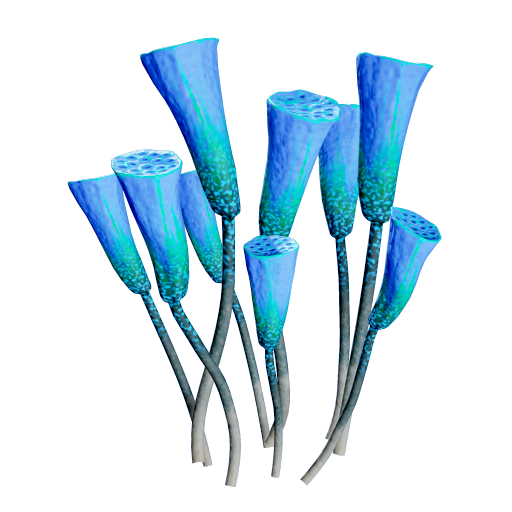
*Spraion flagon*. Databank generation alert: known scientific theory inadequate to explain specimen. Interpretation and improvisation may lead to error. 1. Sponge-worm hybrid Like the raions, this is a sponge occupied by worms. The sponge pumps seawater, while the worms feed on meioafauna in the current. In this 'spraion' the two organisms have become genetically entwined: each can give birth to the other. This defies conventional evolutionary theory, which uses reproductive barriers to define species. 2. Alternating generations Some of the sponge's germ cells undergo a transformation into worm embryos. This transformation involves the activation and expression of stored genetic material from the worm genome. Adult worms leave the sponge, swim to a new anchor site, and die. Their bodies provide food to a newborn flagon sponge. 3. Possible explanations The simplest explanation is that these are two alternating generations of the same organism — like the polyp and medusa stages of the jellyfish life cycle. But spectrogenetic analysis suggest the flagon sponge and its resident worms evolved tens of millions of years apart. Exactly how the reproductive cells of one organism can yield an adult of another species is unknown. Assessment: advise further investigation. May yield insight into genetic adaptations specific to this world. Await further updates.
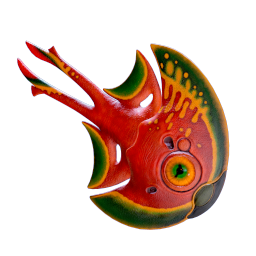
Рыба-полумесяц (предлагаемое название: *Moliform luna*). Крупная непромысловая рыба, питающаяся планктоном и мелкой растительностью. 1. Корм для хищников Типичный объект охоты хищников, выработавший несколько стратегий, как скрываться и прятаться от них. Пригодна в пищу, хотя рекомендуется обработка в изготовителе. 2. Раздельные системы Жёсткий клюв защищает парные створки, через которые рыба втягивает воздух для отфильтровывания планктона. Отдельные брызгальца, расположенные позади глаз, снабжают водой для дыхания расположенные внутри жабры. 3. Выдающаяся подвижность Тело рыбы-полумесяца испещрено эпителиальными чувствительными органами, позволяющими определять завихрения воды. Передние плавники снабжены фенестрами (отверстиями), позволяющими резко менять направление (предположительная эволюционная стратегия, позволяющая маневрировать в тесных пространствах или плотных косяках себе подобных). 4. Необычная нервная система Отсутствует механизм подавления обратной афферентации (не отличает раздражители, вызываемые собственными движениями, от изменений в окружающем мире). С готовностью плывут на яркий свет – и даже могут воспринимать себя как причину его появления. Временами как бы теряют ориентацию: безо всякой причины плывут боком. Оценка: приемлемый источник пропитания.
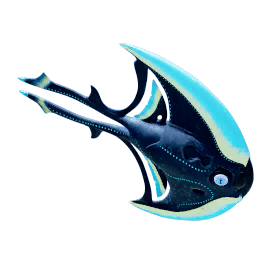
Waxmoon — это хищная фауна, каталогизированная в руинах Аксума, бункере колонистов, коралловых садах и еще 1 месте. В текущих записях указано 15 подтвержденных точек появления в 4 биомах в пределах Главной зоны, с центром кластера около -2341/4282/-143. К этой записи не прилагается блок боевых характеристик, поэтому вики-профиль фокусируется на доступных фактах структурированной среды обитания и появления. Данные о движении содержат 6 строк поведения.
Рыба-таран (предлагаемое название: *Panoplia sphyrna*). Бронированное стайное морское травоядное с развитым инстинктом защиты своего участка и мощным таранным ударом. 1. Голова-таран Таранит непрошенных гостей, в особенности других самцов. Перед атакой демонстрирует грудные плавники и закрывает защитные щитки на голове. 2. Реактивное движение Расположенные позади глаз брызгальца подают под давлением воду во внутренний канал с жабрами. Та же с силой выбрасываемая вода придаёт рыбе-тарану разгон для удара. 3. Крупный мозг Головной мозг рыбы-тарана плавает в защитной оболочке. Расположенный по центру глаз отвечает за цветовое восприятие, а два более мелких по сторонам реагируют на движение и помогают наводиться на цель. 4. Челюсти-скребки Мощные вертикально расположенные челюсти указывают на рацион из губок, бурых водорослей, оболочников и, возможно, измельчённых кораллов. Необходимость охранять пастбище, вероятно, способствовала развитию агрессивности. 5. Практика? Рыбы-тараны часто врезаются в коралловые купола. Практическая целесообразность такого поведения неясна. Возможно, это делает их щитки крепче. Оценка: рекомендуется соблюдать осторожность, особенно при пилотировании подводных аппаратов. Рыбы-тараны могут быть способны к социальному познанию в объёмах, сравнимых с земными копытными (многие из которых чрезвычайно опасны для человека). Места брачных соревнований самцов являются источниками повышенного шума.
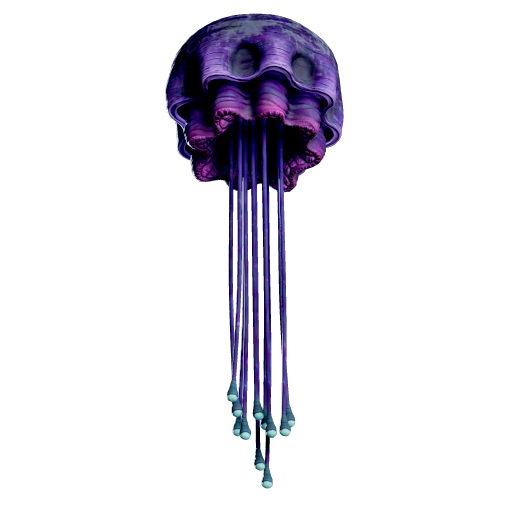
*Salp pendulous*. A sticky, suspension-feeding predator that captures organisms from the current. 1. Salp-like biology Like Earth's salps, this is a colony of zooids — tiny, cloned animals (in this case tunicates) — that form a long, tube-like pump. The salp draws in water to filter for plankton. 2. Hard holdfast The holdfast that anchors the feeding string is secreted by the same zooids that make up the rest of the organism. Spectrogenetic analysis detects proteins similar to those expressed by reefbuilding sponges and corals. 3. Bloom response Terrestrial salps can reproduce very quickly, allowing them to grow with—and devour—sudden blooms of algae. If the algae bloom is too dense, the salps may clog. Assessment: may be a useful indicator of ecological stress. Await further updates.
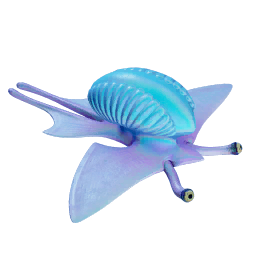
*Marilimax kleptopharos* («слизень-похититель маяка»). Светящийся свободноплавающий родич-химера водного слизня с чертами, заимствованными у совершенно другого вида.
*Ostrakonskelos periskopion*, стебельчатоглазое членистоногое. Социальный донный организм, живущий в симбиозе с морскими стрекающими.
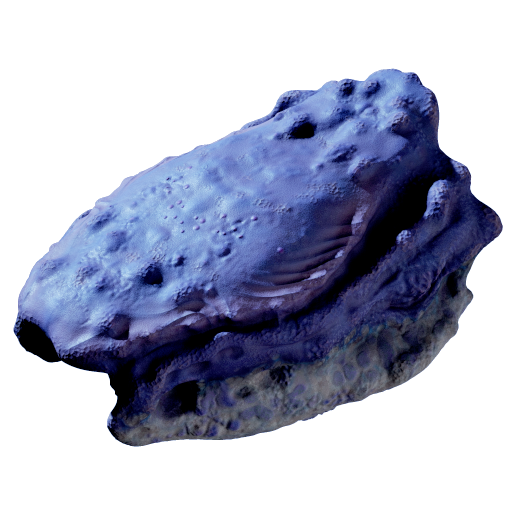
У титанических камнеточцев (Lithodont titanicae) имеются черты, роднящие его с наблюдаемым на горизонте гигантским организмом. Поскольку размер последнего подразумевает потребность в огромных объёмах питательных веществ, камнеточцы могут оказаться корнями или трубами, ведущими к этой центральной конструкции.
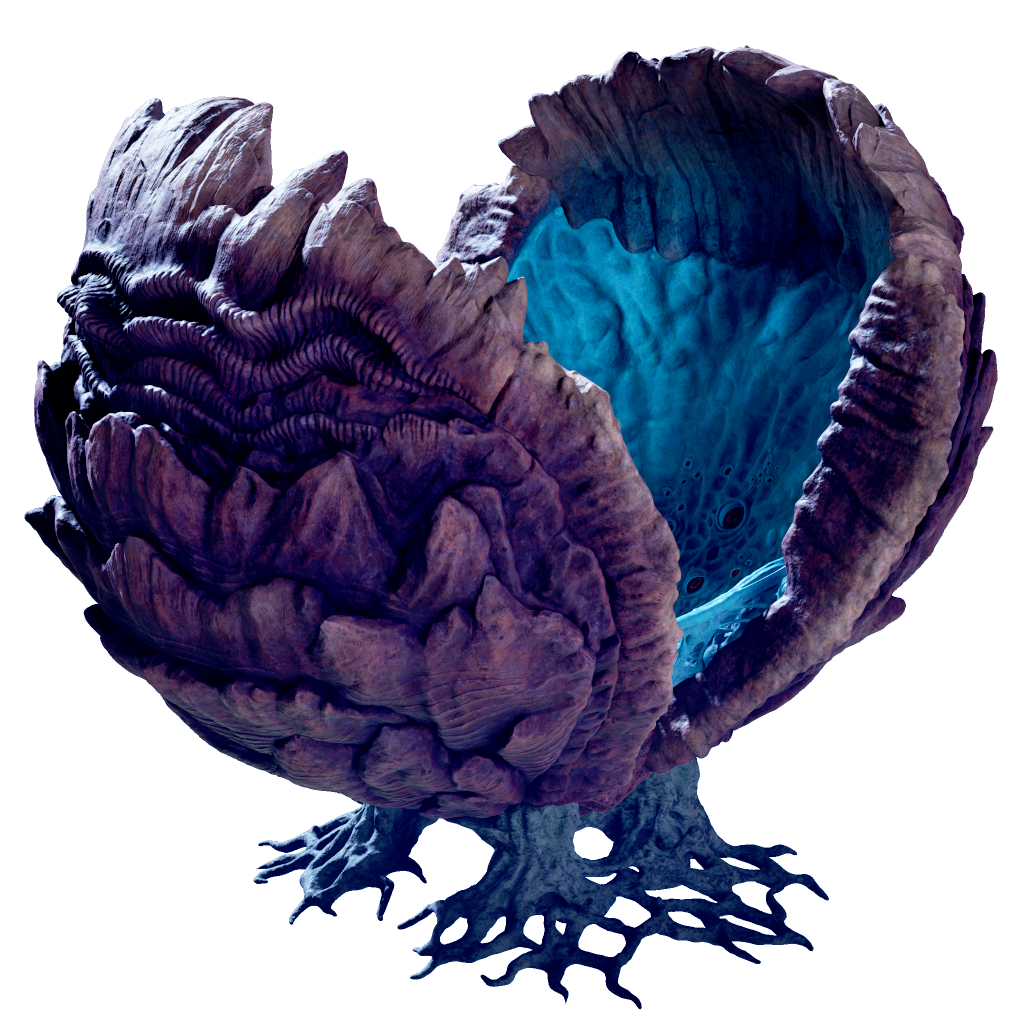
Устрица-живоглот (предлагаемое название: *Megamya sudacna*, «кусачая устрица-гигант»). Массивный всеядный морской моллюск с опасным механизмом защиты/питания.
«Наши КПК приводят в пример организмы вроде футлярника и говорят: «Глядите, у эволюции на Протее свои законы.
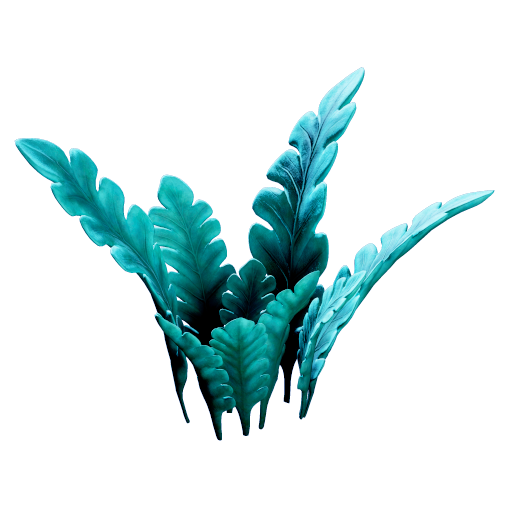
*Ventworm cryocthonian*, the vent worm that brings cold from below. 1. Vent worm The fridge worm's body plan is familiar from terrestrial analogs — a tubular body with a protruding gill. The body hosts a colony of symbiotic bacteria in a chamber called the trophosome ("feeding body"). These bacteria help the worm survive extreme environments. 2. Cold water emitter The cryocthonian lives in colonies along geothermal gradients—from hot to cold. It exploits the flow of energy and minerals through the rock to feed. Colonies pumps deep, cold brine (usually at 4 degrees C) to the worms exposed to hot water, helping regulate their temperature. 3. Sulfur-based metabolism The symbiotic bacteria in the fridge worm feed on sulfur and other dissolved minerals. The fridge worm uses cold deep-sea brine to trigger chemical reactions which help collect minerals from the hot vent water. Assessment: Produces pockets of cold water. May attract life that cannot tolerate the surrounding heat.
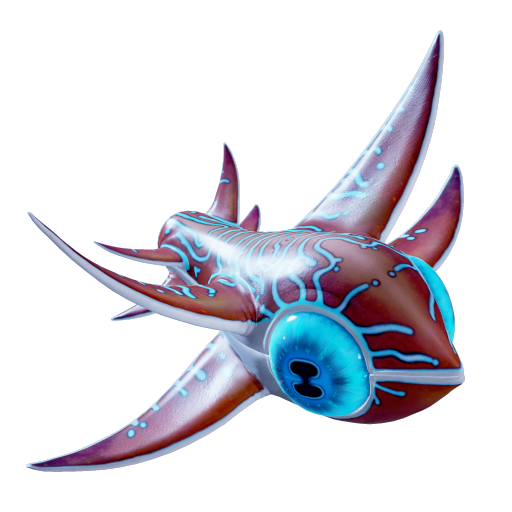
Четырёхглаз (*Morokotoform duplex*). Совместный организм из двух хищных рыб, всегда появляющихся на свет парно. Примыкают друг к другу брюхом, объединяя пищеварительную и нервную системы.
Шомпол остистый (*Scopula aristata*). Обитает в горячей, насыщенной минералами воде, из которой поглощает сероводород и другие микроэлементы. Способен выжить в почти кипящей среде.
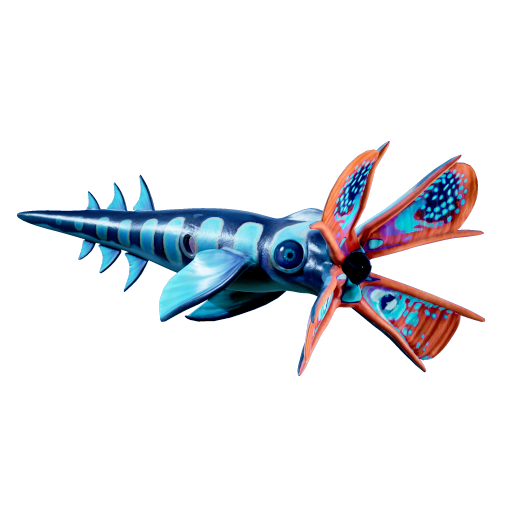
Щука-гончая (предлагаемое название: *Teuthis courser*). Головоногое, загоняющее добычу для костоломов. 1. Кальмарообразное строение тела Анатомия «щуки» близка к земным кальмарам: голова с клювом, восемь щупалец, длинное гибкое тело и пара плавников. Развитые плавники указывают на то, что этот вид пошёл по эволюционному пути, отличному от земного кальмара. Парные сифоны подают воду на расположенные внутри жабры. 2. Отвлекающий камуфляж Восемь щупалец щуки-гончей соединены четырьмя перепонками, которые они демонстрируют добыче. Поверхность перепонок покрывают миллионы хроматофоров (светящихся клеток), создающие динамически меняющиеся узоры, маскирующие её приближение к жертве. 3. Партнёрство с костоломами Щуки-гончие – идеальная добыча для костоломов, однако два этих вида охотятся совместно. Щуки-гончие вспугивают и отвлекают добычу, сигнализируя близоруким костоломам, куда направлять атаку, а «щуке» достаются объедки. Чем крупнее добыча, тем выгоднее для щуки-гончей. 4. Мощный клюв Похожий на клюв попугая, он способен разрывать плоть. Это критически важно, так как всё заглатываемое щукой-гончей проходит через центр её мозга. 5. Потенциальная социальная структура Косяки щук-гончих должны находить подходящую добычу для костоломов, чтобы самим не стать их жертвами. Костоломы должны завлекать косяки щук-гончих, оставляя им как можно больше добычи. Щуки-гончие заставляют костоломов охотиться на всё более и более крупную добычу. Динамическое равновесие между интересами щук-гончих и костоломов напоминает о лозунге «Милости Альтерры»: «Мы нуждаемся в том, чтобы быть нужными». Оценка: сигнальное поведение щуки-гончей может указывать на неминуемую атаку костолома. Вид представляется потенциально дрессируемым.
Электроджорди (предлагаемое название: *Salpapod geordiwangi*). Родственный вид либо форма джорди обыкновенного. Тянется к источникам электрического тока. 1. Электротропизм Электроджорди выискивают источники тока. Организм электроджорди способен выдерживать на удивление мощные разряды, так что пытаться извлекать их руками или при помощи инструментов может быть небезопасно; короткое замыкание чревато последствиями как для самого джорди, так и для электроприборов. 2. Заполненные гелем желудки Четыре дивертикулярных мешка джорди заполнены гидрогелем, по своим свойствам похожим на желеобразное вещество в ампулах Лоренцини – органе, позволяющем улавливать электрические поля. Эти мешки могут чувствовать электрическое поле, создаваемого затаившейся добычей, или помогать отыскивать в придонном иле электропроводящие волокна. Искусственные источники тока могут быть для электроджорди суперстимулом – вызывать непреодолимый интерес. 3. Электрический метаболизм Гипотеза о том, что данный вид джорди в ходе эволюции выработал способность метаболизировать электрический ток, представляется маловероятной, хотя и не невозможной. Так, любой обмен веществ в конечном счёте представляет собой процесс переноса электронов, и явление электротрофии как таковой уже наблюдалось на планетах с повышенной атмосферно-грозовой активностью, а также в вакууме. Оценка: электроджорди – прирождённый вредитель электросетей и коммуникаций. Для борьбы с нашествием этого вида могут потребоваться специальные отвлекающие ловушки.
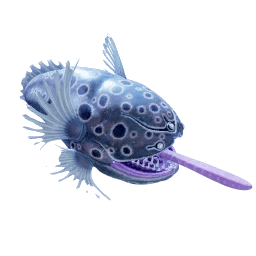
*Postpanoplia epicureana* («прожорливая беспанцирная панцирная рыба»). Вечно голодная рыба с непредсказуемым поведением, особенно если заражена паразитом.
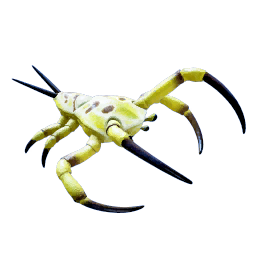
*Ostrakonskelos glossaklept*, панцирный языковый краб. Ротополостной паразит, который поселяется во рту носителя и вызывает чувство острого, ничем не утолимого голода.