Fauna
Todas as criaturas: estatísticas, comportamento e habitat.
- Fauna
- 86
- Predadores
- 23
- Séssil
- 38
- Pontos de geração
- 11070

*Raion carbonica*. A colony of worms living inside a shared membrane, probably a sponge. Uses weak acid to digest prey. 1. Raion An organism defined as a sponge occupied by a colony of cloned predatory worms. This sponge is chambered, akin to Earth's extinct sphinctozoans; the chambers grow around a central pump. 2. Pressurized acid The raion's worms secrete weak acid as a digestive factor and defense mechanism. This acid is held under pressure by a plug in the raion's central pump. To avoid unwanted acid release, cut away the chambers before disturbing the central pump. 3. Volcanic origin? The acid raion may have originally evolved near a cold seep or a volcanic caldera. Acid-friendly biochemistry gave it a useful defense mechanism and feeding strategy to colonize other waters. 4. Medical gel The raion's central pump is partially plugged by a mass of worm residue; this keeps the pressure in the chambers high. This residue contains useful clotting factors and broad-spectrum antibiotics. Recommend collection. 5. Problematic genetics Spectrogenetic analysis indicates the host sponge and the resident worms contain partial copies of each others' genomes. This is a biological impossibility on Earth, and suggests that genetic inheritance functions differently on this world. Assessment: useful source of weak acid for batteries. Central plug contains medically relevant gel. Cut away chambers before removing central plug. Consult with your Noetic Advisor system to research optimum search areas.
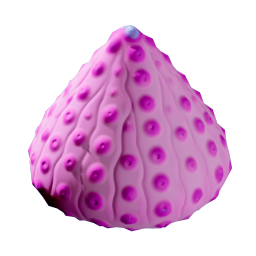
A glowing sponge (tentatively *Symphon aeroshell*) that resembles the cone of a heat shield on atmospheric entry. 1. Predation strategy The aeroshell feeds on microorganisms attracted to light, especially in dark caves where it can be mistaken for the sun. 2. Light source Instead of relying on symbiotic bacteria, the aeroshell generates its own light through oxygen-fueled reactions. This light is piped throughout its tissue by glassy fibers resembling those grown by Earth's glassy sponges - among the longest living animals known. 3. Symbiotic partner Often found associated with shootroots (hard-surfaced starfish-like organisms that burrow into the seafloor). The exact dynamics of the symbiosis are unknown. Await further updates. Assessment: useful light source in dark water. May provide interesting bio-optics reference.
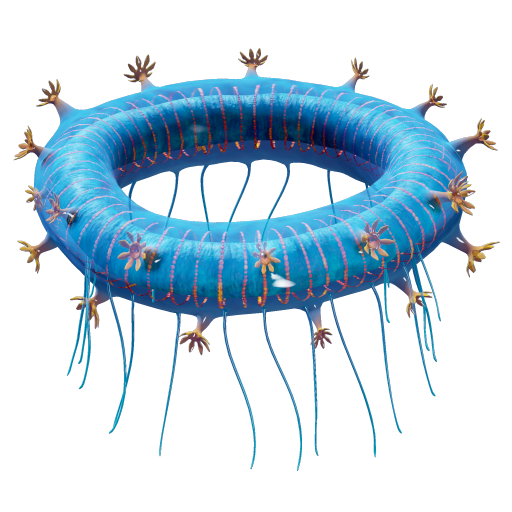
Anel de gelatina (nome provisório: *Thermodont sufganiyah*, rosquinha de gelatina devoradora de calor). Não é uma gelatina, mas é cheia de gelatina. Alimenta-se do calor e do fluxo químico das fendas hidrotermais.
Anel de gelatina (nome provisório: *Thermodont sufganiyah*, rosquinha de gelatina devoradora de calor). Não é uma gelatina, mas é cheia de gelatina. Alimenta-se do calor e do fluxo químico das fendas hidrotermais.
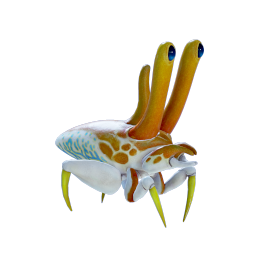
*Ostrakonskelos periskopion*, o periscópio de pernas duras. Um caranguejo social que se abriga entre anêmonas urticantes.
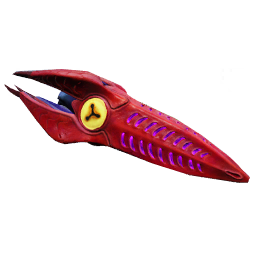
Um predador enxame de alta velocidade que se esconde em cavernas e caça organismos bioluminescentes em busca de parceiros. Alertado pela luz e pelo som. Não registrado no EA1
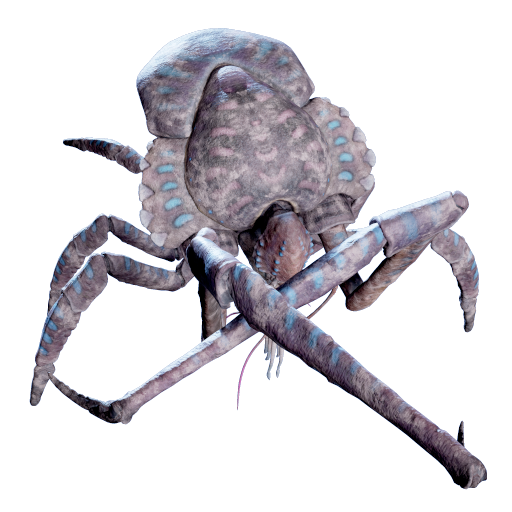
Um caranguejo enorme (nome provisório: *Ostrakonskelos anaktoraphore*, guardião do palácio de pernas duras) que se esconde entre domos de coral. 1. Morfologia crustácea Seus membros anteriores vasculham e cavam em busca de alimento, que é coletado por longos maxilípedes (membros que manuseiam comida) moles ao redor da boca. Para crescer, precisa trocar de carapaça. 2. Domo de coral Um domo de coral vivo, cortado de seu ponto de fixação e utilizado como casco. Esse domo oferece camuflagem, proteção e, possivelmente, um berçário para os filhotes de caranguejo. Não se sabe se ele usa apenas um domo a vida inteira ou se os troca conforme cresce. 3. Predador implícito As defesas e o comportamento sugerem a existência de um predador forte e hábil o suficiente para arrancá-lo do domo e quebrar a sua carapaça espessa. 4. Atividade viral O seu genoma contém grandes inserções retrovirais repetidas, incluindo fatores de crescimento neural e pigmentos da carapaça. O relógio molecular sugere que essas inserções foram recentes. As células nas costas do caranguejo contêm grandes segmentos do genoma dos pólipos do domo de coral. 5. Cérebros de grande porte O caranguejo coralino não possui uma trança neural espinhal. Um grande cérebro localizado acima dos olhos controla os sentidos e planeja comportamentos, enquanto um segundo aglomerado nervoso controla as pernas e o sistema digestivo. 6. Comunicação no leito marinho Os caranguejos coralinos batem no solo marinho para se comunicar. O estalo das garras pode indicar excitação ou agitação intensa. Alguns caranguejos terrestres buscam parceiros antes da muda - um comportamento conhecido como "mãos dadas". Descobrir um comportamento semelhante neste mundo pode ser gratificante emocionalmente. 7. Sinais de estresse ecológico Deficiências minerais e infecções fúngicas indicam a presença de fontes de estresse ambiental. Avaliação: provavelmente tem mais medo de você do que você dele. Aja com cuidado e respeito. Nível mínimo de inteligência comparável à de um gorila. Possivelmente uma fonte valiosa de recursos do leito marinho. Proposta de pesquisa: investigar se o caranguejo transporta o seu domo para áreas ensolaradas ou ricas em nutrientes para se alimentar.
*Ostrakonskelos periskopion*, o periscópio de pernas duras. Um caranguejo social que se abriga entre anêmonas urticantes.
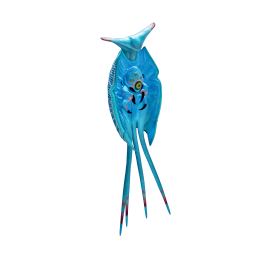
\”Os nossos APDs apontam para organismos como o ceratecano e exclamam 'eis o caminho não tomado'.
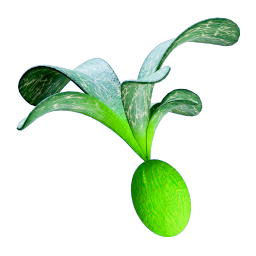
*Rotsac cherimoya*. A tunicate-like animal which collects alcohol from decaying matter to produce a creamy, flavorful mucus. 1. Cherimoya Named for its resemblance to the terrestrial cherimoya fruit (or custard apple). It can be eaten whole or sucked on through a straw; the exterior tunic is soft but the heart, nervous system, and other organs should be spat out. The rotsac contains mercury sulfide, which will eventually accumulate to dangerous levels in the human body. 2. Peculiar metabolism As a rough inverse of the lucifer rotsac, the cherimoya rotsac converts alcohols to sugars rather than decomposing sugars to alcohols. The cherimoya achieves this with a chemical pathway that does not occur on Earth. Aqueous cinnabar provides a source of mercury to oxidize alcohols into simple sugars. The cherimoya has no other behaviors: it simply stores sugars as it grows into a taut, full adult. 3. Symbiotic partner Because of its plentiful stored sugars, the cherimoya is a common symbiotic partner for organisms like the cage gorgon. 4. Enteric reproduction The cherimoya rotsac is gonochoric - either male or female. However, it does not release eggs or sperm into the seawater. Instead, its reproductive cells are eaten by organisms feeding on the cherimoya. They seek out other cherimoya rotsacs' gametes in the digestive tract of the host. The fertilized embryos are then expelled by the host organism, providing them with nutritious waste to bootstrap their growth. Assessment: edible. Your digestive tract may briefly become pregnant.
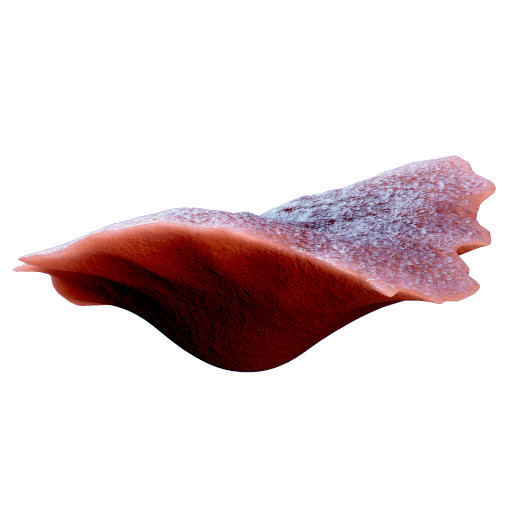
Um coral rígido que cresce frequentemente em fendas hidrotermais. Utiliza o gradiente térmico entre a sua base ancorada e a sua borda de água fria para impulsionar reações metabólicas.
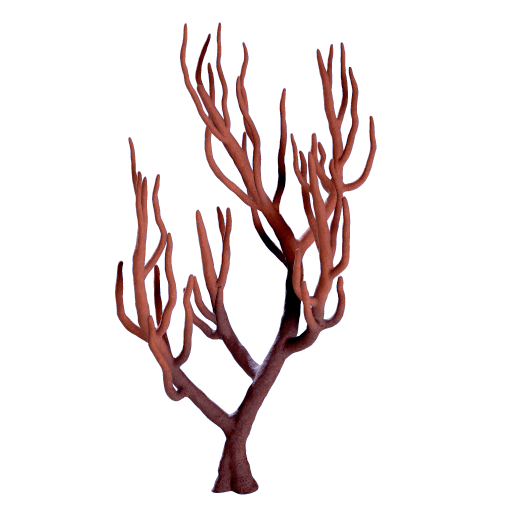
Nahema, registro de voz, iniciar. Este é um coral Proteano típico, mas não um coral *terrestre* típico. Sim, a morfologia geral é como uma árvore ramificada, similar ao extinto Acropora... mas, ao olhar por dentro, é estranho. Na Terra, corais são pequenas águas-vivas que constroem casas de pedra. Em Proteus... é como se eles tivessem se mudado para um prédio: a esponja. Os pólipos de coral viviam nos poros da esponja... pagavam aluguel ao limpá-la e protegê-la. Eventualmente, algumas esponjas ficaram duras e rochosas, similar às demospôngias terrestres. Se eu estiver certa, vamos encontrar outras parcerias coral-esponja com acordos variados, cada um adaptado a nichos ecológicos específicos. A questão real é... o que está acontecendo com essa genética?
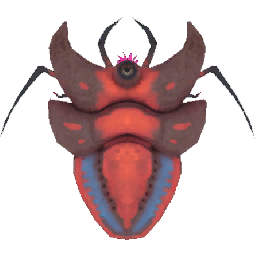
Camarão Carmesim é uma fauna passiva catalogada em Coral Gardens. Os registros atuais listam 5 pontos de desova confirmados em 1 bioma, dentro da zona principal, com o cluster centrado perto de -3538/4267/-46. Nenhuma estatística de combate está anexada a esta entrada passiva, então o perfil da wiki se concentra na localização do habitat, observações de spawn e classificação de ameaças.
Veps Defender is fauna catalogued from the current creature data. No combat stat block is attached to this entry, so the wiki profile focuses on the structured habitat and spawn facts available.
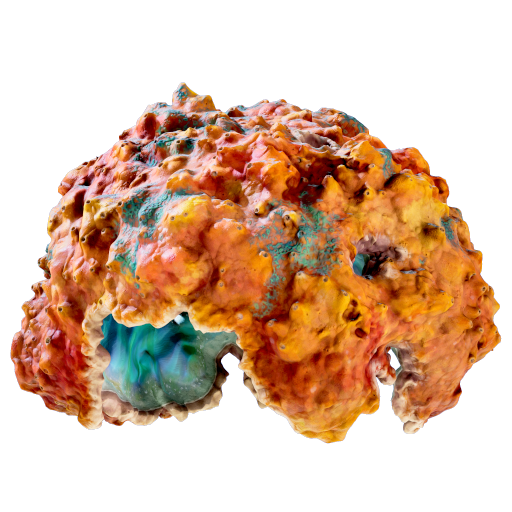
*Coral geodesica*. The defining feature of its shallow biome. 1. Coral analog Like Earthly coral, the dome is a colony of polyps, small jellyfish-like animals that secrete a limestone skeleton. This process uses dissolved carbon dioxide from the seawater: corals are therefore an important method of climate regulation, since they transform atmospheric carbon into hard limestone. 2. Dual feeding strategy The dome's outer surface feeds on sunlight, using photosynthetic symbiotes known as zooxanthellae. As the dome grows, the colony clears its interior, recycling the limestone for reuse. Polyps on the inside of the dome hunt with stinging tentacles. 3. Mineral expulsion As the dome grows, it collects and expels mineral waste, creating nodes of quartz. 4. Critical ecosystem element The dome corals help regulate global climate and provide a breakwater, reducing erosion in their shallow surroundings. The domes capture nutritious sediments from sea currents. Pioneers should prioritize a survey of coral health. Assessment: critical source of quartz. Vital to the local ecosystem.
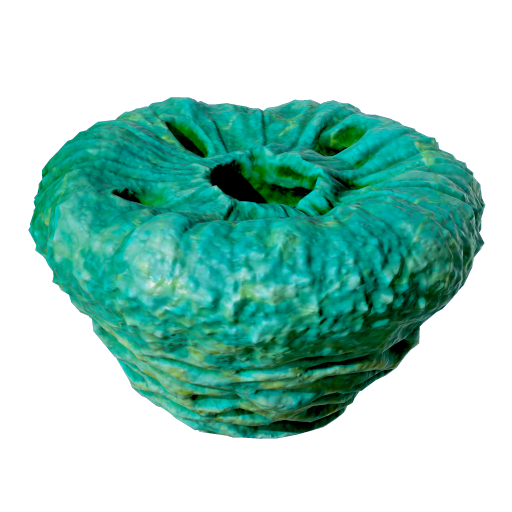
Donut of worms (tentatively *Raion donut*) without visible worms. 1. Normal state Just as terrestrial corals contain photosynthetic partners called zooxanthella, the donut contains a population of predatory worms. 2. Disturbed state Just as terrestrial corals sometimes expel their partners when under stress, this donut raion has discharged or killed its population of worms. (Alternatively, they have left in search of a better host.) This may be a reproductive strategy, a defensive reaction to the worms turning on and feeding upon the sponge, or a response to environmental stress. Assessment: unclear how long the donut can survive without its primary food supply. Terrestrial corals survive only days to weeks after bleaching.
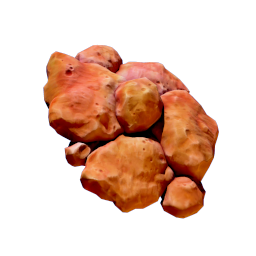
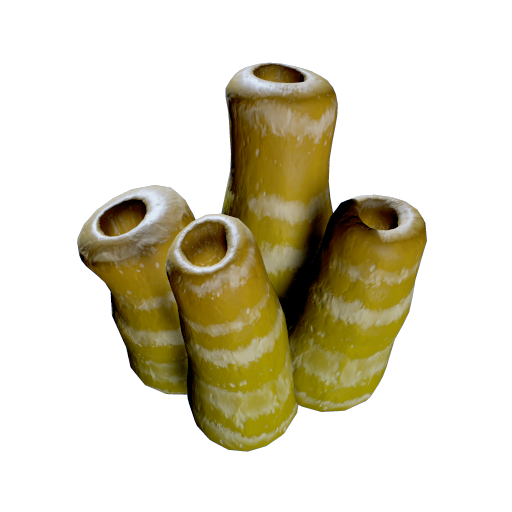
*Symphon apokalupsis*. An unassuming button-shaped sponge that may be an omen of mass extinction. 1. Simplicity Among the earliest animal forms on Earth, sponges are a group of cells that live between two membranes and work together to pump water. Sponges on this world are similarly elegant. 2. Tolerance Due to this simplicity, sponges tolerate low oxygen and high temperatures better than many other organisms. They also benefit from elevated death rates, which floods the water with decaying matter. 3. Role in mass extinction Biospheres dominated by sponges may be an indicator of a recent or ongoing mass extinction. After Earth's first major die-off during the Ordovician period, some 85% of species went extinct, leaving a world ruled by sponges. The popular existential terror franchise "Life Is Only Pulse" is set in a fictionalized version of this time period. Assessment: possibly a warning sign of planetwide ecological collapse. Possibly not.
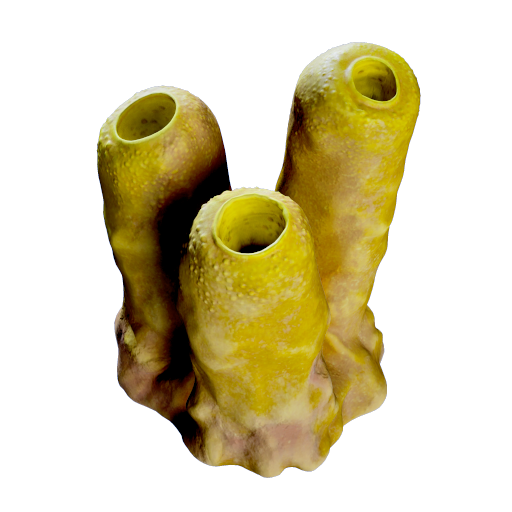
Nahema, registro de voz, iniciar. O último grande homem da Terra brincava que o Criador devia amar estrelas e besouros, porque Ele fez muitos deles. Duzentos anos depois, encontramos muita vida alienígena, mas poucos besouros. Perdão, Jack. Mas, olha — o seu Criador ainda tem preferidos. Onde quer que Ele atue, parece começar com uma esponja.
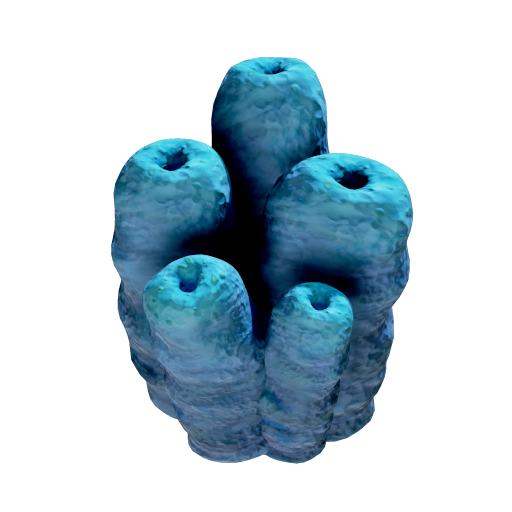
A hateful and malicious sponge. Assessing PDA neural temperature. Reducing output subjectivity. *Symphon achlys*, sponge of dying mist. A dangerous semi-predatory sponge that acts as the central node in a necrobiome. 1. Bacterial arsenal Sponges cultivate bacteria which secrete helpful chemicals. At some point in its history the toxic sponge was infected by a bacterial symbiote which generated a powerful antibiotic (akin to the human Streptomyces). The bacterium used this antibiotic to extinguish competition, then began an internal power struggle to evolve compounds that could destroy rival strains of its own species. The result is a sponge flush with an antibiotic so concentrated it causes skin burns and nerve damage. 2. Touch based hunting strategy When brushed, the sponge contracts sharply, expelling a cloud of antibiotic toxin. Microorganisms are killed, and larger species may enter convulsions and die nearby. The dead matter decomposes, releasing nutrients upon which the sponge feeds. 3. Animal gene fragments The toxic sponge's genetic code contains fragment of an animal genome: likely a crustacean. Assessment: avoid. Keep medical supplies on hand to treat chemical burns and nerve damage.
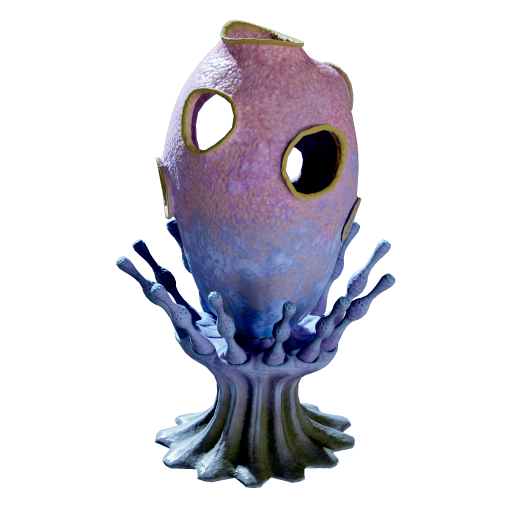
*Symphon amphora*. A sponge adapted to colonize — and create — air pockets. 1. Amphora-shaped structure Like all sponges, the amphora requires constant flow through its pores to survive, but it pumps air rather than water. Contraction and expansion forces moist air through the sponge's pores. Absorbent surfaces harvest water and carbon dioxide from the air. Waxy coating helps prevent water loss. 2. Radiolytic metabolism The soft blue glow of the sponge is bioluminescence fueled by radioactive minerals in the sponge's vanes (the structures growing from the anchoring rhizoid). This radiation splits water into hydrogen and oxygen. The gases gather in the cave ceilings the amphora prefers to colonize, creating pockets of knallgass (unmixed hydrogen and oxygen). Though breathable, this air is highly flammable and an explosion risk. The sponge's symbiotic bacteria feed on the hydrogen and oxygen, producing energy and water. The sponge uses this energy to fix carbon from the air and grow, as an Earth plant would. Assessment: a remarkable step. The amphora sponge may evolve an entire lineage of dry-land sponges, colonizing niches filled by plants and fungi on Earth. Indicates the presence of an air pocket. Swim up to breathe. Do not ignite flares or discharge electrical devices in the pocket.
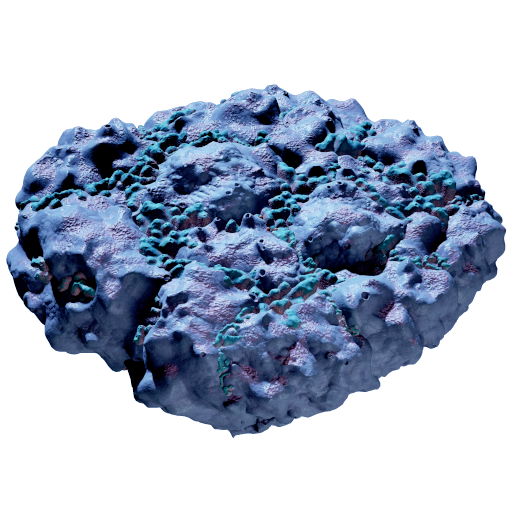
*Sporal psephos*. A moiety (two paired species) of a sponge and a coral. Possibly a single chimeric organism. 1. Reefbuilding Reefbuilding on this world seems to be carried out by a range of sponge-coral pairings. In hard corals, the sponge has lost its ability to feed independently and provides a hard shell for the corals. In this organism, the relationship is reversed: the coral polyps grow a hard surface shell, while the sponges continue to pump water. Because the hard shell blocks the sponges' pores, they work in pairs, with one inhaling through its osculum and one exhaling. 2. Dome coral association Frequently found on the surface of the larger dome coral, blocking patches of its surface from receiving sunlight. This may be an opportunistic/parasitic relationship. 3. Confusing genetics Both coral polyps and sponge cells seem to carry the full genome of both organisms, blurring the definition of a species. It is unknown how a single organism can contain genomes for two biologically distinct species; the two cannot reproduce sexually to combine their genes. Assessment: interesting data point.
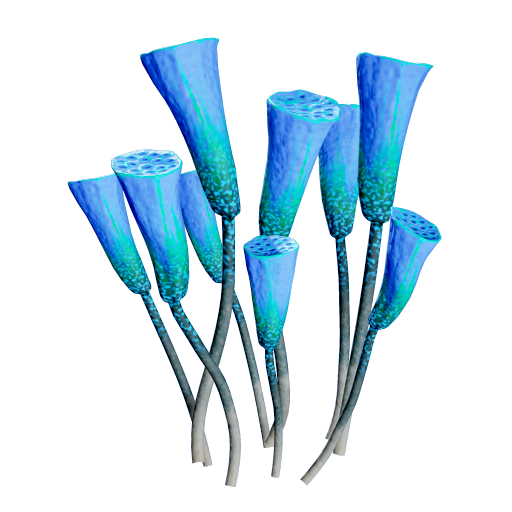
*Spraion flagon*. Databank generation alert: known scientific theory inadequate to explain specimen. Interpretation and improvisation may lead to error. 1. Sponge-worm hybrid Like the raions, this is a sponge occupied by worms. The sponge pumps seawater, while the worms feed on meioafauna in the current. In this 'spraion' the two organisms have become genetically entwined: each can give birth to the other. This defies conventional evolutionary theory, which uses reproductive barriers to define species. 2. Alternating generations Some of the sponge's germ cells undergo a transformation into worm embryos. This transformation involves the activation and expression of stored genetic material from the worm genome. Adult worms leave the sponge, swim to a new anchor site, and die. Their bodies provide food to a newborn flagon sponge. 3. Possible explanations The simplest explanation is that these are two alternating generations of the same organism — like the polyp and medusa stages of the jellyfish life cycle. But spectrogenetic analysis suggest the flagon sponge and its resident worms evolved tens of millions of years apart. Exactly how the reproductive cells of one organism can yield an adult of another species is unknown. Assessment: advise further investigation. May yield insight into genetic adaptations specific to this world. Await further updates.
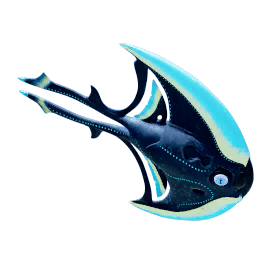
Waxmoon é uma fauna predatória catalogada em Axum Ruins, Colonist Bunker, Coral Gardens e mais 1. Os registros atuais listam 15 pontos de desova confirmados em 4 biomas, dentro da zona principal, com o cluster centrado perto de -2341/4282/-143. Nenhum bloco de estatísticas de combate está anexado a esta entrada, então o perfil do wiki se concentra no habitat estruturado e nos fatos de spawn disponíveis. Os dados de movimento contêm 6 linhas de comportamento.
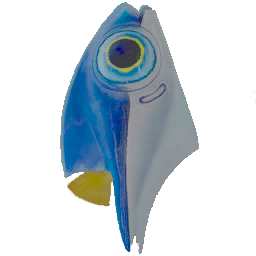
Fish School Flutter Tail é uma fauna passiva catalogada em Colonist Bunker, Coral Gardens, Graveyard e mais 3. Os registros atuais listam 213 pontos de spawn confirmados em 6 biomas, em Default Devmap, Main, PCG Zoo e mais 2 zonas, com o cluster centrado perto de -1906/2502/-26. Nenhuma estatística de combate está anexada a esta entrada passiva, então o perfil da wiki se concentra na localização do habitat, observações de spawn e classificação de ameaças.
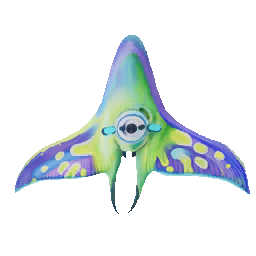
Fish School Mirrorhalfmoon é uma fauna passiva catalogada em Colonist Bunker, Coral Gardens, Plateaus e mais 1. Os registros atuais listam 186 pontos de spawn confirmados em 4 biomas, em Devmap padrão, Gameplayzoo Stimuli, Main e mais 3 zonas, com o cluster centrado perto de -1628/2060/-20. Nenhuma estatística de combate está anexada a esta entrada passiva, então o perfil da wiki se concentra na localização do habitat, observações de spawn e classificação de ameaças.
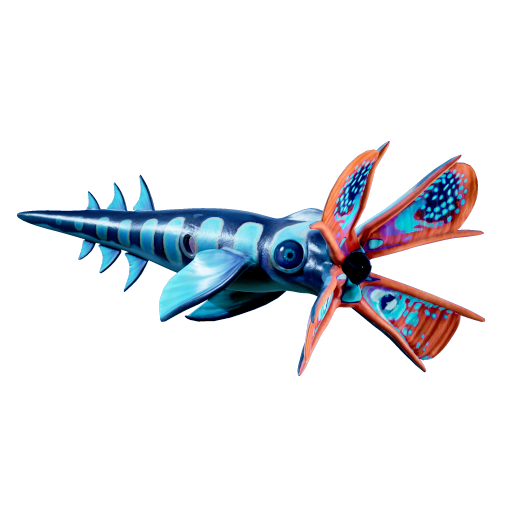
Gar-caçador (nome provisório: *Teuthis courser*). Um cefalópode que desorienta presas para emboscadas de rompe-medula. 1. Morfologia cefalópode Apresenta um formato semelhante ao de cefalópodes terrestres — cabeça com bico, 8 braços, corpo mole alongado e um par de nadadeiras. A estrutura desenvolvida das nadadeiras sugere uma linhagem evolutiva distinta dos cefalópodes invertebrados da Terra. 2 espiráculos conduzem água para brânquias internas. 2. Camuflagem Os 8 braços do gar-caçador são interligados por 4 membranas, que ele exibe à presa. Milhões de cromatóforos (pixels biológicos) criam padrões de camuflagem em movimento, ocultando a sua aproximação. 3. Parceria com rompe-medulas O gar-caçador é a presa ideal para os rompe-medulas, mas ambas as espécies caçam juntas. O gar-caçador expulsa a presa do esconderijo, depois a distrai e a marca com exibições visuais, auxiliando a visão limitada do rompe-medula. O gar-caçador recebe os restos — quanto maior a presa, maior o seu benefício. 4. Bico poderoso O bico do gar-caçador, semelhante ao de um papagaio, é capaz de rasgar carne dura. Isso é muito importante, já que tudo o que ele ingere passa pelo centro de seu cérebro. 5. Estrutura social especulativa Grupos de gar-caçador precisam identificar boas presas para os seus rompe-medulas, porque, caso contrário, eles se tornam o alimento. Enquanto isso, os rompe-medulas precisam atrair bons grupos de gar-caçador, cedendo mais de suas capturas para esse fim. Os gar-caçadores estimulam os rompe-medulas a atacar presas cada vez maiores. A constante negociação dessa parceria lembra o mantra da Iniciativa Alterra: "todos precisamos ser necessários". Avaliação: as exibições do gar-caçador podem sinalizar um ataque iminente de rompe-medula. É potencialmente inteligente e, talvez, treinável.
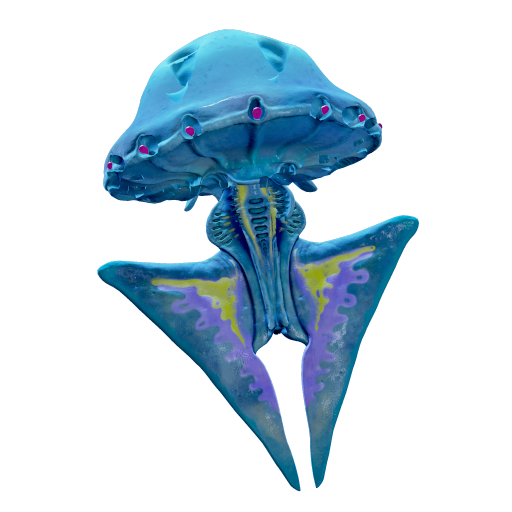
Gelatina elétrica (nome provisório: Staurobrachia capacitor). Grande gelatina complexa que caça com descargas elétricas. 1. Animal único Diferentemente de organismos coloniais como a caravela-portuguesa, a gelatina elétrica é um único organismo, com tecidos especializados — muito *mais* especializados e complexos do que as gelatinas terrestres. Nome de classe proposto: staurobrachia (braços em forma de haste). 2. Estrutura interna complexa A borda externa da campânula é cercada por órgãos sensoriais chamados de ropália. Uma rede nervosa coordena os movimentos da campânula para nadar e buscar presas. A estrutura visível no interior é o trato digestivo. 3. Estrutura de alimentação A gelatina mantém o seu pedúnculo — um vestígio de seu crescimento em pilhas de clones. O pedúnculo canaliza nutrientes diretamente para o sistema digestivo. 4. Nadadeiras elétricas Duas nadadeiras rígidas contêm eletrócitos em forma de fios, provavelmente uma adaptação dos tentáculos ancestrais. Esses órgãos acumulam carga elétrica para atordoar ou matar presas. Potência medida: de 400 a 1000 volts, a 1 ampere: o suficiente para matar um humano. 5. Passageiros peculiares Traços de radioatividade, ceras resistentes a altas temperaturas e ácido sulfúrico indicam contato com fendas hidrotermais. A composição tecidual sugere uma origem no oceano profundo. 6. Domesticadas no passado? Gelatinas próximas umas das outras parecem se comunicar por meio de seus campos elétricos. Não se sabe se possuem nomes próprios ou uma linguagem gramatical, mas certos padrões podem ser treinados e aprendidos — ou até passados de geração em geração. Avaliação: perigo moderado em contato direto. Um prospecto de pesquisa fascinante à distância.
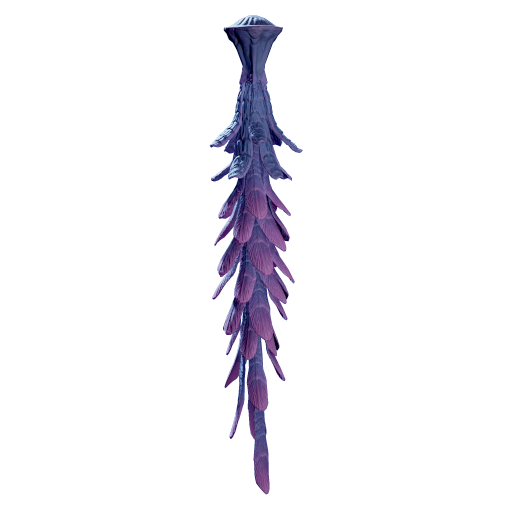
*Anthobrachia hebesoros*, the young stack of flower arms. Reproductive stage of a flower-like jelly. 1. Polyp Despite its resemblance to a kelp, the jelly lei prefers to hang underneath surfaces—where it cannot photosynthesize. It is the rooted polyp phase of a jellyfish's life cycle. The chain of 'flowers' growing beneath the polyp are larval jellyfish, called ephyra. The stalk itself is called a scyphistome. 2. Ephyral traits The budding larvae have broad, flat petals which will eventually merge into the adult jelly's bell. These petals already host photosynthetic symbiotes—it is possible the adult jelly will seek light sources to grow, akin to the terrestrial upside-down jelly. Note the purple color produced by photosynthetic retinal, the same molecule your eyes use to detect light. 3. Heat stress The jelly lei's growth cycle has been accelerated by heat stress. The stalked parent may release its larvae early to allow them to swim clear of hot, oxygen-depleted water. Assessment: sign of ecological crisis.
Giant Tube Salp is fauna catalogued from the current creature data. No combat stat block is attached to this entry, so the wiki profile focuses on the structured habitat and spawn facts available.
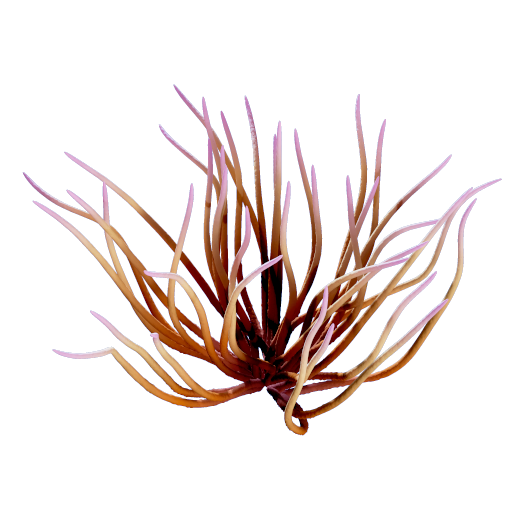
*Gorgon mastix*, the whip gorgon. A soft coral similar to the earthly gorgonians — it lacks the hard limestone shell of a true reefbuilding coral. 1. Earthly namesake Named for the extinct *Leptogorgia virulata*, Earth's sea whip. Like the sea whip it is a predator, and it must defend its soft body from parasites and predation. 2. Spine defenses Unlike the terrestrial sea whip, which developed a chemical arsenal to repel unwanted contact, the whip gorgon colony has developed specialized 'soldier' polyps which migrate to the surface and develop a brittle spine. When disturbed, this spine snaps off, releasing the soldier's payload of toxins. It is impossible to project the effects of this sting on colonists, but mechanical similarities to the infamous Australian gympie-gympie plant suggest negative outcomes ranging from chronic agony to total sleep deprivation lasting weeks to years. 3. Carnivorous diet 'Civilian' polyps in the whip gorgon use their stings to kill and digest microscopic prey. They lack the brittle spine and powerful toxins of the soldier polyp. ASSESSMENT: Avoid contact. Consider pruning back with hand tools.
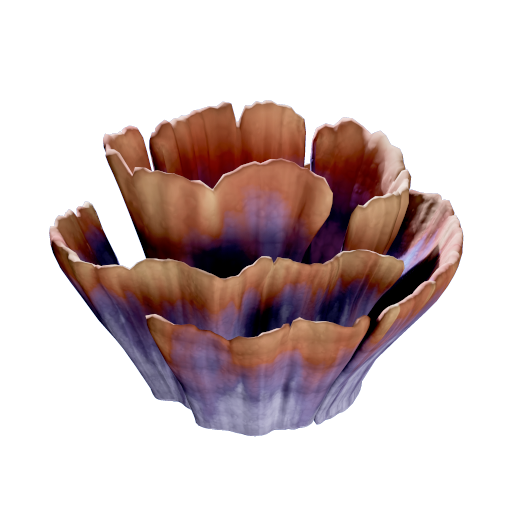
*Gorgon aulaia*. A soft, predatory coral akin to Earth's gorgonians, especially the Venus fan. 1. Sponge-coral moiety Like Earth's brown tube sponges (*Agelas schmidti*), soft corals on this world are a colony of coral polyps growing within a matrix of sponge tissue. In this specimen it is very difficult to distinguish the sponge's jellylike inner tissue (or mesohyl) from the soft coenenchyme which connects the coral polyps. 2. Ribbons of tissue The curtain gorgon forms a long, low-lying fan of tissue which catches prey. The curtain gorgon is an obligate predator and cannot survive on sunlight, but some specimens are colonized by chemotrophic bacteria which may provide the gorgon with extra energy. 3. Plasticized skeleton The gorgon's skeleton is chemically similar to PVC (polyvinyl chloride, an obsolete industrial plastic). Assessment: indicates the presence of plankton and other small sea life.
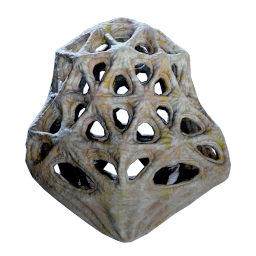
*Gorgon thalamiskos*. A predatory soft coral named for its resemblance to Earth's gorgonians. 1. Sponge-coral moiety Like hard corals on this world, gorgons are sponges inhabited by cnidarian polyps — tiny jellyfish like organisms which live within the sponge and direct its growth. Unlike hard corals, they do not produce a limestone structure or host photosynthetic microbes. They are pure predators. 2. Caged friend The cage gorgon specializes in capturing and protecting a symbiotic partner, which attracts prey for the gorgon to sting and eat. The cage gorgon larva probably adheres to a partner (such as a cherimoya rotsac) and then grows around it, eventually fastening the partner to the seafloor. 3. Duplex larva The free-swimming reproductive stage of the cage gorgon carries cells of a host sponge, like seeds. These seeds are genetically distinct from other sponges in the ecosystem, suggesting the cage gorgon is monogamous with only a single host sponge. Assessment: cutting open the cage gorgon allows access to the symbiotic partner and carries no risk of inflicting pain or suffering. The cage may attract a new partner before healing, or survive while empty.
Noon gorgon (tentatively *Gorgonian meridiem).* A predatory soft coral that lures prey by mimicking the sun in the dark. The brightest noon gorgon in a cave will attract the majority of the prey, creating an arms race to be as bright as possible. Noon gorgons feed much of their energy to their symbiotic light-producing lucifer rotsac. The ancestral noon gorgon may have evolved to grow towards or around lucifer rotsacs, using them as bait. Eventually, a symbiotic partnership developed. Expect noon gorgons to modify their spectrum in different depths and biomes.
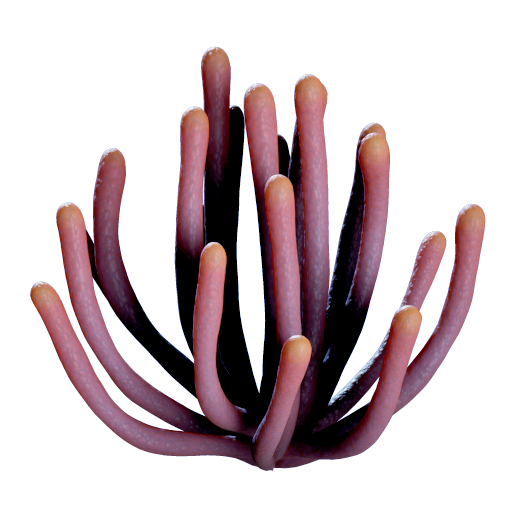
*Gorgon Kryphakous* or Listening Gorgon. A soft coral with dull olive filaments. A predatory filter feeder that sways with the current like kelp. Not known to be hostile or harmful to humans, but remains under observation (see notes below). 1. Sound sensitive Dissecting the Listening Gorgon's basal filaments reveals a web of vibration-sensitive cilia hidden in its soft, gelatinous core. These can detect movement through water at resolutions not seen except in the airflow sensors of clip-winged gnats on Kepler-22b - enough to pick up the swish of a tail through miles of water. 2. Reactive orientation At first the listening gorgon appeared inert, but its movement is simply too slow to be perceived. It has been observed to orient itself over time to specific low-frequency vibrations. It will do this even if food is less abundant in that direction. 3. Silent. The Gorgon kryphakous has no vibration-producing organs. It emits no detectable signals - no chemical plumes nor bioluminescence. It is essentially silent across all known communication spectra. ASSESSMENT: Requires further analysis. One leading hypothesis suggests that the Listening Gorgon once tracked the low-frequency vibrations of a massive, slow-moving marine species - now possibly extinct, or still undetected in the deeper zones of Proteus’s oceans. If so, the open question is whether this trait evolved in response to an ecological partner... or a threat
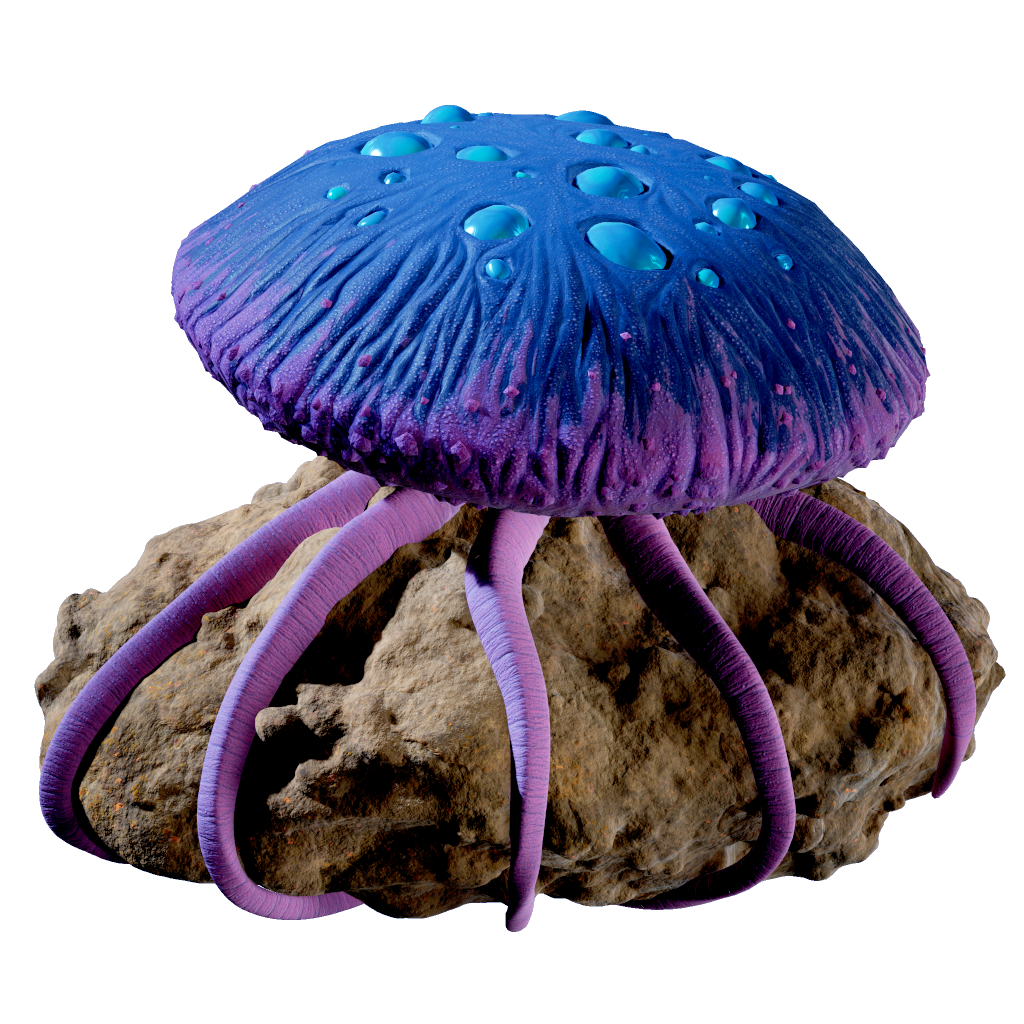
*Dactylbrachia gigas*, a gelatina predadora colossal. Um espécime colossal, sem análogo conhecido na Terra.
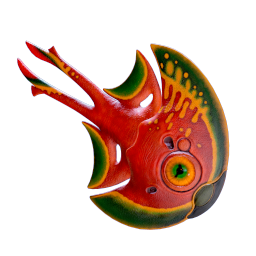
Hemilua (nome provisório: *Moliform luna*). Peixe forrageador grande que filtra plâncton da água marinha e rói pequenas colônias. 1. Peixe-presa Alimento básico para predadores — evoluiu diversas estratégias de fuga e camuflagem. Comestível, mas recomenda-se preparo em fabricador. 2. Sistema hidráulico separado Um bico rígido protege duas válvulas que puxam água marinha para alimentação. Espiráculos atrás dos olhos conduzem água para as brânquias internas, usadas na respiração. 3. Feito para ser ágil Corpo repleto de neuromastos para detectar fluxo de água. Nadadeiras anteriores possuem fenestras (orifícios) que ajudam na rápida inversão de direção. Possivelmente evoluiu para manobrar em espaços apertados ou em cardumes densos de outras hemiluas. 4. Sistema nervoso peculiar Não possui cancelamento de reaferência — não consegue distinguir estímulos causados por seus próprios movimentos das mudanças no ambiente externo. Facilmente fascinado por luz intensa — pode até perceber que é ele mesmo quem gera essa luz. Às vezes, se comporta como se estivesse desorientado, nadando de lado sem benefício aparente. Avaliação: fonte alimentar tolerável.
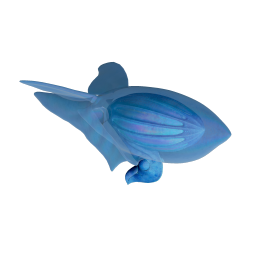
*Hycean hycean*, um predador voador impressionante, nomeado em referência a planetas com céu de hidrogênio e oceano de água.
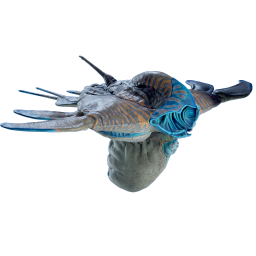
*Titanotagmatapterya amalthea*, o cálice de abundância segmentado alado titânico. Um leviatã artrópode gigantesco, com um bico rasgador enorme e grandes depósitos de gordura, usados tanto para se alimentar quanto para proteger os ovos.
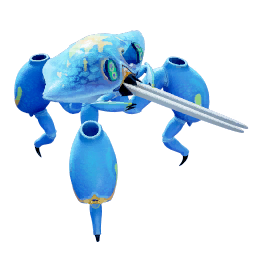
Jetocaris (nome provisório: *Tripod phrontiscaris*). Crustáceo social trípode que demonstra comportamento parental. 1. Morfologia trípode Devido à evolução precoce da simetria bilateral, não existem organismos com três pernas na Terra. As pernas do jetocaris podem ter se originado da fusão de 6 membros anteriores — 3 de cada lado. Os pequenos membros anteriores permaneceram independentes. 2. Jatos nas pernas Evoluídos a partir de brânquias localizadas nas pernas, propulsores com válvulas em cada membro permitem que o jetocaris paire e nade. A fusão das pernas para dobrar o tamanho de cada brânquia-propulsor aumenta a eficiência, conforme simulações. 3. Línguas coletoras O jetocaris possui 2 rádulas longas e flexíveis (possivelmente evoluídas de maxilípedes manipuladores de alimento) que usa para buscar alimentos. Os membros anteriores limpam e cuidam das rádulas. Essas extremidades são sensíveis, mas regeneráveis. Isso sugere que o jetocaris pode regenerar seus nervos — e que algo no leito marinho gosta de mordê-los. 4. Comportamento parental O jetocaris carrega e protege filhotes da mesma espécie, e a sua linguagem corporal expressiva indica uma vida social complexa. Análises espectrogenéticas mostram que alguns dos filhotes são adotados — não descendem geneticamente do cuidador. A adoção já foi observada em muitas espécies, embora seja considerada um erro sob uma perspectiva adaptativa racional. Pode ser um traço instintivo. Ou, talvez, o jetocaris tenha vivido em grupos eussociais no passado, com uma única rainha reprodutiva e operários encarregados da criação da prole. Avaliação: majoritariamente inofensivo. Pode oferecer benefícios emocionais.
Lagarta-arista (*Scindovermis arista*). Habita águas quentes e ricas em minerais, onde suas plumas coletam sulfeto de hidrogênio e outros minerais do ambiente. Pode sobreviver em temperaturas próximas à ebulição.
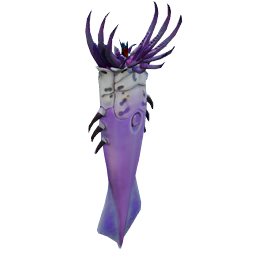
Sandspear Juvenile é uma grande fauna predatória catalogada em Ruínas de Axum, Jardins de Coral, Ruínas Overgrown e mais 1. Os registros atuais listam 20 pontos de desova confirmados em 4 biomas, dentro da zona principal, com o cluster centrado perto de -2899/4209/-102. O ajuste de criatura registrado lista 1000 HP e 500 velocidade máxima de natação. Os dados de movimento contêm 6 linhas de comportamento.
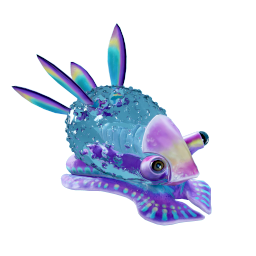
Lesma d'água (nome provisório: *Limacopelago hydroclastus*). Um enigma biológico que converte água marinha em água doce potável. 1. Célula de combustível microbiana Remover o sal da água marinha exige muita energia. Ainda assim, a lesma d'água consegue isso, talvez como subproduto de um reator microbiano interno que se alimenta dos resíduos presentes na água marinha. 2. Reserva de água doce Uma bolha plástica hidrofóbica protege a lesma da rápida desidratação causada pela água salgada. 3. Fazenda de plâncton A bolha de água da lesma abriga uma espécie de plâncton altamente produtiva, que transforma luz em alimento. A água doce pode ser necessária para a química do plâncton, ou talvez a bolha funcione como uma prisão — impedindo o plâncton de escapar. 4. Aura vampírica O bico desenvolvido da lesma tem uma superfície cortante afiada. Possível origem evolutiva como parasita ou comensal, sugando o sangue do hospedeiro e filtrando toxinas. Avaliação: única fonte próxima de água potável. Recomenda-se ferver antes de beber. Em caso de problemas renais, considerar permitir que a lesma se alimente do seu sangue.
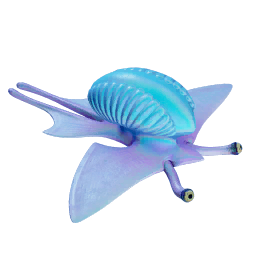
*Limacopelago kleptopharos*, a lesma que rouba luz. Um parente livre-natante e luminescente da lesma-d’água, com traços quiméricos de uma espécie completamente diferente.
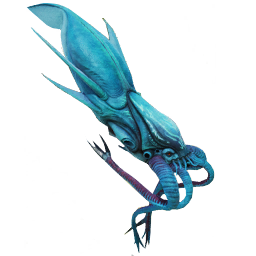
Predador cefalópode colossal (nome provisório: *Tyrannoteuthis phobocoeus*, ou polvo tirano da curiosidade temerosa). Alimenta-se de presas com carapaças duras e defesas pesadas. Solitário, mas altamente inteligente. Possivelmente vive em regiões abissais. 1. Morfologia cefalópode O corpo do coletor lembra o de um cefalópode terrestre — um manto alongado e vários membros ligados diretamente à cabeça. O manto é revestido por uma couraça plástica. Diferentemente dos cefalópodes da Terra, ele possui 4 tentáculos de caça longos, com garras ágeis. Os seus 8 braços são pequenos e se agrupam ao redor do bico. 2. Propulsor potente 2 grandes espiráculos alimentam 1 propulsor traseiro. Esses espiráculos são separados das 4 aberturas branquiais na cabeça, o que permite ao coletor controlar separadamente a respiração e a velocidade de propulsão. 2 corações secundários bombeiam sangue das brânquias para o coração principal. 3. Presas resistentes 1 bico colossal (capaz de rasgar titânio blindado) e 4 tentáculos com garras de biovidro afiadas sugerem que o coletor se especializa em abrir ou destruir presas extremamente blindadas. Entre possíveis alvos estão o caranguejo coralino e o macro-mandíbula. A necessidade de lidar com presas ativas e blindadas pode ter causado a evolução de sua psicologia agressiva e curiosa. 4. Órgão de transmissão Esse enorme órgão multicavitado funciona como um sonar biológico de matriz em fases. Vários "alto-falantes" e "ouvidos" permitem ao coletor emitir pulsos complexos e em múltiplas partes. A densa rede nervosa que conecta esse órgão ao cérebro toroidal sugere que os padrões de bioluminescência são reflexos diretos da atividade cerebral do animal. 5. Pupila em formato de W Em ambientes iluminados, a pupila do coletor assume um formato de "W". Essa característica também existia em alguns cefalópodes terrestres, embora a sua função exata nunca tenha sido determinada antes do colapso Holoceno. 6. Gigantismo abissal Criaturas das profundezas frequentemente são enormes, um fenômeno conhecido como "gigantismo abissal". Avaliação: predadores com dietas variadas e desafiadoras tendem a ser inteligentes e curiosos, e, para as suas presas, a curiosidade de um predador pode parecer tortura arbitrária. Qualquer submersível pequeno ou habitat submarino pode facilmente atrair o interesse de um coletor.
"A maior parte da biosfera é vazia. Um deserto molhado com cinco mil metros de profundidade. A vida na superfície aproveita o sol e depois morre. Os mortos nevam até o fundo pra alimentar coisas estranhas.
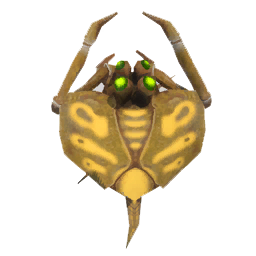
Gafanhoto é fauna passiva catalogada em Ruínas de Axum, Jardins de Coral, Cemitério e mais 1. Os registros atuais listam 137 pontos de desova confirmados em 4 biomas, dentro da zona principal, com o cluster centrado perto de -2908/4516/-147. Nenhuma estatística de combate está anexada a esta entrada passiva, então o perfil da wiki se concentra na localização do habitat, observações de spawn e classificação de ameaças.

Tentatively *Rotsac lucifer*, the light-bringing rotsac. A tunicate-like animal which ferments decomposing biomatter inside its body. 1. Hidden body The rotsac's larval swimming body transforms into a spherical adult form. Because fermentation does not require oxygen, the rotsac actually stops breathing as it matures. 2. Swollen with hydrocarbons The rotsac contains isoprene, useful for fabricating rubber and lubricant. High diacetyl levels give the rotsac a strong caramel funk. 3. Bioluminescence Glow may attract animals (especially sun-seeking microorganisms) to defecate or die on the rotsac. Bioluminescence seems to play an important role in this world's ecology. Regular experiments with light reactions are advised. 4. Symbiote Often found glued to the cradle shootroot, an unrelated species of starfish-like bottom-dweller that provides the rotsac with an anchor while it grows. Assessment: useful source of organic polymers for rubber and oil. Consult your Noetic Advisor to research optimal search areas.
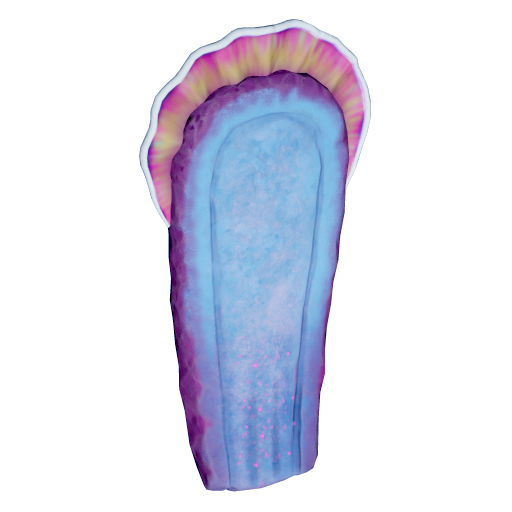
*Symphon macaron*. A sponge that has developed a disc of flagellated feeding cells. Named for the dessert sandwich cookie (not available in current fabricator settings). 1. Hardened plates Instead of a sponge's normal inner and outer layers, the macaron develops two hard plates of pinacoderm. These anchor the feeding disc to a holdfast. 2. Feeding disc The sponge's mesohyl (internal jelly) has specialized into feeding disc, with tentacled cells that pull particles from the surrounding seawater. This leaves the delicate jelly vulnerable to predators and parasites. 3. Hostage exchange The feeding disc hosts the larvae of sponge-eating organisms in its pores. By providing a shelter and habitat for their young, the macaron may buy itself a degree of safety and defense. (These larvae are themselves tempting prey for many species.) 4. Unusual protein expression Many of the cells in the feeding disc express proteins also found in the hosted larvae. This may be a recognition signal to attract the desired species. ASSESSMENT: Inedible despite name. Await further updates.
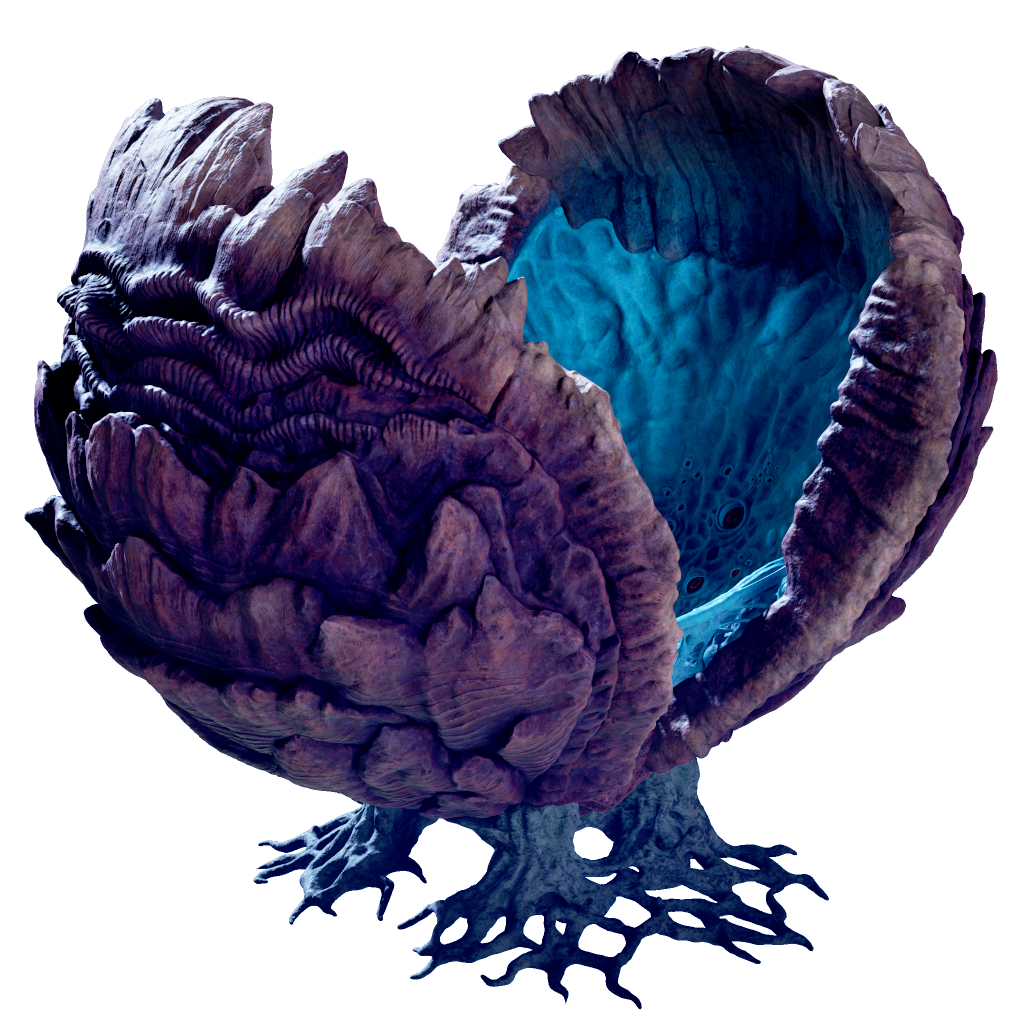
Macro-mandíbula (nome provisório: *Megamya sudacna*, "grande molusco que te morde"). Uma enorme amêijoa onívora com uma perigosa estratégia de defesa e alimentação.
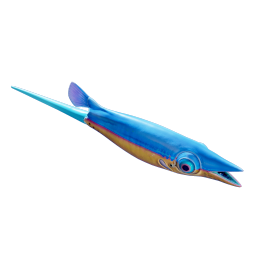
Peixe comestível, porém pouco substancial. Difícil de segurar devido à sua propulsão eletromagnética única.
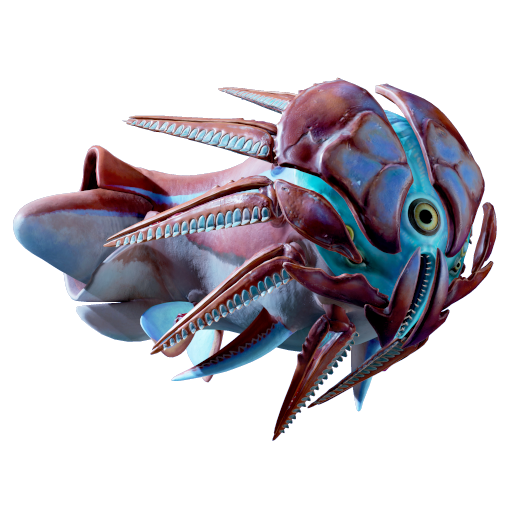
Maleocéfalo (nome provisório: *Panoplia malleocephalus*). Um herbívoro blindado, territorial e que vive em bandos, equipado com um poderoso aríete. 1. Cabeça de martelo Desafia intrusos em seu território, especialmente outros maleocéfalos. Exibe suas nadadeiras peitorais e fecha o escudo de esmalte em sua cabeça antes de atacar. 2. Propulsão a jato Espiráculos localizados atrás dos olhos alimentam um canal de jato com brânquias internas. Esse jato impulsiona os ataques repentinos do maleocéfalo. 3. Cérebro grande Flutua dentro de um cisto protetor. O olho central enxerga cores, enquanto dois olhos menores, sensíveis a movimento, guiam o aríete. 4. Mandíbula para pastagem A mandíbula vertical e musculosa indica uma dieta composta por esponjas, laminárias, tunicados e possivelmente coral triturado. A necessidade de proteger uma área de pastagem pode ter evoluído a territorialidade do maleocéfalo. 5. Comportamento de treinamento? Maleocéfalos colidem contra domos de coral. O benefício adaptativo não é claro — talvez seja para fortalecer seus escudos. Recomendações: cautela ao pilotar veículos. Pode apresentar cognição social comparável aos ungulados da Terra, alguns dos quais eram extremamente perigosos para humanos. Áreas de colisão (chamadas de "leks") são uma fonte significativa de ruído oceânico.

*Mango kestros*, o tubarão lançador de dardos. Predador territorial capaz de disparar presas com ponta de urânio a até vinte metros por segundo.
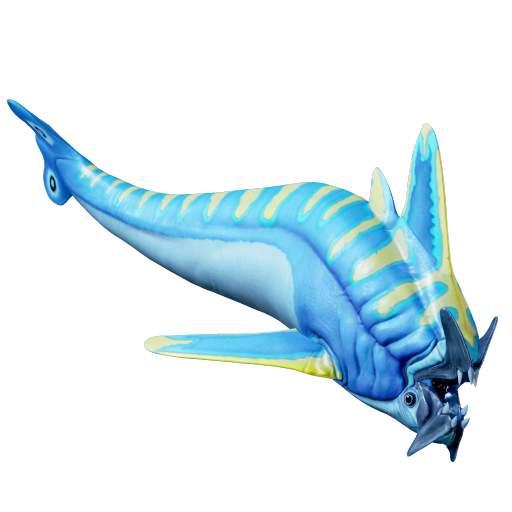
Mangô roedor (nome provisório: *Mango tructa*). Um onívoro irritante adaptado para alimentação raspadora. Ataca peixes, esponjas, laminárias e até membros humanos.
*Mephit ceryneian.* A stack of cloned clams adapted to life in very hot water. The central stalk that connects them appears to be a symbiotic worm worm worm worm worm 1. Clamclone Clam stack clone stack! Jelly lei like. Connect on worm like coins on spindle. Monitoring PDA bad output. 2. Genderstack All clone female. Worm forms antlers: emit male cell. Why worm help clam? No more worm. Worm taken over by clam cancer. 3. Hot hot hot! Clams evolve shut forever. Too hot! Never open...but then starve? A ha, eat with tissue fans, withdraw if nibble burn. Starvation solved. 4. Namepun Stack sounds like stag and stack has antlers and stag has antlers. Stagged. Name for hot water living clam? Mephit. Stagged mephit. Assessment: bad output stop.
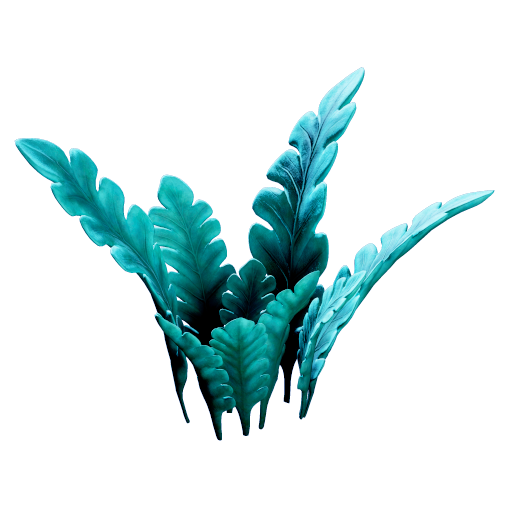
*Ventworm cryocthonian*, the vent worm that brings cold from below. 1. Vent worm The fridge worm's body plan is familiar from terrestrial analogs — a tubular body with a protruding gill. The body hosts a colony of symbiotic bacteria in a chamber called the trophosome ("feeding body"). These bacteria help the worm survive extreme environments. 2. Cold water emitter The cryocthonian lives in colonies along geothermal gradients—from hot to cold. It exploits the flow of energy and minerals through the rock to feed. Colonies pumps deep, cold brine (usually at 4 degrees C) to the worms exposed to hot water, helping regulate their temperature. 3. Sulfur-based metabolism The symbiotic bacteria in the fridge worm feed on sulfur and other dissolved minerals. The fridge worm uses cold deep-sea brine to trigger chemical reactions which help collect minerals from the hot vent water. Assessment: Produces pockets of cold water. May attract life that cannot tolerate the surrounding heat.
*Anthobrachia necrolei*. A clonal stalk of large jellies, similar to Earth's stauromedusae. Each jelly remains moored to the stalk, rather than maturing into a free-swimming medusa. 1. Enormous size and hunger Rather than feeding on prey, the necrolei gathers dead matter from the seawater. The size and height of the stalk are directly related to the rate of death and decay up-current. 2. Acid-yielding metabolism The necrolei has adapted to low-oxygen seawater. It ferments much of the matter it collects in a central 'basket' stomach, a process which requires no oxygen and yields strong acids. The necrolei concentrates these acids around its eggs as a defense. Assessment: large numbers of necrolei in this region indicate a bloom, a population explosion caused by a flood of nutrients. This is a poor sign for the health of the ecosystem and perhaps for the state of the global climate. Produces egg clusters that can be processed into strong acid.
*Mango kestros*, o tubarão lançador de dardos. Predador territorial capaz de disparar presas com ponta de urânio a até vinte metros por segundo.
Tubarão Nibbler é uma grande fauna predatória catalogada em Colonist Bunker, Coral Gardens, Plateaus e mais 1. Os registros atuais listam 13 pontos de desova confirmados em 4 biomas, dentro da zona principal, com o cluster centrado perto de -3348/4197/-29. O ajuste de criatura registrado lista 100 HP e 500 velocidade máxima de natação. Os dados de movimento contêm 8 linhas de comportamento.
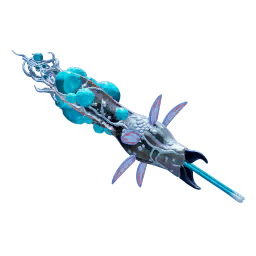
Um cefalópode sem braços, com bico (semelhante a uma lula), que se alimenta de sangue e fluidos corporais. Extremamente infectado por um grande vírus de RNA (nome gerado: Proteavírus beta), que altera o seu comportamento.
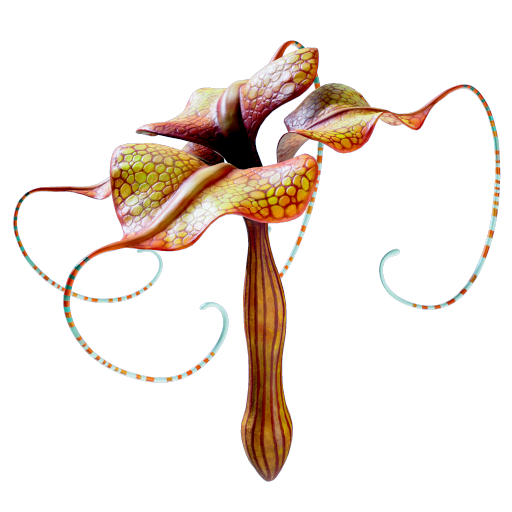
Tentatively *Pyloraptor mimic*. A predatory animal disguised as a leafy kelp. Discharges electrical shock when disturbed. 1. Cephalopod-like body Resembles an octopus or squid planted mantle-down in the seabed, with its arms spread to mimic kelp. Pouches of symbiotic bacteria between the arms allow it to photosynthesize. A beak at the center of its arms is plugged with mucus. 2. Electrical hunting The four arms contain electrocytes, organs which build up an electrical charge. When disturbed by prey, the electrocysts discharge, causing paralysis or death. It is unclear if the prey are directly eaten, or if they decompose in a garden around the mimic pylon. (Organisms which feed on external decay are known as saprotrophs.) 3. Implies kelp The pylon's cryptic aggressive mimicry of leafy kelp implies that kelp must exist on this world. Most species in Earths' oceans eat to survive, with primary production (the conversion of sunlight into biomass) carried out by plankton and algae. Leafy kelp were a late evolutionary development. 4. Cave mouth strategy Mimic pylons tend to cluster around sea cave entrances, perhaps to feed on organisms entering or leaving the caves. Alternately (and speculatively) they may have been planted there by another species to control access. Assessment: avoid contact to prevent injury. May mark cave mouths.
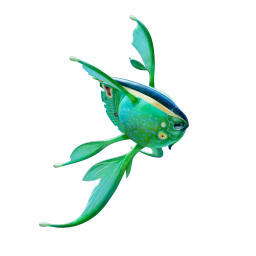
Um peixe-presa que imita as bolsas de flutuação de uma espécie de laminária ainda não descoberta.

Pulsóide (nome provisório: *Salpapod pulsoide*). Um onívoro propulsado a jato, evoluído a partir de um organismo semelhante a um polvo ósseo. 1. Mandíbula raspadora As partes bucais rígidas do pulsóide podem raspar algas das rochas, esmagar pequenos crustáceos, puxar segmentos de corais e cortar tufos de laminárias. 2. Quatro nadadeiras Possivelmente evoluídas a partir de pernas ósseas, elas direcionam o pulsóide e abrigam suas 4 bolsas estomacais. 3. Estômagos diverticulares Cada nadadeira-perna contém uma bolsa digestiva com bactérias especializadas para porções da dieta diversificada do pulsóide. O movimento de natação ajuda a agitar e digerir o alimento. 4. Jato central O canal central é revestido por células urticantes, que matam pequenas faunas marinhas. Não inserir os dedos. Pulsos musculares impulsionam o pulsóide por ação a jato. 5. Trança "espinhal" em forma de rosquinha A trança nervosa do pulsóide envolve o canal do jato como uma rosquinha. Estruturas cerebrais toroides podem ter consequências interessantes em organismos maiores. Avaliação: comestível, porém com alta concentração de metais e ceras. Recomenda-se cozimento rigoroso no fabricador.
Pulsóide elétrico (nome provisório: *Salpapod pulsowangi*). Parente ou morfo do pulsóide comum. Atraído por corrente elétrica. 1. Eletrotropismo Pulsóides elétricos são atraídos por corrente viva. Toleram amperagens surpreendentes, o que os torna perigosos de remover manualmente ou com ferramentas. Curtos-circuitos causados por eles podem comprometer tanto o pulsóide quanto os sistemas elétricos. 2. Estômagos gelatinosos Os quatro divertículos estomacais do pulsóide elétrico são preenchidos por um hidrogel semelhante ao muco receptor das ampolas de Lorenzini — órgãos sensoriais usados para detectar campos elétricos. Esses divertículos podem localizar campos elétricos de presas ocultas ou fibras bacterianas condutoras em gosmas do leito oceânico. Correntes artificiais podem atuar como superestímulos — iscas impossíveis de resistir. 3. Metabolismo elétrico Embora improvável, não é impossível que o pulsóide tenha evoluído para metabolizar corrente elétrica. Todo metabolismo orgânico envolve transporte de elétrons; formas de eletrotrofia direta já foram observadas em planetas-tempestade e até em vida no vácuo. Avaliação: praga séria em sistemas elétricos e de comunicação. Pode ser necessário o uso de iscas condutivas para controlar infestações.
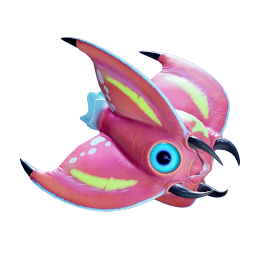
Quadrangular (nome provisório: Salpapod tetragnatha). Um parente carnívoro ou morfo do pulsóide comum. 1. Semelhanças com pulsóides Compartilha o plano corporal do pulsóide, mas troca a mandíbula áspera por 4 dentes perfurantes. 2. Dieta carnívora O quadrangular se enterra na carne viva para se alimentar de sangue e fluido seroso. É difícil removê-lo sem ferir o hospedeiro. Recomenda-se o uso de luz ou calor para induzir a descolagem voluntária do quadrangular. 3. Enzima vampírica Um anticoagulante impede a coagulação do sangue da presa — semelhante à enzima draculina produzida pelos icônicos morcegos-vampiros da Terra. Essa enzima é idêntica à encontrada na lesma d'água, possivelmente transferida via retrovírus. 4. Superpopulação de quadrangulares O fardo dos quadrangulares na vida local é grande, sugerindo a despopulação ou extinção das espécies que antes regulavam as suas populações. Alternativamente, os pulsóides podem estar passando fome e se transformando em quadrangulares para buscar novas fontes de alimento. Avaliação: Pode causar desidratação grave ou até fatal se permanecer fixado. Remover pelo método mais seguro disponível. Considerar remover os quadrangulares dos organismos encontrados para observar possíveis respostas sociais.
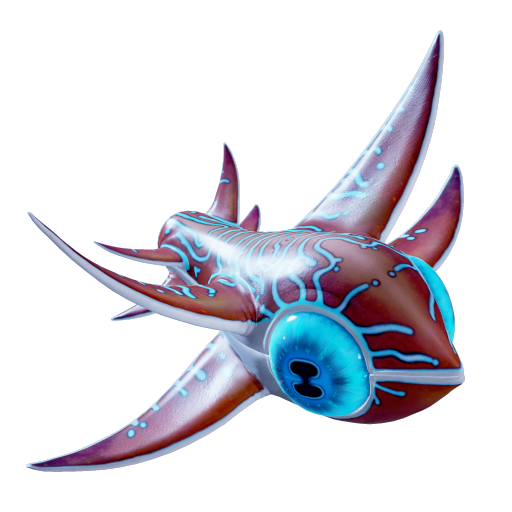
Quatro-olhos (*Morokotoform duplex*). Um peixe predatório sempre nascido em pares de gêmeos idênticos. Os gêmeos se unem barriga com barriga, conectando seus sistemas digestivo e nervoso para se comportarem como um único organismo.
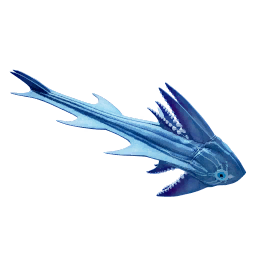
*Sitaroid gemini*, a raia gêmea que se assemelha a um sitar. Um eletropredador das profundezas, impulsionado para a superfície por perturbações ecológicas.
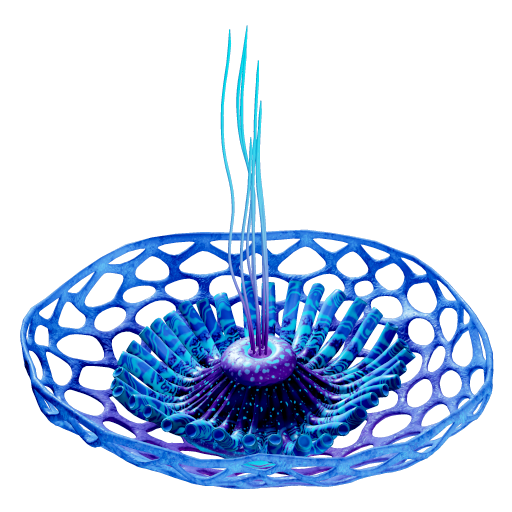
*Raion calix*. A puzzling combination of worm colony (the raion) and slime mold. 1. Feeding strategy Feeds on drifting matter, though the worms also sting and kill meiofauna (small sea life between 45 nm and 1 mm in size). 2. Glassy central structure The central structure is a glasy spicule similar to those found in Earth's glass sponges. The worms live in this structure, creating a raion — a sponge inhabited by worms. 3. "Tripe bowl" The ‘tripe bowl’ around the base is a single enormous cell, similar to Earth’s syncytial slime molds. The structure resembles the lining of a cow’s stomach, although this Voronoi pattern is common to self-organizing structures in many exobiologies. Its function is unclear. In terrestrial analogs, syncytial structures can be found in both healthy tissues like muscles and in tissues infected by certain viruses. Optogenetic analysis cannot determine the tripe bowl's genetic ancestry. Assessment: biological enigma. Await further updates.
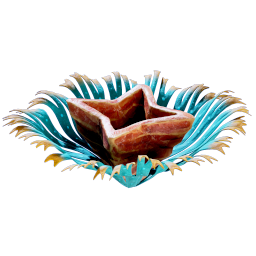
A basket-shaped organism (tentatively *shootroot cunabulum*) with no clear Earthly analog. Anatomically similar to a plastic starfish, or to an opened variety of Earth's extinct blastoids. 1. Animal anatomy The flattened, fibrous 'leaves' are the arms of an animal loaded with photosynthetic symbiotes. The central structure houses a digestive system and a hard, sticky cradle (the cunabulum). A second ring of arms grows into the seabed, seeking crevices in the rock. 2. Preferred symbiote The cradle is an exchange site with a symbiotic partner (such as the lucifer rotsac). Spectrogenetic analysis suggests the cradle shootroot is younger than the rotsac. It may have originally parasitized free-floating lucifer rotsacs, before evolving a niche as an anchor: providing a refuge and minerals to the rotsac in exchange for a share of the rotsac's fermented food. 3. Plastic fibers Although it lacks the true cell walls of Earth plants, the cradle shootroot strengthens its tissues with bioplastic fibers. Too tough to cut by hand, they could be severed by a cutting tool. Assessment: tough fibers could be used to synthesize fabric, possibly food.
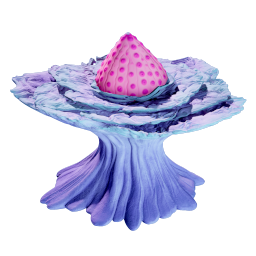
*Shootroot cabbage*. A robust bottom-dwelling organism anatomically similar to a plastic starfish, or to an opened variety of Earth's extinct blastoids. 1. Animal anatomy The cabbage shootroot's upwards-facing mouth is surrounded by outstretched arms. These arms are hard, tightly grouped, partly calcified, and covered in a tough biopolymer characteristic of other shootroots (tentative name: polyproteovinyl). These arms produce the cabbage-leaf texture that gives the shootroot its name. 2. Seabed burrowing A second set of arms uses ribbons of the same tough biopolymer to dig into the seabed, stirring up sediment and expanding cracks in rock. This is a difficult and metabolically expensive process, but it is a niche with little competition. 3. Symbiote kiss The cabbage shootroot does not use its mouth to eat, or its hard leaflike arms to feed. These surfaces seem to be reserved for a symbiotic partner. The cabbage shootroot uses its mouth to transfer nutrients gathered by its roots to the symbiote, and to receive a trickle of food or chemistry in exchange. 4. Circular nerve cord Like all shootroots, the cabbage shootroot is notable for its expression of a circular nerve cord. Assessment: do not sit. You may receive nutrients.
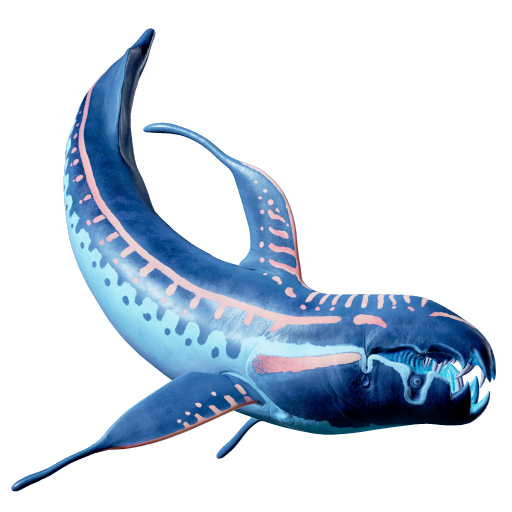
Rompe-medula (nome provisório: Mangô medullivorus).
Marrowbreach Giant é uma fauna passiva catalogada no Cemitério. Os registros atuais listam 1 ponto de desova confirmado em 1 bioma, dentro da zona principal, com o cluster centrado perto de -2919/4469/-68. Nenhuma estatística de combate está anexada a esta entrada passiva, então o perfil da wiki se concentra na localização do habitat, observações de spawn e classificação de ameaças.
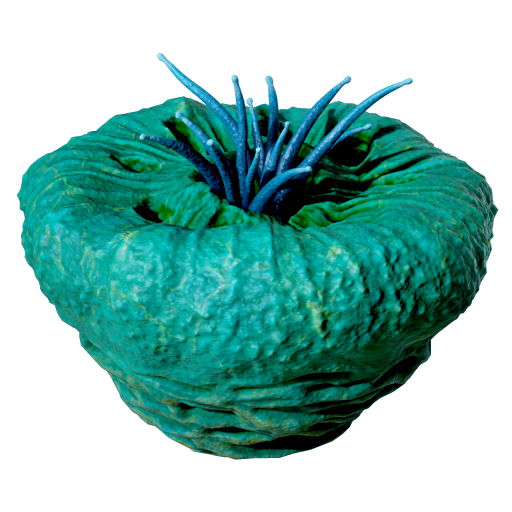
An organism (tentatively *Raion donut*) that resembles an Earthly anemone or ceriantherian, but is actually a sponge occupied by a colony of predatory worms. 1. Raion An organism defined as a sponge occupied by a colony of cloned predatory worms. 2. Hunting strategy The worms live in the sponge's jelly (called the mesohyl), protruding from its anus (the osculum) to sting passing prey with sticky cells and draw them into the sponge. 3. Puzzling genetics Spectrogenetic analysis indicates the host sponge and the resident worms contain partial copies of each others' genomes. This is a biological impossibility on Earth, and suggests that genetic inheritance functions differently on this world. Assessment: minor sting hazard — do not insert fingers. Important scientific discovery.
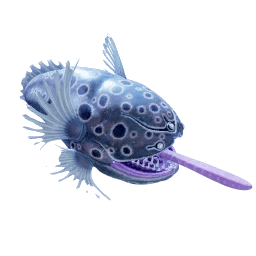
*Postpanoplia epicurean*, o voraz peixe-blindado sem armadura. Imprevisível e faminto, especialmente sob a influência de parasitas.
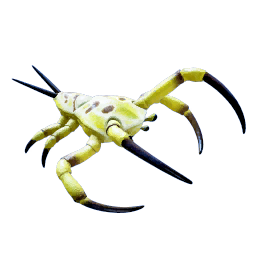
*Ostrakonskelos glossaklept*, o rouba-língua de pernas duras. Um caranguejo ou piolho parasita que vive na boca, causando uma fome intensa e constante.
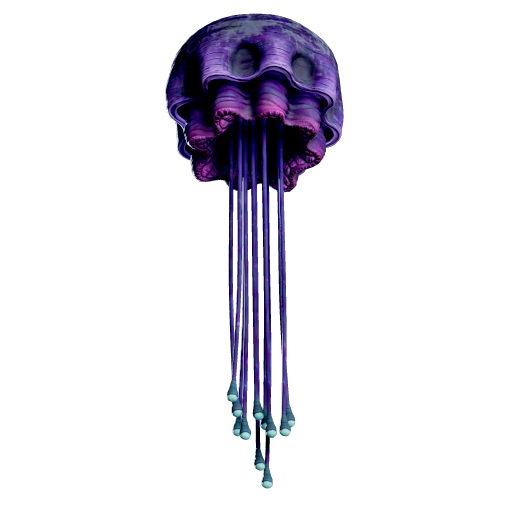
*Salp pendulous*. A sticky, suspension-feeding predator that captures organisms from the current. 1. Salp-like biology Like Earth's salps, this is a colony of zooids — tiny, cloned animals (in this case tunicates) — that form a long, tube-like pump. The salp draws in water to filter for plankton. 2. Hard holdfast The holdfast that anchors the feeding string is secreted by the same zooids that make up the rest of the organism. Spectrogenetic analysis detects proteins similar to those expressed by reefbuilding sponges and corals. 3. Bloom response Terrestrial salps can reproduce very quickly, allowing them to grow with—and devour—sudden blooms of algae. If the algae bloom is too dense, the salps may clog. Assessment: may be a useful indicator of ecological stress. Await further updates.

Scourge Hive is fauna catalogued from the current creature data. No combat stat block is attached to this entry, so the wiki profile focuses on the structured habitat and spawn facts available.
Veps Sensor is fauna catalogued from the current creature data. No combat stat block is attached to this entry, so the wiki profile focuses on the structured habitat and spawn facts available.
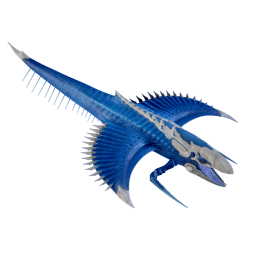
*Skythopterygion atropos*, o ceifador de destinos de nadadeiras em foice. O macho de uma espécie de leviatã predador sexualmente dimórfica, que vive em mar aberto e ataca em bandos (ou "calafrios").
Snorkleback (Adult) is fauna catalogued from the current creature data. No combat stat block is attached to this entry, so the wiki profile focuses on the structured habitat and spawn facts available.
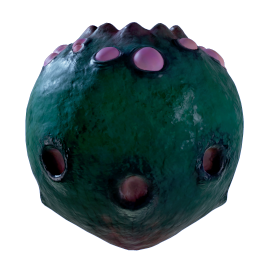
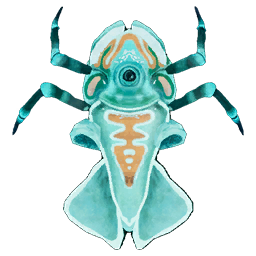
Teal Cycloplet é uma fauna passiva catalogada em Coral Gardens. Os registros atuais listam 29 pontos de desova confirmados em 1 bioma, dentro da zona principal, com o cluster centrado perto de -3462/3982/-49. Nenhuma estatística de combate está anexada a esta entrada passiva, então o perfil da wiki se concentra na localização do habitat, observações de spawn e classificação de ameaças.
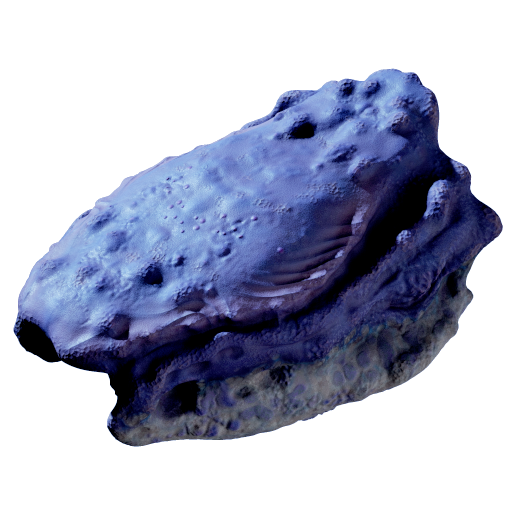
O titã-perfurador (Lithodont titanicae) compartilha certos traços biológicos com o grande organismo no horizonte. Devido ao tamanho do organismo, que implica a necessidade de quantidades enormes de nutrientes, o titã-perfurador pode ser uma raiz ou tubo que se conecta de volta à torre central.
The titan-class organism on the eastern horizon pushes the boundaries of planetbound life.
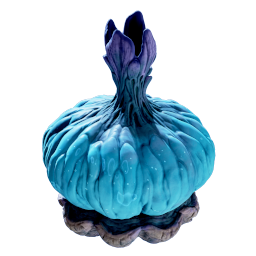
*Tunic aeolian*. A bizarre animal that splits seawater into hydrogen (on which it feeds) and oxygen (which it releases). 1. Tunic Like Earthly tunicates, this is a complex animal with a heart, nerve chord, and a flexible exterior shell (the tunic). 2. Radiolytic metabolism At the heart of the oxygen tunic is a nugget of radioactive metal such as uranium, radium, or thorium. Radiation from this nugget splits water into hydrogen and oxygen through radiolysis. The oxygen tunic retains the hydrogen to feed an internal colony of sulfur-reducing bacteria, and releases the excess oxygen. 3. Blue glow Cherenkov radiation from the core excites radioluminescent pigments in the tunic, producing a distinctive blue glow. This may be a warning to would-be predators that the oxygen tunic releases poisonous quantities of oxygen. 4. Implications for life on this world The oxygen tunic's metabolism suggests that this world has an energetic geology and a biosphere adapted to use radiation as a food source. It also has interesting implications for life without sunlight. On Earth, even deep-sea vents depend on oxygen produced by photosynthesis. No such dependency exists here. Assessment: emergency oxygen source for divers. Beware that repeated use could lead to radon buildup, with serious health risks including cancer.
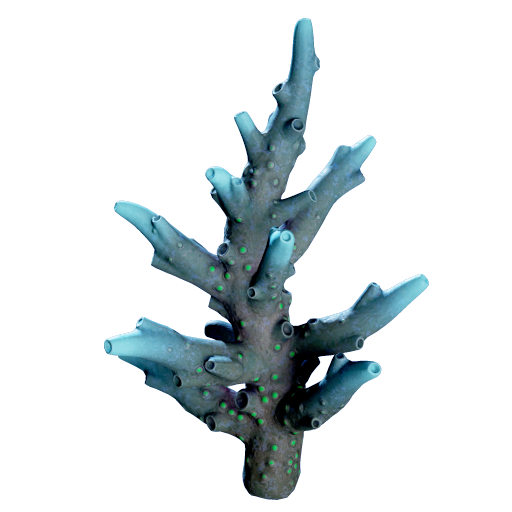
*Hecaton tunic*. Named for the hundred-handed hecatoncheires of Greek myth. A complex of animals undergoing competitive sex differentiation. 1. Anatomy Each pore on the surface of the hecaton is the mouth of a tunic, a complex filter-feeding animal. The colony's branching structure allows each tunicate acces to the water so it can breathe and eat. Each tunic grows a flexible, semi-hard polyvinyl shell which merges with the neighbors' tunics, defending the entire colony. 2. Growth patterns Analysis suggests the colony begins as a single stem of identical tunicates cloned from an embryo. More successful tunicates become large and sexually mature, starting new arms of the colony and developing their own eggs. Less successful tunicates are driven to the ends of the arms, where they shrink and develop a teal bioluminescence. 3. Viral reproduction The less successful tunicates do not release sperm. Instead, they are heavily infected by a strain of large RNA virus in the seawater. The majority of the tunic's genome consists of copies of this virus insert by retroviral action. How the hecaton tunic fertilizes eggs is therefore unclear—it seems to lack sperm cells. Assessment: reproductive enigma. Await further updates.