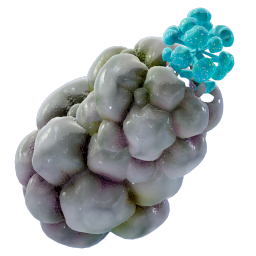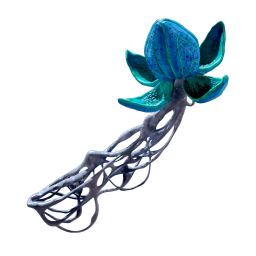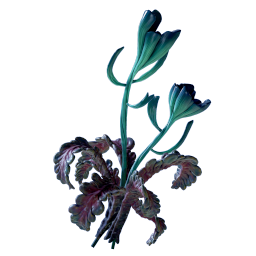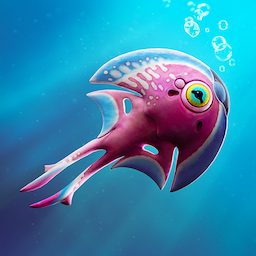
Subnautica 2 위키 현장 가이드
업데이트
91 항목

생명체

동물군과 식물군: 행동, 서식지, 스캔, 지도 지점.

생명체
91
포식자
12
정착성
36
식물군
10
가아오징어
모바일

가아오징어

fauna

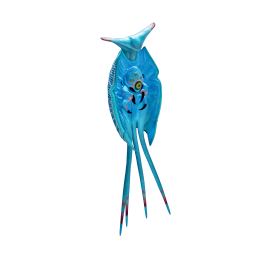
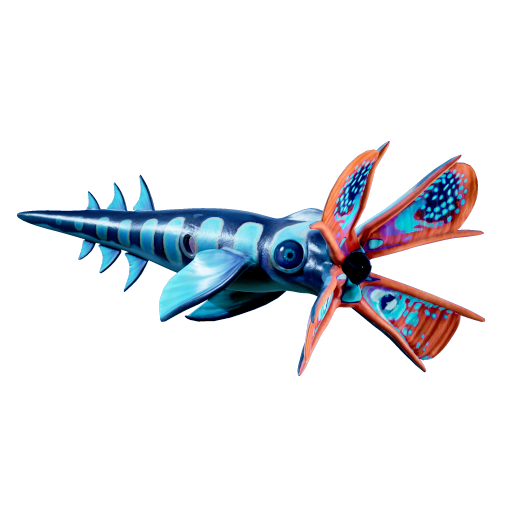
가아오징어(가칭 *Teuthis courser*). 뼈뚤치의 매복 공격을 돕기 위해 먹잇감을 유인하는 두족류 생물입니다. 1. 오징어형 신체 구조 기본적인 체형은 지구의 오징어와 유사하며, 부리가 달린 머리와 여덟 개의 팔, 길고 부드러운 몸통, 한 쌍의 지느러미로 구성되어 있습니다. 단, 정교한 지느러미 구조로 미루어 볼 때, 뼈가 없는 지구 오징어와는 다른 진화 경로를 거쳤을 것으로 보입니다. 두 개의 기문을 통해 내부 아가미로 물을 공급합니다. 2. 위장 패턴 여덟 개의 팔은 네 개의 막으로 연결되어 있으며, 이 막을 펼쳐 먹잇감에 시각적 혼란을 줍니다. 생물성 화소 역할을 하는 수백만 개의 색소 세포로 움직이는 위장 패턴을 만들어 먹잇감의 주의를 끈 다음, 상대에게 몰래 다가가는 식으로 사냥합니다. 3. 뼈뚤치와의 협력 관계 뼈뚤치의 입장에서 이상적인 먹잇감임에도 불구하고 두 생물은 함께 사냥합니다. 숨어 있는 먹잇감을 유인해 밖으로 몰아낸 뒤, 시각이 나쁜 뼈뚤치를 위해 눈에 잘 띄는 표시로 먹잇감을 가리킵니다. 사냥에 성공하면 뼈뚤치가 먹고 남은 찌꺼기를 섭취합니다. 먹잇감이 클수록 가아오징어가 얻는 이익도 커집니다. 4. 강력한 부리 앵무새를 연상케 하는 단단한 부리는 질긴 살을 찢기 위해 발달했습니다. 이는 삼킨 먹이가 뇌 중심부를 지나가는 식도 구조로 인해 강한 부리로 먹이를 잘게 찢어야 하기 때문입니다. 5. 추정되는 사회 구조 가아오징어 무리는 좋은 먹잇감을 찾지 못하면 뼈뚤치에게 잡아먹히고, 뼈뚤치는 사냥한 먹이를 많이 나눠줄수록 더 유능한 가아오징어 무리를 끌어들입니다. 가아오징어 역시 뼈뚤치가 점점 더 큰 먹이를 노리도록 압박하는데, 이 관계는 지속적으로 갱신되는 일종의 계약으로, '우리는 모두에게 필요한 존재가 될 필요가 있다'라는 알테라 구호금의 슬로건과 일맥상통합니다. 평가: 가아오징어가 위장 패턴을 드러내는 행위는 뼈뚤치의 공격이 임박했음을 알리는 신호일 수 있습니다. 지능이 높을 가능성이 있으며, 조련이 가능할 수도 있습니다.

모바일

강모충

fauna

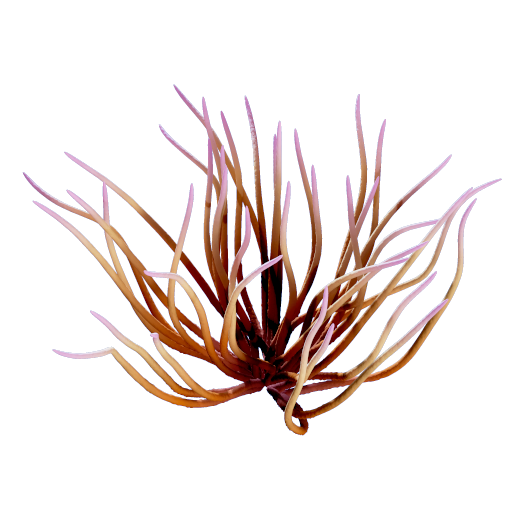
강모충(*Ventworm awn*). 무기질이 풍부한 열수 지역에 서식하는 생물입니다. 깃털 모양의 기관으로 황화수소 및 기타 무기질을 섭취하며, 끓는점에 가까운 온도에서도 살아남을 수 있습니다.

고리 해파리
모바일

고리 해파리

fauna · 20 지도 포인트

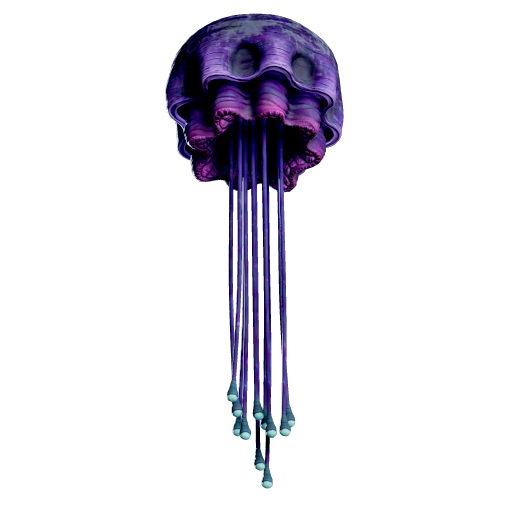
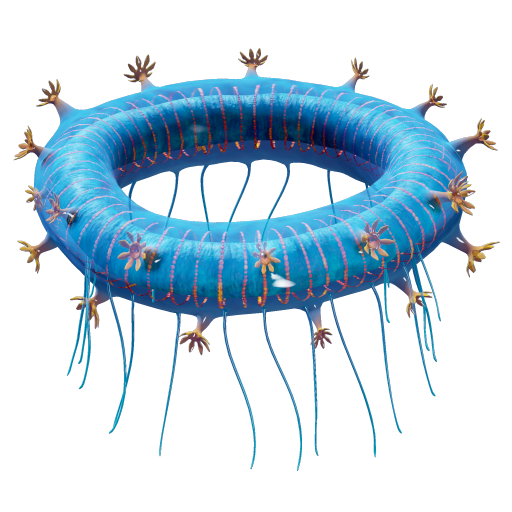
고리 해파리(가칭 *Thermodont sufganiyah*, 일명 '열을 먹는 젤리 도넛'). 점액으로 가득 차 있으며, 열수 분출구의 열과 화학 용매를 섭취하며 살아갑니다.

꼬챙이총 망고
모바일

꼬챙이총 망고

fauna · 11 지도 포인트

*Mango kestros*, 일명 '창던지기 상어'. 우라늄 촉이 달린 송곳니를 초속 20미터로 발사하는 영역성 포식 생물입니다.

네눈박이
모바일

네눈박이

fauna · 33 지도 포인트

네눈박이(*Morokotoform duplex*). 일란성 쌍둥이로만 태어나는 포식성 어류입니다. 쌍둥이는 서로 배를 맞댄 상태로 소화기관과 신경계를 연결해 하나의 개체처럼 행동합니다.

네모입고기
모바일

네모입고기

fauna

네모입고기(가칭 *Salpapod tetragnatha*). 육식성을 가진 조르디의 근연종 또는 변이형으로 추정됩니다. 1. 조르디와의 유사성 기본 체형은 조르디와 같지만, 톱밥 형태의 턱 대신 날카로운 네 개의 송곳니를 지녔습니다. 2. 육식성 살아 있는 생물의 살 속으로 파고들어 혈액과 체액을 섭취합니다. 숙주에 손상을 끼치지 않고는 떼어내기가 어렵습니다. 빛이나 열을 가해 스스로 떨어지게 유도하는 방법을 고려하세요. 3. 흡혈 효소 피가 응고되는 것을 막는 항응고 효소를 분비합니다. 지구 흡혈박쥐의 드라쿨린과 유사한 이 효소는 물달팽이에게서 발견된 효소와 성분이 동일한 것으로 밝혀졌습니다. 레트로바이러스를 통한 수평 유전자 이동 가능성이 있습니다. 4. 과잉 개체수 이 지역 생물에 대한 네모입고기의 기생률이 높다는 것은, 본래 네모입고기의 수를 조절하던 생물이 멸종했거나 급감했음을 시사합니다. 혹은 조르디가 먹이를 찾지 못해 네입고기로 변이하고 있을 가능성도 있습니다. 평가: 네모입고기가 숙주에 장시간 부착될 경우 심각한 탈수, 심하면 사망에 이를 수 있습니다. 최대한 안전한 방법을 사용해 제거하세요. 다른 생물에 붙어있을 경우 제거 후 숙주의 사회성 반응을 관찰하세요.

떼상어 레비아탄
모바일

떼상어 레비아탄

fauna

"해저 5천 미터에 위치한 이 물 덮인 사막은 대체로 공허한 곳입니다. 수면 근처의 생물들은 태양 아래 잠시 살아가다 죽음을 맞이하고, 그 유해는 눈처럼 바닥으로 내려앉아 이곳의 기이한 생명체들을 먹여 살립니다.

떼상어 레비아탄 수컷
모바일

떼상어 레비아탄 수컷

fauna

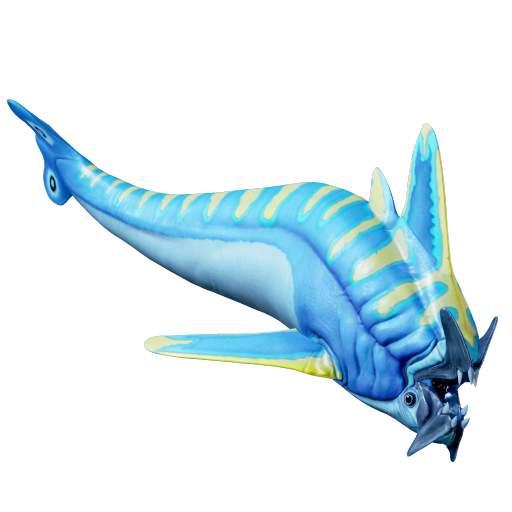
*Skythopterygion atropos*, 일명 '낫지느러미 운명 종결자'. 성적 이형성을 보이는 포식성 레비아탄 종의 수컷으로, 외해에 서식하며 무리를 이루어 공격합니다.

맴돌가시
모바일

맴돌가시

fauna · 229 지도 포인트

식용은 가능하나 영양가는 별로 없는 물고기. 전자기장의 강한 척력 때문에 잡고 먹기 어렵습니다.

모래꼬챙이 Juvenile
모바일

모래꼬챙이 Juvenile

fauna · 20 지도 포인트

모래창 청소년(Sandspear Juvenile)은 Axum Ruins, Coral Gardens, Overgrown Ruins 외 1개 이상의 목록에 있는 대규모 포식 동물입니다. 현재 기록에는 클러스터가 -2899 / 4209 / -102 근처에 중심을 두고 있는 메인 구역 내의 4개 생물 군계에 20개의 확인된 생성 지점이 나열되어 있습니다. 기록된 생물 튜닝에는 HP가 1000이고 최대 수영 속도가 500으로 나와 있습니다. 이동 데이터에는 6개의 행동 행이 포함되어 있습니다.

물달팽이
모바일

물달팽이

fauna

물달팽이(가칭 *Seaslug hydroclast*). 바닷물을 식수로 전환하는 의문의 생물입니다. 1. 미생물 연료 전지 많은 양의 에너지가 소요되는 염분 제거 과정을 수행할 수 있는데, 이는 바닷물 속 유기물을 양분으로 삼는 내부 미생물 반응의 부수 작용으로 보입니다. 2. 물주머니 해수의 유입을 막는 소수성 플라스틱 재질의 물주머니로 탈수를 방지합니다. 3. 플랑크톤 농장 물주머니 안에는 광합성을 하는 고생산성 플랑크톤이 서식합니다. 물은 플랑크톤의 생화학 반응에 필요한 요소일 수도 있지만, 동시에 플랑크톤이 빠져나가지 못하도록 막고 있을 수도 있습니다. 4. 흡혈성의 잔재 부리의 날카로운 절단면은 기생 또는 공생 생물로 살던 이전 진화 단계의 잔재일 수도 있습니다. 이는 과거에 숙주의 혈액을 흡수하고 독소를 걸러내는 역할을 했을지도 모릅니다. 평가: 현지에서 확보할 수 있는 유일한 식수 공급원입니다. 섭취 전 제작기로 조리할 것을 권장합니다. 신장 기능에 문제가 발생할 경우, 물달팽이에게 혈액을 먹여 투석 받는 것도 고려해 보세요.
바다나래 모체
모바일

바다나래 모체

fauna

*Titanotagmatapterya amalthea*, 일명 '날개형 마디를 지닌 거대한 풍요의 잔'. 초대형 레비아탄이자, 거대한 부리와 지방층을 가진 절지동물입니다. 축적된 지방은 알을 보호하고 영양을 공급하는 데 사용됩니다.

반달고기
모바일

반달고기

fauna · 9,349 지도 포인트

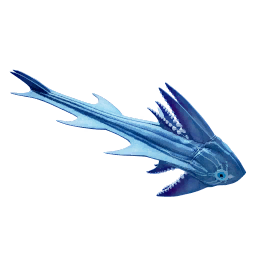
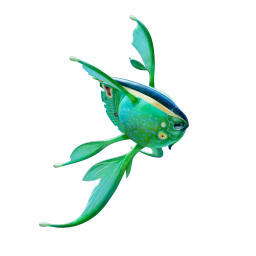
반달고기(가칭 *Moliform luna*). 해수를 거르며 플랑크톤과 작은 생명체를 섭취하는 대형 채집형 어류입니다. 1. 피식성 어류 포식 생물의 주된 먹잇감으로, 도주 및 은신 행동이 다양하게 진화되어 있습니다. 식용은 가능하지만, 제작기를 통한 조리가 권장됩니다. 2. 분리된 유입 구조 단단한 부리는 해수를 빨아들여 먹이를 걸러내는 두 개의 밸브를 보호합니다. 눈 뒤쪽의 기문은 호흡을 위해 물을 내부 아가미로 공급합니다. 3. 기동성 특화 몸 전체에 물의 흐름을 감지하는 신경구가 촘촘히 분포되어 있으며, 앞지느러미에 달린 천공 덕분에 급격한 방향 전환이 가능합니다. 좁은 공간이나 무리 속에서도 기민하게 헤엄칠 수 있게 진화한 것으로 보입니다. 4. 특이한 신경계 자기 움직임으로 인한 자극과 외부 변화에 의한 자극을 구분하지 못합니다. 밝은 빛에 쉽게 이끌리며, 때로는 그 빛이 자신 때문에 생긴 것으로 착각하는 것처럼 보이기도 합니다. 가끔 방향감각을 상실한 것처럼 아무 이유 없이 옆으로 헤엄치는 모습이 관찰되기도 합니다. 평가: 식용으로 무난하나, 맛이 특별히 뛰어나지는 않습니다.

방전 해파리
모바일

방전 해파리

fauna · 138 지도 포인트

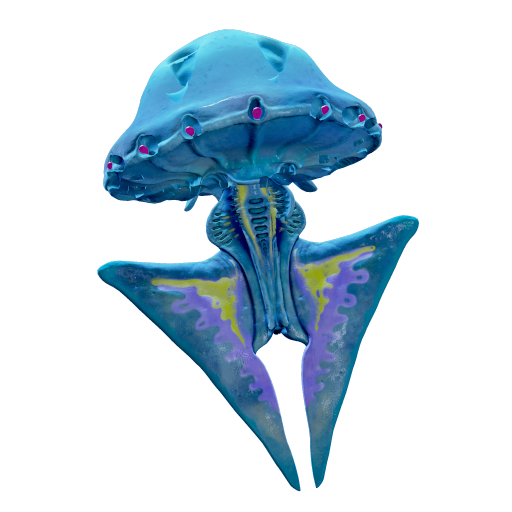
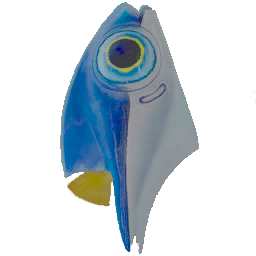
방전 해파리(가칭 *Staurobrachia capacitor*). 전기 충격을 활용해 사냥하는 크고 복잡한 해파리형 생물입니다. 1. 단일 개체 군집으로 이루어진 고깔해파리 등의 생물과는 달리 고도로 분화된 조직을 지닌 단일 개체입니다. 구조는 지구 해파리보다 훨씬 복잡합니다. 제안된 분류명: 수극류 ('창 손'). 2. 복잡한 내부 구조 외부에 달린 종은 촉수포라 불리는 감각기관으로 둘러싸여 있으며, 신경망이 종의 움직임을 조정해 유영과 먹이 탐색을 수행합니다. 내부에 보이는 구조는 소화기관입니다. 3. 섭식 구조 이 해파리는 성장 과정에서 형성된 줄기를 지니고 있습니다. 이 줄기는 복제된 개체들이 층을 이루며 자란 흔적으로, 지금은 소화관으로 영양분을 끌어들이는 기능을 합니다. 4. 축전형 지느러미 두 개의 단단한 지느러미에는 전기를 축적하는 전기 생산 세포가 줄처럼 분포되어 있으며, 이는 조상 종의 촉수에서 진화된 구조로 보입니다. 방전 해파리는 이 기관을 통해 전압을 생성해 먹이를 기절시키거나 죽입니다. 측정된 출력은 400~1,000볼트에 1암페어로, 이는 인간에게도 치명적일 수 있습니다. 5. 독특한 부착물 조직에서 검출된 미량의 방사성 물질, 고온의 왁스, 황산을 봤을 때 열수 분출구와 접촉했을 가능성이 있습니다. 구성 성분을 보면 깊은 바다에서 기원한 것으로 추정됩니다. 6. 가축화의 흔적? 가까이 있는 해파리 개체들과 전기장을 통해 의사소통하는 것으로 추정됩니다. 이름이나 문법이 있는 언어의 사용 여부는 아직 밝혀지지 않았지만, 특정 전기 신호 패턴은 학습을 통해 세대를 거쳐 전승되는 경우도 있습니다. 평가: 가까이 있을 경우 약간 위험할 수도 있으나, 멀리서 관찰했을 때 매우 흥미로운 연구 대상입니다.
모바일

벱스 수호자

fauna

Veps Defender is fauna catalogued from the current creature data. No combat stat block is attached to this entry, so the wiki profile focuses on the structured habitat and spawn facts available.

모바일

벱스 탐지자

fauna

Veps Sensor is fauna catalogued from the current creature data. No combat stat block is attached to this entry, so the wiki profile focuses on the structured habitat and spawn facts available.

블룸 기생체
모바일

블룸 기생체

fauna

팔이 없고 부리가 달린 오징어와 유사한 두족류로, 피와 체액을 섭취합니다. 행동을 변화시키는 대형 RNA 바이러스(생성명: 프로테아바이러스 베타)에 대량 감염되어 있습니다.
빛달팽이
모바일

빛달팽이

fauna · 30 지도 포인트

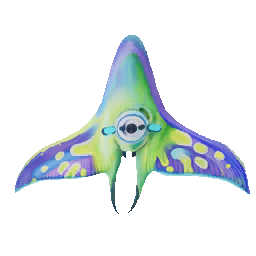
*Seaslug kleptopharos*, 일명 '도난당한 신호기 달팽이'. 자유 유영이 가능한 물달팽이의 발광성 근연종으로, 완전히 다른 종의 키메라 형질을 지니고 있습니다.
뼈뚤치
모바일

뼈뚤치

fauna · 10 지도 포인트

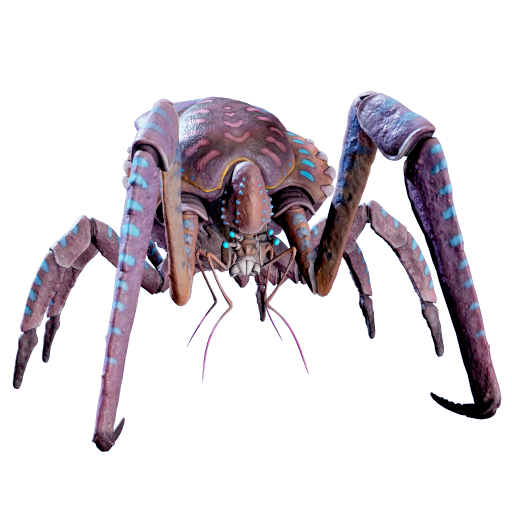
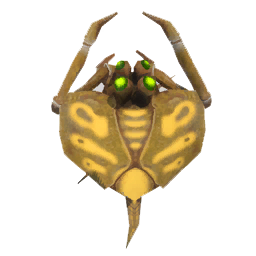
뼈뚤치(가칭 *Mango marrowbreach*).

뿔새우
모바일

뿔새우

fauna · 20 지도 포인트

"우리의 PDA는 뿔새우 같은 생물을 '선택받지 못한 종'이라고 부른다. 지구에서 조개 물벼룩은 점액질 속에 사는 작은 생물이지만, 프로테우스에서는 거대한 크기로 자란다.

산호 게
모바일

산호 게

fauna · 7 지도 포인트

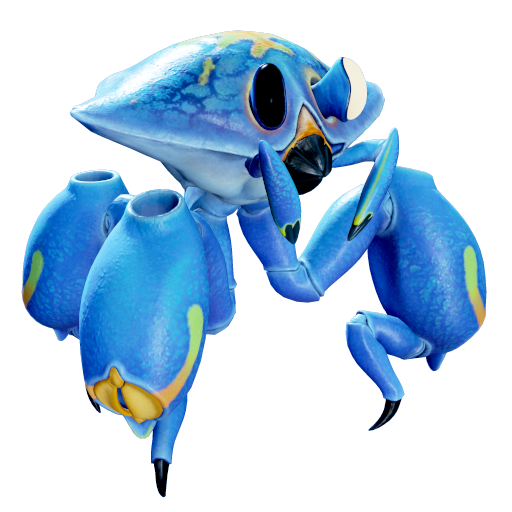
산호 돔 사이에 숨어 지내는 대형 갑각류(가칭 *Ostrakonskelos anaktoraphore*, 일명 '단단한 다리로 궁전을 짊어지는 자')입니다. 1. 게와 유사한 체형 앞다리는 땅을 긁거나 파며 먹이를 찾는 데 사용되며, 입 주변의 부드럽고 긴 턱다리로 먹이를 모읍니다. 성장을 위해서는 탈피가 필요합니다. 2. 산호 돔 게는 살아 있는 산호 돔을 절단해 등에 고정합니다. 이는 위장과 방어에 도움을 주며, 새끼를 위한 부화장 역할을 할 가능성도 있습니다. 해당 생물이 한 돔에서만 평생 살아가는지, 성장하면서 돔을 바꾸는지는 아직 밝혀지지 않았습니다. 3. 포식 생물의 존재 암시 방어 수단과 행동 양상으로 보아 게를 돔에서 끌어내고 단단한 외골격을 부술 수 있는 포식 생물이 존재한다는 사실을 유추할 수 있습니다. 4. 바이러스 활동 게의 유전체에는 신경 성장 인자와 껍질 색소를 포함한 대규모의 복제성 레트로바이러스 삽입물이 존재합니다. 분자시계 분석에 따르면 이는 비교적 최근에 삽입된 것으로 보입니다. 등 세포에서는 산호 돔 폴립의 유전자 일부가 검출되었습니다. 5. 거대한 뇌 이 게는 척추 신경 다발이 없으며, 눈 위에 위치한 큰 뇌가 감각 처리와 행동 계획을 담당합니다. 다리와 소화계는 별도의 신경 집합체가 조절합니다. 6. 해저 소통 산호 게는 해저를 두드려 의사소통합니다. 집게발을 부딪치는 동작은 흥분이나 격앙된 감정 상태를 나타내는 것으로 보입니다. 지구의 일부 게는 탈피 전 짝을 이룰 상대를 구하는데, 이를 '손잡기'라고 부릅니다. 이와 유사한 행동이 이 행성에서도 발견된다면 정서적인 만족을 느낄 수 있을 것입니다. 7. 생태 스트레스의 징후 무기질 결핍 및 진균 감염은 이 생물이 환경적 스트레스를 받고 있음을 시사합니다. 평가: 조우 시, 당신보다는 이 게가 두려움을 느낄 가능성이 더 큽니다. 고릴라 수준의 지능을 가진 생물이므로 조심스럽고 공손한 태도로 대하세요. 해저 자원의 유용한 공급원이 될 수도 있습니다. 연구 제안: 산호 게가 돔을 짊어진 채로 먹이를 찾기 위해 일조량이 많거나 영양분이 풍부한 지역으로 이동하는지 여부를 확인해 보세요.

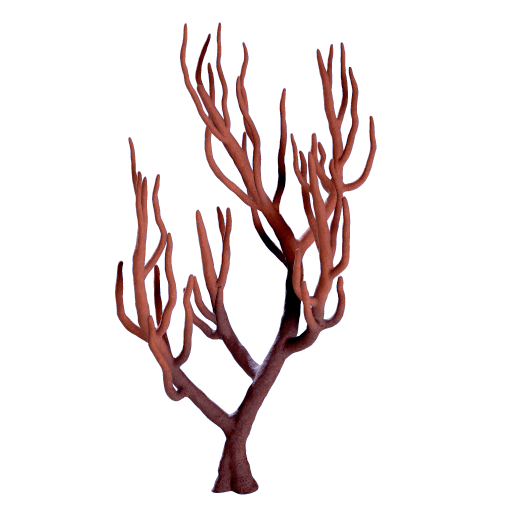
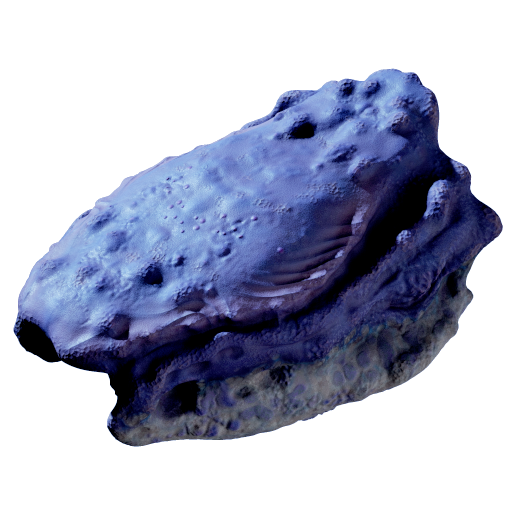
상현달고기
모바일

상현달고기

fauna · 15 지도 포인트

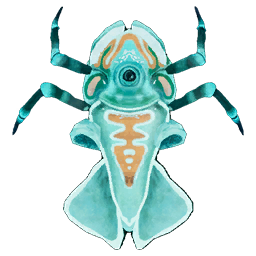
Waxmoon은 Axum Ruins, Colonist Bunker, Coral Gardens 외 1곳에 등록된 포식 동물입니다. 현재 기록에는 클러스터가 -2341 / 4282 / -143 근처에 중심을 두고 있는 메인 구역 내의 4개 생물 군계에서 확인된 15개의 생성 지점이 나열되어 있습니다. 이 항목에는 전투 통계 블록이 첨부되어 있지 않으므로 위키 프로필은 구조화된 서식지와 사용 가능한 산란 사실에 중점을 둡니다. 이동 데이터에는 6개의 행동 행이 포함되어 있습니다.

수집가 레비아탄
모바일

수집가 레비아탄

fauna · 27 지도 포인트

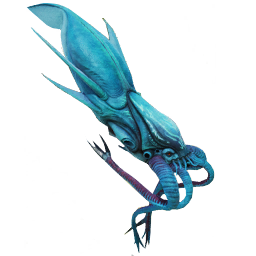
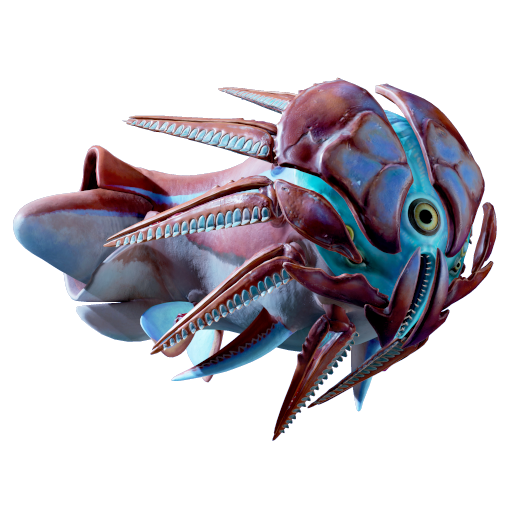
거대 두족류 포식 생물(가칭 *Tyrannoteuthis phobocoeus*, 일명 '무시무시한 호기심을 지닌 폭군 오징어'). 단단한 외골격을 가진 생물을 주로 사냥하며, 단독 생활을 하는 고지능 심해 생물체입니다. 1. 오징어형 체형 지구의 오징어처럼 여러 개의 팔다리가 머리에 연결되어 있으며, 길게 뻗은 외피를 갖추었습니다. 외피 표면은 생체플라스틱 갑주로 덮여 있습니다. 지구 오징어와 달리 이 개체에는 네 개의 사냥용 촉수가 달려 있으며, 그 끝에는 정밀한 생체유리 발톱이 붙어 있습니다. 부리 주변에는 여덟 개의 짧은 팔이 밀집해 있습니다. 2. 강력한 추진 기관 두 개의 대형 기문은 후방 추진기에 공기를 공급합니다. 이 기문은 머리 양측에 있는 네 개 아가미와는 별도로 존재하며, 그 덕분에 호흡 속도와 추진 속도를 분리해 조절할 수 있습니다. 두 개의 보조 심장이 아가미에서 주 심장으로 혈액을 전달합니다. 3. 단단한 먹이 티타늄 판을 찢을 수 있는 거대한 부리와 날카로운 생체유리 발톱을 지닌 네 개의 사냥용 촉수로 미루어 볼 때, 두꺼운 외골격을 지닌 생물을 주로 사냥하는 것으로 추측됩니다. 주요 사냥 대상으로는 산호 게, 큰턱조개 등이 있습니다. 이러한 고난도 포식 전략은 호기심 많고 공격적인 심리 발달로 이어졌을 가능성이 있습니다. 4. 음파 송출 기관 거대한 다실형 기관을 생물학적인 위상 배열 음파탐지기처럼 사용하며, 복수의 '스피커'와 '청각 수용기'를 통해 복합적인 다중 음파를 송출합니다. 빽빽한 신경 분포는 도넛형 뇌 구조와 밀접한 관련이 있습니다. 해당 생물이 보이는 생체발광 패턴은 이 뇌 활동을 시각적으로 표현한 신호일 수 있습니다. 5. W자형 동공 밝은 환경에서 동공이 W자 형태로 수축됩니다. 이 특성은 지구의 두족류에서도 관찰된 바 있으나, 홀로세 붕괴 이전까지도 그 기능이 밝혀지지 않았습니다. 6. 심해 거대화 현상 심해 생물은 일반적으로 덩치가 비대해지는 경향을 보이며, 이는 '심해 거대화' 현상으로 알려져 있습니다. 평가: 다양한 고난도 먹이를 사냥하는 포식 생물로, 높은 지능과 호기심을 지닐 가능성이 높습니다. 이러한 호기심은 먹잇감의 입장에서는 무의미한 고문처럼 느껴질 수 있습니다. 소형 잠수정이나 해저 거주지는 이 생물의 주의를 끌 가능성이 매우 높습니다.

쌍둥이 시타르 가오리
모바일

쌍둥이 시타르 가오리

fauna · 13 지도 포인트

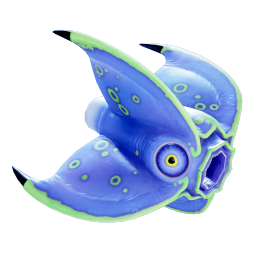
*Sitaroid gemini*, 일명 '시타르를 닮은 쌍둥이 가오리'. 생태계 교란으로 수면 쪽으로 밀려 올라온 심해의 전기 포식 생물입니다.

쏜살오징어
모바일

쏜살오징어

fauna · 206 지도 포인트

빠른 속도를 자랑하는 집단형 포식 생물로, 동굴에 숨어 살며 빛을 내는 생물을 사냥합니다. 사냥 시 빛과 소리에 의존합니다. EA1에는 등장하지 않음

용치놀래기 망고
모바일

용치놀래기 망고

fauna

용치놀래기 망고(가칭 *Mango tructa*). 갉아먹기에 특화된 성가신 잡식성 생물로, 물고기, 해면, 켈프, 심지어 인간의 사지에도 서슴없이 달려드는 특성이 있습니다.

장도리고기
모바일

장도리고기

fauna · 10 지도 포인트

장도리고기(가칭 *Panoplia hammerhead*). 강력한 돌진 능력을 갖춘 초식 장갑어로, 무리 생활을 하면서 영역을 적극적으로 방어합니다. 1. 망치 같은 머리 다른 장도리고기를 포함한 침입자에게 달려들며, 공격 전에 가슴지느러미는 펼치고 에나멜 덮인 두부 보호판은 닫습니다. 2. 제트 추진 눈 뒤의 기문은 내부 아가미가 있는 제트 통로로 이어지며, 이를 통해 기습적으로 돌진할 수 있습니다. 3. 거대한 뇌 뇌는 보호용 낭포로 둘러싸여 있습니다. 가운데 달린 눈으로 색을 감지하고, 좌우의 작은 두 눈으로 움직임을 감지해 돌진 방향을 지정합니다. 4. 영역 내 먹이에 특화된 턱 수직으로 발달한 강한 턱으로 보아 해면, 켈프, 피낭동물, 그리고 산호를 먹는 것으로 추정됩니다. 영역성은 일정 구역을 훑으며 먹이를 확보하는 습성에서 비롯됐을 가능성이 있습니다. 5. 연습 행동? 산호 돔을 반복적으로 들이받는 모습을 보입니다. 진화적 이점이 불분명한 이 행동은 두부 보호판 단련을 위한 것일 수도 있습니다. 주의 사항: 탑승물 운전 시 특히 경계가 필요합니다. 사회적 인지 능력은 지구의 유제류(예: 들소, 사슴)와 유사할 수 있는데, 해당 동물 중에는 인간에게 매우 위험한 종도 있었습니다. 장도리고기가 자주 돌진하는 지역은 해양 소음의 주요 원인 중 하나입니다.

전기 조르디
모바일

전기 조르디

fauna · 37 지도 포인트

전기 조르디(가칭 *Salpapod geordiwangi*). 일반 조르디의 변종 혹은 근연종으로, 전류에 이끌리는 특성을 보입니다. 1. 전류 지향성 전류를 감지해 접근합니다. 강한 전류도 견딜 수 있기 때문에, 맨손이나 도구로 전기 조르디를 제거하는 행위는 매우 위험합니다. 이 과정에서 합선이 발생하면 조르디뿐 아니라 전력 시스템 전체에 심각한 손상을 초래할 수 있습니다. 2. 젤로 가득 찬 위장 4개의 게실 주머니는 하이드로젤로 가득 차 있는데, 이 젤은 지구 해양 생물의 로렌치니 기관(전기 감지 기관)에서 발견되는 수용성 점액과 유사한 성질을 지닙니다. 조르디는 이를 활용해 숨어 있는 먹이의 전기장을 감지하거나, 해저 진흙 속 전도성 박테리아 섬유를 탐색하는 데 사용됩니다. 인공 전류는 이 생물에게 강한 유인을 유발하는 과잉 자극으로 작용할 수 있습니다. 3. 전기 대사 전류를 직접 대사 에너지원으로 사용하도록 진화했을 가능성은 낮지만, 완전히 불가능하다고 보기는 어렵습니다. 모든 유기 대사는 본질적으로 전자 수송 과정인데, 실제로 폭풍 행성이나 진공 상태에서 생물이 전기로 직접 대사 활동을 하는 사례가 관측된 바 있습니다. 평가: 전력 및 통신 관련 설비에 심각한 피해를 일으킬 수 있는 유해 생물입니다. 증식 통제를 위해 유인 장치가 필요할 수 있습니다.

조르디
모바일

조르디

fauna · 148 지도 포인트

조르디(가칭 *Salpapod geordie*). 뼈가 있는 문어형 생물에서 진화한 잡식성 생물로, 추진 기관을 활용해 헤엄칩니다. 1. 까칠한 턱 구조 단단한 구기로 바위에 붙은 조류, 작은 갑각류, 틈속 산호, 켈프 등을 먹습니다. 2. 네 개의 지느러미 지느러미는 뼈가 있는 다리에서 진화한 것으로 보입니다. 각 지느러미는 방향 조종 기능과 더불어 소화용 위장을 하나씩 품고 있습니다. 3. 게실 주머니 지느러미 다리마다 게실 주머니가 하나씩 들어 있습니다. 이 안에는 다양한 먹이를 분해하는 특수 박테리아가 서식합니다. 조르디의 헤엄 동작은 게실 주머니 내부를 뒤섞어 소화를 돕습니다. 4. 중앙 제트 기관 중앙 홈 내부를 뒤덮고 있는 자포 세포는 작은 해양 생물을 죽이는 역할을 하며, 이곳에 손가락을 넣는 행위는 금물입니다. 조르디는 근육 수축으로 물을 분사하는 제트 추진 방식으로 헤엄칩니다. 5. 도넛 모양의 '척추' 다발 조르디의 신경 다발은 제트 추진 홈을 도넛 형태로 감싸고 있습니다. 이러한 도넛형 뇌 구조는 더 복잡한 생물에서 특이한 신경 발달 양상으로 이어질 가능성이 있습니다. 평가: 식용은 가능하지만, 금속과 왁스 성분이 다량 함유되어 있어 제작기를 통한 철저한 조리가 권장됩니다.

추진발사게
모바일

추진발사게

fauna · 15 지도 포인트

추진발사게(가칭 *Tripod phrontiscaris*). 세 개의 다리를 가진 사회성 갑각류로, 양육 행동을 보입니다. 1. 세 다리 구조 초기부터 좌우 대칭형 진화가 이루어진 지구의 생물들에서는 볼 수 없는, 세 다리를 지닌 몸을 가지고 있습니다. 다리는 진화 초기에 여섯 개(좌우 각각 세 개)였으나, 각 쌍이 융합해 세 개가 남은 것으로 보입니다. 작은 앞다리는 융합되지 않고 별도로 남아 있습니다. 2. 다리를 활용한 제트 추진 각 다리에는 밸브 구조의 추진 기관이 달려 있으며, 이는 다리에 달린 아가미에서 유래한 것으로 추정됩니다. 이를 활용해 공중에 뜨거나 수중에서 헤엄칠 수 있습니다. 시뮬레이션에 따르면, 다리의 융합은 각 아가미-추진기의 크기를 두 배로 키워 에너지 효율을 높이는 것으로 보입니다. 3. 섭식용 혀 턱다리에서 진화한 것으로 추정되는 두 개의 길고 유연한 치설로 먹이를 찾으며, 앞다리는 치설을 청소하고 손질하는 데 사용됩니다. 민감한 치설을 재생시킬 수 있는데, 이는 게가 다른 생물에게 자주 공격당하며 신경 자체를 재생할 수 있음을 의미합니다. 4. 양육 행동 유생을 데리고 다니며 보호합니다. 풍부한 몸짓 언어는 복잡한 사회적 생활을 시사합니다. 분광 유전 분석 결과, 일부 유생은 보호 개체의 유전적 자손이 아닌 것으로 나타났습니다. 입양은 여러 종에서 관찰되지만, 적응론적 관점에서는 실수에 가깝습니다. 이는 본능적인 행동이거나 여왕과 일꾼이 나뉜 진사회성 무리 생활의 잔재일 수도 있습니다. 평가: 대부분 무해하며, 정서적 안정감을 제공할 수 있습니다.

큰손해파리
모바일

큰손해파리

fauna

*Dactylbrachia gigas*, 일명 '큰 손가락다리 해파리'. 유사한 지구 생물이 존재하지 않는 거대한 생물입니다.

큰턱조개
모바일

큰턱조개

fauna

위협적인 섭식 방식과 방어 전략을 가진 잡식성 거대 조개(가칭 *Megamya sudacna*, 일명 '무는 대합')입니다.

툭눈 광대게
모바일

툭눈 광대게

fauna · 35 지도 포인트

*Ostrakonskelos periskopion*, 일명 '단단한 다리를 지닌 잠망경 눈'. 자포 말미잘 사이에 숨어 사는 게로, 사회성을 보입니다.

하이시언
모바일

하이시언

fauna

*Hycean hycean*, 수소 대기와 물로 이루어진 바다가 공존하는 행성의 유형에서 이름을 딴 비행 포식 생물입니다.

해초부레고기
모바일

해초부레고기

fauna · 59 지도 포인트

아직 발견되지 않은 켈프 종의 부레를 흉내 내는 피식성 어류입니다.

혀도둑
모바일

혀도둑

fauna · 15 지도 포인트

*Postpanoplia epicurean*, 일명 '게걸스럽고 장갑이 없는 장갑어'. 항상 굶주림에 시달리며, 행동을 예측할 수 없는 장갑어. 기생충에 감염되었을 경우 굶주림은 더욱 심해집니다.

Crimson Shrimp
모바일

Crimson Shrimp

fauna · 5 지도 포인트

크림슨 새우(Crimson Shrimp)는 산호 정원(Coral Gardens)에 등록된 수동적 동물군입니다. 현재 기록에는 클러스터가 -3538 / 4267 / -46 근처에 중심을 두고 있는 메인 구역 내의 1개 생물 군계에서 5개의 확인된 생성 지점이 나열되어 있습니다. 이 패시브 항목에는 전투 통계가 첨부되지 않으므로 위키 프로필은 서식지 배치, 생성 관찰 및 위협 분류에 중점을 둡니다.

Fish School Flutter Tail
모바일

Fish School Flutter Tail

fauna · 213 지도 포인트

Fish School Flutter Tail은 Colonist Bunker, Coral Gardens, Graveyard 외 3개에 등록된 수동적 동물군입니다. 현재 기록에는 Default Devmap, Main, PCG Zoo 및 2개 추가 구역에 걸쳐 6개 생물 군계에서 확인된 213개의 생성 지점이 나열되어 있으며 클러스터는 -1906 / 2502 / -26 근처에 집중되어 있습니다. 이 패시브 항목에는 전투 통계가 첨부되지 않으므로 위키 프로필은 서식지 배치, 생성 관찰 및 위협 분류에 중점을 둡니다.

Fish School Mirrorhalfmoon
모바일

Fish School Mirrorhalfmoon

fauna · 186 지도 포인트

Fish School Mirrorhalfmoon은 Colonist Bunker, Coral Gardens, Plateaus 외 1개에 등록된 수동적 동물군입니다. 현재 기록에는 Default Devmap, Gameplayzoo Stimuli, Main 및 3개 이상의 영역에 걸쳐 4개 생물 군계에 186개의 확인된 생성 지점이 나열되어 있으며 클러스터는 -1628 / 2060 / -20 근처에 집중되어 있습니다. 이 패시브 항목에는 전투 통계가 첨부되지 않으므로 위키 프로필은 서식지 배치, 생성 관찰 및 위협 분류에 중점을 둡니다.

모바일

Giant Tube Salp

fauna

Giant Tube Salp is fauna catalogued from the current creature data. No combat stat block is attached to this entry, so the wiki profile focuses on the structured habitat and spawn facts available.

Locust
모바일

Locust

fauna · 137 지도 포인트

메뚜기는 Axum Ruins, Coral Gardens, Graveyard 외 1개 이상에 등록된 수동적 동물군입니다. 현재 기록에는 클러스터가 -2908 / 4516 / -147 근처에 중심을 두고 있는 메인 구역 내의 4개 생물 군계에서 확인된 137개의 생성 지점이 나열되어 있습니다. 이 패시브 항목에는 전투 통계가 첨부되지 않으므로 위키 프로필은 서식지 배치, 생성 관찰 및 위협 분류에 중점을 둡니다.

Nibbler Shark
모바일

Nibbler Shark

fauna · 13 지도 포인트

니블러상어(Nibbler Shark)는 콜로니스트 벙커(Colonist Bunker), 산호 정원(Coral Gardens), 고원(Plateaus) 외 1곳에 등록된 대규모 포식성 동물상입니다. 현재 기록에는 클러스터가 -3348 / 4197 / -29 근처에 중심을 두고 있는 메인 구역 내의 4개 생물 군계에서 확인된 13개의 생성 지점이 나열되어 있습니다. 기록된 생물 튜닝에는 HP가 100이고 최대 수영 속도가 500으로 나와 있습니다. 이동 데이터에는 8개의 행동 행이 포함되어 있습니다.

Scourge Hive
모바일

Scourge Hive

fauna

Scourge Hive is fauna catalogued from the current creature data. No combat stat block is attached to this entry, so the wiki profile focuses on the structured habitat and spawn facts available.

모바일

Snorkleback (Adult)

fauna

Snorkleback (Adult) is fauna catalogued from the current creature data. No combat stat block is attached to this entry, so the wiki profile focuses on the structured habitat and spawn facts available.

Teal Cycloplet
모바일

Teal Cycloplet

fauna · 29 지도 포인트

청록색 사이클로플렛(Teal Cycloplet)은 산호 정원(Coral Gardens)에 등록된 수동적 동물군입니다. 현재 기록에는 클러스터가 -3462 / 3982 / -49 근처에 중심을 두고 있는 메인 구역 내의 1개 생물 군계에서 29개의 확인된 생성 지점이 나열되어 있습니다. 이 패시브 항목에는 전투 통계가 첨부되지 않으므로 위키 프로필은 서식지 배치, 생성 관찰 및 위협 분류에 중점을 둡니다.

가지 산호
정착성

가지 산호

Sessile fauna

나헤마, 음성 기록 시작. 이 프로테우스 산호는 일반적인 지구 산호와는 다르지. 겉모습은 가지처럼 뻗은 나무 형태로 되어 있는데, 지구에서는 이미 멸종한 아크로포라 몇 종과 유사하지. 근데 안을 들여다보면 조금 이상하단 말이지. 지구 산호는 돌로 직접 집을 짓는 작은 해파리 같은 생물이지만, 프로테우스 산호는 해면이라는 아파트에 입주하는 존재에 가깝지. 폴립이 해면의 구멍 안에 살면서 청소와 보호의 형태로 월세를 내면서 살다가 시간이 지나서 일부 해면은 지구의 경해면처럼 돌처럼 변해버린 거지. 내 추측이 맞다면, 이곳엔 각각 다른 방식으로 계약을 맺은 산호와 해면 쌍들이 여럿 있을 거야. 각자 자신에게 맞는 생태적 틈새를 찾아서. 문제는 유전적으로 무슨 일이 벌어지는 건지 모른다는 거지.

거대 암굴충
정착성

거대 암굴충

Sessile fauna

거대 암굴충(Lithodont titanicae)은 수평선 너머에 보이는 거대 생물과 생물학적 특성을 일부 공유합니다. 거대 생물은 크기로 미루어 막대한 영양분이 필요할 것으로 보이는데, 암굴충은 그 뿌리 또는 관의 역할을 하고 있을 가능성이 있습니다.

냉장 벌레
정착성

냉장 벌레

Sessile fauna

*Ventworm cryocthonian*, the vent worm that brings cold from below. 1. Vent worm The fridge worm's body plan is familiar from terrestrial analogs — a tubular body with a protruding gill. The body hosts a colony of symbiotic bacteria in a chamber called the trophosome ("feeding body"). These bacteria help the worm survive extreme environments. 2. Cold water emitter The cryocthonian lives in colonies along geothermal gradients—from hot to cold. It exploits the flow of energy and minerals through the rock to feed. Colonies pumps deep, cold brine (usually at 4 degrees C) to the worms exposed to hot water, helping regulate their temperature. 3. Sulfur-based metabolism The symbiotic bacteria in the fridge worm feed on sulfur and other dissolved minerals. The fridge worm uses cold deep-sea brine to trigger chemical reactions which help collect minerals from the hot vent water. Assessment: Produces pockets of cold water. May attract life that cannot tolerate the surrounding heat.

독성 해면
정착성

독성 해면

Sessile fauna

A hateful and malicious sponge. Assessing PDA neural temperature. Reducing output subjectivity. *Symphon achlys*, sponge of dying mist. A dangerous semi-predatory sponge that acts as the central node in a necrobiome. 1. Bacterial arsenal Sponges cultivate bacteria which secrete helpful chemicals. At some point in its history the toxic sponge was infected by a bacterial symbiote which generated a powerful antibiotic (akin to the human Streptomyces). The bacterium used this antibiotic to extinguish competition, then began an internal power struggle to evolve compounds that could destroy rival strains of its own species. The result is a sponge flush with an antibiotic so concentrated it causes skin burns and nerve damage. 2. Touch based hunting strategy When brushed, the sponge contracts sharply, expelling a cloud of antibiotic toxin. Microorganisms are killed, and larger species may enter convulsions and die nearby. The dead matter decomposes, releasing nutrients upon which the sponge feeds. 3. Animal gene fragments The toxic sponge's genetic code contains fragment of an animal genome: likely a crustacean. Assessment: avoid. Keep medical supplies on hand to treat chemical burns and nerve damage.

매달린 살파
정착성

매달린 살파

Sessile fauna

*Salp pendulous*. A sticky, suspension-feeding predator that captures organisms from the current. 1. Salp-like biology Like Earth's salps, this is a colony of zooids — tiny, cloned animals (in this case tunicates) — that form a long, tube-like pump. The salp draws in water to filter for plankton. 2. Hard holdfast The holdfast that anchors the feeding string is secreted by the same zooids that make up the rest of the organism. Spectrogenetic analysis detects proteins similar to those expressed by reefbuilding sponges and corals. 3. Bloom response Terrestrial salps can reproduce very quickly, allowing them to grow with—and devour—sudden blooms of algae. If the algae bloom is too dense, the salps may clog. Assessment: may be a useful indicator of ecological stress. Await further updates.

모방 파일런
정착성

모방 파일런

Sessile fauna

Tentatively *Pyloraptor mimic*. A predatory animal disguised as a leafy kelp. Discharges electrical shock when disturbed. 1. Cephalopod-like body Resembles an octopus or squid planted mantle-down in the seabed, with its arms spread to mimic kelp. Pouches of symbiotic bacteria between the arms allow it to photosynthesize. A beak at the center of its arms is plugged with mucus. 2. Electrical hunting The four arms contain electrocytes, organs which build up an electrical charge. When disturbed by prey, the electrocysts discharge, causing paralysis or death. It is unclear if the prey are directly eaten, or if they decompose in a garden around the mimic pylon. (Organisms which feed on external decay are known as saprotrophs.) 3. Implies kelp The pylon's cryptic aggressive mimicry of leafy kelp implies that kelp must exist on this world. Most species in Earths' oceans eat to survive, with primary production (the conversion of sunlight into biomass) carried out by plankton and algae. Leafy kelp were a late evolutionary development. 4. Cave mouth strategy Mimic pylons tend to cluster around sea cave entrances, perhaps to feed on organisms entering or leaving the caves. Alternately (and speculatively) they may have been planted there by another species to control access. Assessment: avoid contact to prevent injury. May mark cave mouths.

방열 산호
정착성

방열 산호

Sessile fauna

열수 분출구에서 자주 자라는 경산호입니다. 고정된 기저부와 차가운 해수에 노출된 상단부 사이의 온도 차이를 활용해 대사 반응을 유도합니다.

벌레 도넛
정착성

벌레 도넛

Sessile fauna

An organism (tentatively *Raion donut*) that resembles an Earthly anemone or ceriantherian, but is actually a sponge occupied by a colony of predatory worms. 1. Raion An organism defined as a sponge occupied by a colony of cloned predatory worms. 2. Hunting strategy The worms live in the sponge's jelly (called the mesohyl), protruding from its anus (the osculum) to sting passing prey with sticky cells and draw them into the sponge. 3. Puzzling genetics Spectrogenetic analysis indicates the host sponge and the resident worms contain partial copies of each others' genomes. This is a biological impossibility on Earth, and suggests that genetic inheritance functions differently on this world. Assessment: minor sting hazard — do not insert fingers. Important scientific discovery.

정착성

사슴뿔 메피트 (하이햇)

Sessile fauna

*Mephit ceryneian.* A stack of cloned clams adapted to life in very hot water. The central stalk that connects them appears to be a symbiotic worm worm worm worm worm 1. Clamclone Clam stack clone stack! Jelly lei like. Connect on worm like coins on spindle. Monitoring PDA bad output. 2. Genderstack All clone female. Worm forms antlers: emit male cell. Why worm help clam? No more worm. Worm taken over by clam cancer. 3. Hot hot hot! Clams evolve shut forever. Too hot! Never open...but then starve? A ha, eat with tissue fans, withdraw if nibble burn. Starvation solved. 4. Namepun Stack sounds like stag and stack has antlers and stag has antlers. Stagged. Name for hot water living clam? Mephit. Stagged mephit. Assessment: bad output stop.

산소 피낭
정착성

산소 피낭

Sessile fauna

*Tunic aeolian*. A bizarre animal that splits seawater into hydrogen (on which it feeds) and oxygen (which it releases). 1. Tunic Like Earthly tunicates, this is a complex animal with a heart, nerve chord, and a flexible exterior shell (the tunic). 2. Radiolytic metabolism At the heart of the oxygen tunic is a nugget of radioactive metal such as uranium, radium, or thorium. Radiation from this nugget splits water into hydrogen and oxygen through radiolysis. The oxygen tunic retains the hydrogen to feed an internal colony of sulfur-reducing bacteria, and releases the excess oxygen. 3. Blue glow Cherenkov radiation from the core excites radioluminescent pigments in the tunic, producing a distinctive blue glow. This may be a warning to would-be predators that the oxygen tunic releases poisonous quantities of oxygen. 4. Implications for life on this world The oxygen tunic's metabolism suggests that this world has an energetic geology and a biosphere adapted to use radiation as a food source. It also has interesting implications for life without sunlight. On Earth, even deep-sea vents depend on oxygen produced by photosynthesis. No such dependency exists here. Assessment: emergency oxygen source for divers. Beware that repeated use could lead to radon buildup, with serious health risks including cancer.

산호 돔
정착성

산호 돔

Sessile fauna

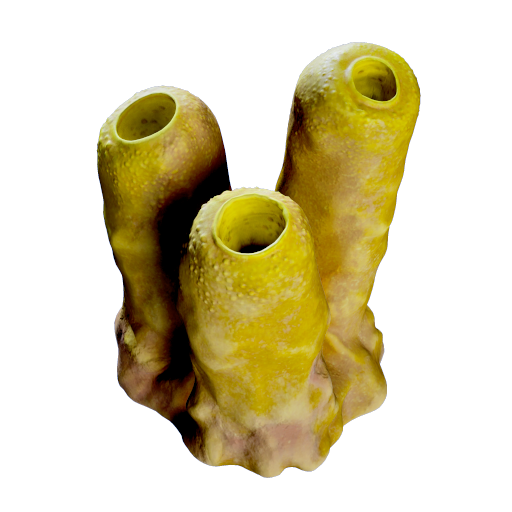
*Coral geodesica*. The defining feature of its shallow biome. 1. Coral analog Like Earthly coral, the dome is a colony of polyps, small jellyfish-like animals that secrete a limestone skeleton. This process uses dissolved carbon dioxide from the seawater: corals are therefore an important method of climate regulation, since they transform atmospheric carbon into hard limestone. 2. Dual feeding strategy The dome's outer surface feeds on sunlight, using photosynthetic symbiotes known as zooxanthellae. As the dome grows, the colony clears its interior, recycling the limestone for reuse. Polyps on the inside of the dome hunt with stinging tentacles. 3. Mineral expulsion As the dome grows, it collects and expels mineral waste, creating nodes of quartz. 4. Critical ecosystem element The dome corals help regulate global climate and provide a breakwater, reducing erosion in their shallow surroundings. The domes capture nutritious sediments from sea currents. Pioneers should prioritize a survey of coral health. Assessment: critical source of quartz. Vital to the local ecosystem.

정착성

시체꽃해파리

Sessile fauna

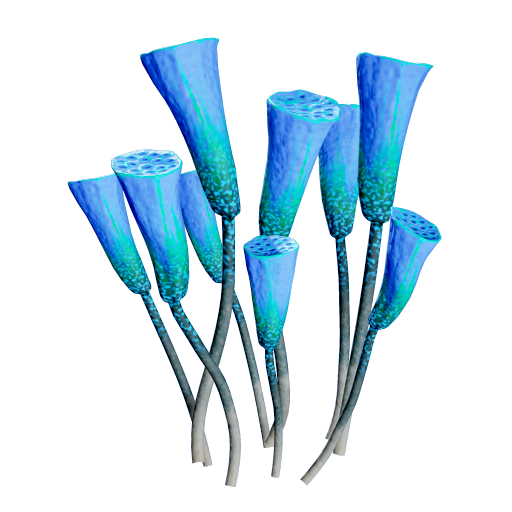
*Anthobrachia necrolei*. A clonal stalk of large jellies, similar to Earth's stauromedusae. Each jelly remains moored to the stalk, rather than maturing into a free-swimming medusa. 1. Enormous size and hunger Rather than feeding on prey, the necrolei gathers dead matter from the seawater. The size and height of the stalk are directly related to the rate of death and decay up-current. 2. Acid-yielding metabolism The necrolei has adapted to low-oxygen seawater. It ferments much of the matter it collects in a central 'basket' stomach, a process which requires no oxygen and yields strong acids. The necrolei concentrates these acids around its eggs as a defense. Assessment: large numbers of necrolei in this region indicate a bloom, a population explosion caused by a flood of nutrients. This is a poor sign for the health of the ecosystem and perhaps for the state of the global climate. Produces egg clusters that can be processed into strong acid.

아포칼립스 해면
정착성

아포칼립스 해면

Sessile fauna

*Symphon apokalupsis*. An unassuming button-shaped sponge that may be an omen of mass extinction. 1. Simplicity Among the earliest animal forms on Earth, sponges are a group of cells that live between two membranes and work together to pump water. Sponges on this world are similarly elegant. 2. Tolerance Due to this simplicity, sponges tolerate low oxygen and high temperatures better than many other organisms. They also benefit from elevated death rates, which floods the water with decaying matter. 3. Role in mass extinction Biospheres dominated by sponges may be an indicator of a recent or ongoing mass extinction. After Earth's first major die-off during the Ordovician period, some 85% of species went extinct, leaving a world ruled by sponges. The popular existential terror franchise "Life Is Only Pulse" is set in a fictionalized version of this time period. Assessment: possibly a warning sign of planetwide ecological collapse. Possibly not.

암포라 해면
정착성

암포라 해면

Sessile fauna

*Symphon amphora*. A sponge adapted to colonize — and create — air pockets. 1. Amphora-shaped structure Like all sponges, the amphora requires constant flow through its pores to survive, but it pumps air rather than water. Contraction and expansion forces moist air through the sponge's pores. Absorbent surfaces harvest water and carbon dioxide from the air. Waxy coating helps prevent water loss. 2. Radiolytic metabolism The soft blue glow of the sponge is bioluminescence fueled by radioactive minerals in the sponge's vanes (the structures growing from the anchoring rhizoid). This radiation splits water into hydrogen and oxygen. The gases gather in the cave ceilings the amphora prefers to colonize, creating pockets of knallgass (unmixed hydrogen and oxygen). Though breathable, this air is highly flammable and an explosion risk. The sponge's symbiotic bacteria feed on the hydrogen and oxygen, producing energy and water. The sponge uses this energy to fix carbon from the air and grow, as an Earth plant would. Assessment: a remarkable step. The amphora sponge may evolve an entire lineage of dry-land sponges, colonizing niches filled by plants and fungi on Earth. Indicates the presence of an air pocket. Swim up to breathe. Do not ignite flares or discharge electrical devices in the pocket.

양배추 뿌리살이
정착성

양배추 뿌리살이

Sessile fauna

*Shootroot cabbage*. A robust bottom-dwelling organism anatomically similar to a plastic starfish, or to an opened variety of Earth's extinct blastoids. 1. Animal anatomy The cabbage shootroot's upwards-facing mouth is surrounded by outstretched arms. These arms are hard, tightly grouped, partly calcified, and covered in a tough biopolymer characteristic of other shootroots (tentative name: polyproteovinyl). These arms produce the cabbage-leaf texture that gives the shootroot its name. 2. Seabed burrowing A second set of arms uses ribbons of the same tough biopolymer to dig into the seabed, stirring up sediment and expanding cracks in rock. This is a difficult and metabolically expensive process, but it is a niche with little competition. 3. Symbiote kiss The cabbage shootroot does not use its mouth to eat, or its hard leaflike arms to feed. These surfaces seem to be reserved for a symbiotic partner. The cabbage shootroot uses its mouth to transfer nutrients gathered by its roots to the symbiote, and to receive a trickle of food or chemistry in exchange. 4. Circular nerve cord Like all shootroots, the cabbage shootroot is notable for its expression of a circular nerve cord. Assessment: do not sit. You may receive nutrients.

요람 뿌리살이
정착성

요람 뿌리살이

Sessile fauna

A basket-shaped organism (tentatively *shootroot cunabulum*) with no clear Earthly analog. Anatomically similar to a plastic starfish, or to an opened variety of Earth's extinct blastoids. 1. Animal anatomy The flattened, fibrous 'leaves' are the arms of an animal loaded with photosynthetic symbiotes. The central structure houses a digestive system and a hard, sticky cradle (the cunabulum). A second ring of arms grows into the seabed, seeking crevices in the rock. 2. Preferred symbiote The cradle is an exchange site with a symbiotic partner (such as the lucifer rotsac). Spectrogenetic analysis suggests the cradle shootroot is younger than the rotsac. It may have originally parasitized free-floating lucifer rotsacs, before evolving a niche as an anchor: providing a refuge and minerals to the rotsac in exchange for a share of the rotsac's fermented food. 3. Plastic fibers Although it lacks the true cell walls of Earth plants, the cradle shootroot strengthens its tissues with bioplastic fibers. Too tough to cut by hand, they could be severed by a cutting tool. Assessment: tough fibers could be used to synthesize fabric, possibly food.

우리 고르곤
정착성

우리 고르곤

Sessile fauna

*Gorgon thalamiskos*. A predatory soft coral named for its resemblance to Earth's gorgonians. 1. Sponge-coral moiety Like hard corals on this world, gorgons are sponges inhabited by cnidarian polyps — tiny jellyfish like organisms which live within the sponge and direct its growth. Unlike hard corals, they do not produce a limestone structure or host photosynthetic microbes. They are pure predators. 2. Caged friend The cage gorgon specializes in capturing and protecting a symbiotic partner, which attracts prey for the gorgon to sting and eat. The cage gorgon larva probably adheres to a partner (such as a cherimoya rotsac) and then grows around it, eventually fastening the partner to the seafloor. 3. Duplex larva The free-swimming reproductive stage of the cage gorgon carries cells of a host sponge, like seeds. These seeds are genetically distinct from other sponges in the ecosystem, suggesting the cage gorgon is monogamous with only a single host sponge. Assessment: cutting open the cage gorgon allows access to the symbiotic partner and carries no risk of inflicting pain or suffering. The cage may attract a new partner before healing, or survive while empty.

위낭 레이온
정착성

위낭 레이온

Sessile fauna

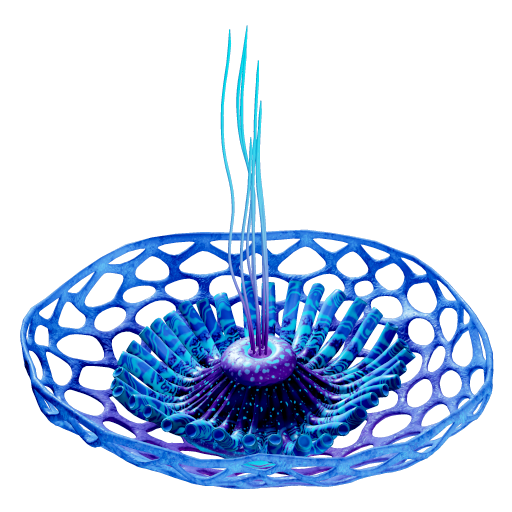
*Raion calix*. A puzzling combination of worm colony (the raion) and slime mold. 1. Feeding strategy Feeds on drifting matter, though the worms also sting and kill meiofauna (small sea life between 45 nm and 1 mm in size). 2. Glassy central structure The central structure is a glasy spicule similar to those found in Earth's glass sponges. The worms live in this structure, creating a raion — a sponge inhabited by worms. 3. "Tripe bowl" The ‘tripe bowl’ around the base is a single enormous cell, similar to Earth’s syncytial slime molds. The structure resembles the lining of a cow’s stomach, although this Voronoi pattern is common to self-organizing structures in many exobiologies. Its function is unclear. In terrestrial analogs, syncytial structures can be found in both healthy tissues like muscles and in tissues infected by certain viruses. Optogenetic analysis cannot determine the tripe bowl's genetic ancestry. Assessment: biological enigma. Await further updates.

자갈 해면산호
정착성

자갈 해면산호

Sessile fauna

*Sporal psephos*. A moiety (two paired species) of a sponge and a coral. Possibly a single chimeric organism. 1. Reefbuilding Reefbuilding on this world seems to be carried out by a range of sponge-coral pairings. In hard corals, the sponge has lost its ability to feed independently and provides a hard shell for the corals. In this organism, the relationship is reversed: the coral polyps grow a hard surface shell, while the sponges continue to pump water. Because the hard shell blocks the sponges' pores, they work in pairs, with one inhaling through its osculum and one exhaling. 2. Dome coral association Frequently found on the surface of the larger dome coral, blocking patches of its surface from receiving sunlight. This may be an opportunistic/parasitic relationship. 3. Confusing genetics Both coral polyps and sponge cells seem to carry the full genome of both organisms, blurring the definition of a species. It is unknown how a single organism can contain genomes for two biologically distinct species; the two cannot reproduce sexually to combine their genes. Assessment: interesting data point.

잭 해면
정착성

잭 해면

Sessile fauna

나헤마, 음성 기록 시작. 지구의 마지막 위인은 창조주가 별과 딱정벌레를 유독 사랑한 것 같다는 농담을 던진 적이 있어. 둘 다 수가 엄청 많았으니까. 그로부터 200년이 지난 지금 우린 온갖 외계 생명체를 발견했지만, 안타깝게도 딱정벌레는 거의 발견된 적이 없어. 그래도 위대하신 창조주께서는 편애하는 동물은 따로 있는 것 같아. 어딜 가든 항상 해면이 먼저 등장하잖아.

정착성

정오 고르곤

Sessile fauna

Noon gorgon (tentatively *Gorgonian meridiem).* A predatory soft coral that lures prey by mimicking the sun in the dark. The brightest noon gorgon in a cave will attract the majority of the prey, creating an arms race to be as bright as possible. Noon gorgons feed much of their energy to their symbiotic light-producing lucifer rotsac. The ancestral noon gorgon may have evolved to grow towards or around lucifer rotsacs, using them as bait. Eventually, a symbiotic partnership developed. Expect noon gorgons to modify their spectrum in different depths and biomes.

주전자 해이온
정착성

주전자 해이온

Sessile fauna

*Spraion flagon*. Databank generation alert: known scientific theory inadequate to explain specimen. Interpretation and improvisation may lead to error. 1. Sponge-worm hybrid Like the raions, this is a sponge occupied by worms. The sponge pumps seawater, while the worms feed on meioafauna in the current. In this 'spraion' the two organisms have become genetically entwined: each can give birth to the other. This defies conventional evolutionary theory, which uses reproductive barriers to define species. 2. Alternating generations Some of the sponge's germ cells undergo a transformation into worm embryos. This transformation involves the activation and expression of stored genetic material from the worm genome. Adult worms leave the sponge, swim to a new anchor site, and die. Their bodies provide food to a newborn flagon sponge. 3. Possible explanations The simplest explanation is that these are two alternating generations of the same organism — like the polyp and medusa stages of the jellyfish life cycle. But spectrogenetic analysis suggest the flagon sponge and its resident worms evolved tens of millions of years apart. Exactly how the reproductive cells of one organism can yield an adult of another species is unknown. Assessment: advise further investigation. May yield insight into genetic adaptations specific to this world. Await further updates.

채찍 고르곤
정착성

채찍 고르곤

Sessile fauna

*Gorgon mastix*, the whip gorgon. A soft coral similar to the earthly gorgonians — it lacks the hard limestone shell of a true reefbuilding coral. 1. Earthly namesake Named for the extinct *Leptogorgia virulata*, Earth's sea whip. Like the sea whip it is a predator, and it must defend its soft body from parasites and predation. 2. Spine defenses Unlike the terrestrial sea whip, which developed a chemical arsenal to repel unwanted contact, the whip gorgon colony has developed specialized 'soldier' polyps which migrate to the surface and develop a brittle spine. When disturbed, this spine snaps off, releasing the soldier's payload of toxins. It is impossible to project the effects of this sting on colonists, but mechanical similarities to the infamous Australian gympie-gympie plant suggest negative outcomes ranging from chronic agony to total sleep deprivation lasting weeks to years. 3. Carnivorous diet 'Civilian' polyps in the whip gorgon use their stings to kill and digest microscopic prey. They lack the brittle spine and powerful toxins of the soldier polyp. ASSESSMENT: Avoid contact. Consider pruning back with hand tools.

청음 고르곤
정착성

청음 고르곤

Sessile fauna

*Gorgon Kryphakous* or Listening Gorgon. A soft coral with dull olive filaments. A predatory filter feeder that sways with the current like kelp. Not known to be hostile or harmful to humans, but remains under observation (see notes below). 1. Sound sensitive Dissecting the Listening Gorgon's basal filaments reveals a web of vibration-sensitive cilia hidden in its soft, gelatinous core. These can detect movement through water at resolutions not seen except in the airflow sensors of clip-winged gnats on Kepler-22b - enough to pick up the swish of a tail through miles of water. 2. Reactive orientation At first the listening gorgon appeared inert, but its movement is simply too slow to be perceived. It has been observed to orient itself over time to specific low-frequency vibrations. It will do this even if food is less abundant in that direction. 3. Silent. The Gorgon kryphakous has no vibration-producing organs. It emits no detectable signals - no chemical plumes nor bioluminescence. It is essentially silent across all known communication spectra. ASSESSMENT: Requires further analysis. One leading hypothesis suggests that the Listening Gorgon once tracked the low-frequency vibrations of a massive, slow-moving marine species - now possibly extinct, or still undetected in the deeper zones of Proteus’s oceans. If so, the open question is whether this trait evolved in response to an ecological partner... or a threat

커튼 고르곤
정착성

커튼 고르곤

Sessile fauna

*Gorgon aulaia*. A soft, predatory coral akin to Earth's gorgonians, especially the Venus fan. 1. Sponge-coral moiety Like Earth's brown tube sponges (*Agelas schmidti*), soft corals on this world are a colony of coral polyps growing within a matrix of sponge tissue. In this specimen it is very difficult to distinguish the sponge's jellylike inner tissue (or mesohyl) from the soft coenenchyme which connects the coral polyps. 2. Ribbons of tissue The curtain gorgon forms a long, low-lying fan of tissue which catches prey. The curtain gorgon is an obligate predator and cannot survive on sunlight, but some specimens are colonized by chemotrophic bacteria which may provide the gorgon with extra energy. 3. Plasticized skeleton The gorgon's skeleton is chemically similar to PVC (polyvinyl chloride, an obsolete industrial plastic). Assessment: indicates the presence of plankton and other small sea life.

해파리 화환
정착성

해파리 화환

Sessile fauna

*Anthobrachia hebesoros*, the young stack of flower arms. Reproductive stage of a flower-like jelly. 1. Polyp Despite its resemblance to a kelp, the jelly lei prefers to hang underneath surfaces—where it cannot photosynthesize. It is the rooted polyp phase of a jellyfish's life cycle. The chain of 'flowers' growing beneath the polyp are larval jellyfish, called ephyra. The stalk itself is called a scyphistome. 2. Ephyral traits The budding larvae have broad, flat petals which will eventually merge into the adult jelly's bell. These petals already host photosynthetic symbiotes—it is possible the adult jelly will seek light sources to grow, akin to the terrestrial upside-down jelly. Note the purple color produced by photosynthetic retinal, the same molecule your eyes use to detect light. 3. Heat stress The jelly lei's growth cycle has been accelerated by heat stress. The stalked parent may release its larvae early to allow them to swim clear of hot, oxygen-depleted water. Assessment: sign of ecological crisis.

헤카톤 피낭
정착성

헤카톤 피낭

Sessile fauna

*Hecaton tunic*. Named for the hundred-handed hecatoncheires of Greek myth. A complex of animals undergoing competitive sex differentiation. 1. Anatomy Each pore on the surface of the hecaton is the mouth of a tunic, a complex filter-feeding animal. The colony's branching structure allows each tunicate acces to the water so it can breathe and eat. Each tunic grows a flexible, semi-hard polyvinyl shell which merges with the neighbors' tunics, defending the entire colony. 2. Growth patterns Analysis suggests the colony begins as a single stem of identical tunicates cloned from an embryo. More successful tunicates become large and sexually mature, starting new arms of the colony and developing their own eggs. Less successful tunicates are driven to the ends of the arms, where they shrink and develop a teal bioluminescence. 3. Viral reproduction The less successful tunicates do not release sperm. Instead, they are heavily infected by a strain of large RNA virus in the seawater. The majority of the tunic's genome consists of copies of this virus insert by retroviral action. How the hecaton tunic fertilizes eggs is therefore unclear—it seems to lack sperm cells. Assessment: reproductive enigma. Await further updates.

Acid Raion
정착성

Acid Raion

Sessile fauna

*Raion carbonica*. A colony of worms living inside a shared membrane, probably a sponge. Uses weak acid to digest prey. 1. Raion An organism defined as a sponge occupied by a colony of cloned predatory worms. This sponge is chambered, akin to Earth's extinct sphinctozoans; the chambers grow around a central pump. 2. Pressurized acid The raion's worms secrete weak acid as a digestive factor and defense mechanism. This acid is held under pressure by a plug in the raion's central pump. To avoid unwanted acid release, cut away the chambers before disturbing the central pump. 3. Volcanic origin? The acid raion may have originally evolved near a cold seep or a volcanic caldera. Acid-friendly biochemistry gave it a useful defense mechanism and feeding strategy to colonize other waters. 4. Medical gel The raion's central pump is partially plugged by a mass of worm residue; this keeps the pressure in the chambers high. This residue contains useful clotting factors and broad-spectrum antibiotics. Recommend collection. 5. Problematic genetics Spectrogenetic analysis indicates the host sponge and the resident worms contain partial copies of each others' genomes. This is a biological impossibility on Earth, and suggests that genetic inheritance functions differently on this world. Assessment: useful source of weak acid for batteries. Central plug contains medically relevant gel. Cut away chambers before removing central plug. Consult with your Noetic Advisor system to research optimum search areas.

Aeroshell Sponge
정착성

Aeroshell Sponge

Sessile fauna

A glowing sponge (tentatively *Symphon aeroshell*) that resembles the cone of a heat shield on atmospheric entry. 1. Predation strategy The aeroshell feeds on microorganisms attracted to light, especially in dark caves where it can be mistaken for the sun. 2. Light source Instead of relying on symbiotic bacteria, the aeroshell generates its own light through oxygen-fueled reactions. This light is piped throughout its tissue by glassy fibers resembling those grown by Earth's glassy sponges - among the longest living animals known. 3. Symbiotic partner Often found associated with shootroots (hard-surfaced starfish-like organisms that burrow into the seafloor). The exact dynamics of the symbiosis are unknown. Await further updates. Assessment: useful light source in dark water. May provide interesting bio-optics reference.

Cherimoya Rotsac
정착성

Cherimoya Rotsac

Sessile fauna

*Rotsac cherimoya*. A tunicate-like animal which collects alcohol from decaying matter to produce a creamy, flavorful mucus. 1. Cherimoya Named for its resemblance to the terrestrial cherimoya fruit (or custard apple). It can be eaten whole or sucked on through a straw; the exterior tunic is soft but the heart, nervous system, and other organs should be spat out. The rotsac contains mercury sulfide, which will eventually accumulate to dangerous levels in the human body. 2. Peculiar metabolism As a rough inverse of the lucifer rotsac, the cherimoya rotsac converts alcohols to sugars rather than decomposing sugars to alcohols. The cherimoya achieves this with a chemical pathway that does not occur on Earth. Aqueous cinnabar provides a source of mercury to oxidize alcohols into simple sugars. The cherimoya has no other behaviors: it simply stores sugars as it grows into a taut, full adult. 3. Symbiotic partner Because of its plentiful stored sugars, the cherimoya is a common symbiotic partner for organisms like the cage gorgon. 4. Enteric reproduction The cherimoya rotsac is gonochoric - either male or female. However, it does not release eggs or sperm into the seawater. Instead, its reproductive cells are eaten by organisms feeding on the cherimoya. They seek out other cherimoya rotsacs' gametes in the digestive tract of the host. The fertilized embryos are then expelled by the host organism, providing them with nutritious waste to bootstrap their growth. Assessment: edible. Your digestive tract may briefly become pregnant.

Donut, No Worms
정착성

Donut, No Worms

Sessile fauna

Donut of worms (tentatively *Raion donut*) without visible worms. 1. Normal state Just as terrestrial corals contain photosynthetic partners called zooxanthella, the donut contains a population of predatory worms. 2. Disturbed state Just as terrestrial corals sometimes expel their partners when under stress, this donut raion has discharged or killed its population of worms. (Alternatively, they have left in search of a better host.) This may be a reproductive strategy, a defensive reaction to the worms turning on and feeding upon the sponge, or a response to environmental stress. Assessment: unclear how long the donut can survive without its primary food supply. Terrestrial corals survive only days to weeks after bleaching.

Dragon's scale coral
정착성 preliminary

Dragon's scale coral

Sessile fauna
Lucifer Rotsac
정착성

Lucifer Rotsac

Sessile fauna

Tentatively *Rotsac lucifer*, the light-bringing rotsac. A tunicate-like animal which ferments decomposing biomatter inside its body. 1. Hidden body The rotsac's larval swimming body transforms into a spherical adult form. Because fermentation does not require oxygen, the rotsac actually stops breathing as it matures. 2. Swollen with hydrocarbons The rotsac contains isoprene, useful for fabricating rubber and lubricant. High diacetyl levels give the rotsac a strong caramel funk. 3. Bioluminescence Glow may attract animals (especially sun-seeking microorganisms) to defecate or die on the rotsac. Bioluminescence seems to play an important role in this world's ecology. Regular experiments with light reactions are advised. 4. Symbiote Often found glued to the cradle shootroot, an unrelated species of starfish-like bottom-dweller that provides the rotsac with an anchor while it grows. Assessment: useful source of organic polymers for rubber and oil. Consult your Noetic Advisor to research optimal search areas.

Macaron Sponge
정착성

Macaron Sponge

Sessile fauna

*Symphon macaron*. A sponge that has developed a disc of flagellated feeding cells. Named for the dessert sandwich cookie (not available in current fabricator settings). 1. Hardened plates Instead of a sponge's normal inner and outer layers, the macaron develops two hard plates of pinacoderm. These anchor the feeding disc to a holdfast. 2. Feeding disc The sponge's mesohyl (internal jelly) has specialized into feeding disc, with tentacled cells that pull particles from the surrounding seawater. This leaves the delicate jelly vulnerable to predators and parasites. 3. Hostage exchange The feeding disc hosts the larvae of sponge-eating organisms in its pores. By providing a shelter and habitat for their young, the macaron may buy itself a degree of safety and defense. (These larvae are themselves tempting prey for many species.) 4. Unusual protein expression Many of the cells in the feeding disc express proteins also found in the hosted larvae. This may be a recognition signal to attract the desired species. ASSESSMENT: Inedible despite name. Await further updates.

Stilt Orb
정착성 preliminary

Stilt Orb

Sessile fauna
정착성

Titan-class Organism

Sessile fauna

The titan-class organism on the eastern horizon pushes the boundaries of planetbound life.

참취꽃 스킬리드
조류

참취꽃 스킬리드

식물군

*Megahecaspid aster*. A colony of shell-forming, algae-like organisms analogous to Earth's haptophytes or coralline algae. 1. Megahecaspid A colony of hecaspids — organisms with fatty or starchy interiors surrounded by many shields of calcium carbonate. 2. Bacterial symbiote These hecaspids use internal bacterial reservoirs to feed on sunlight, chemical, or even radiation. (Electrical feeding is theoretically possible but not yet observed.) 3. Nutrient trove The interior of the colony is a reservoir of high-density food storage. An appropriate nickname might be 'sea tuber' (not to be confused with the nickname for deep-sea metallic nodules). Assessment: positive sign for biodiversity. Await further updates.

키큰버섯
조류

키큰버섯

식물군

*Hyphen tallshroom*. A mysterious, chitinous life form with no clear terrestrial analog. 1. Hyphen Hyphens are colonies of hard-shelled hecaspids: shell-making algae. (Algae on this world descended from a star-like 'solarian' cell, while all animal life descended from an elongated 'polarian' cell.) Hecaspids in the colony align their shells into a column, forming tough armored threads, or hyphae. On Earth hyphae are characteristic of fungi, but it is not clear if an analogous group exists on this world. 2. Tallshroom The tallshroom is a complex organism with differentiated organs, but all its structures are fundamentally threadlike — hyphenated — and constructed of tough biopolymer akin to chitin. Gill-like structures along the flanks collect oxygen and chemistry from the water, fruiting bodies disperse reproductive cells, and the central body forms a sealed 'wellhead'. 3. Armored driller Tallshrooms drill their hyphae into the rock below, cracking open their own hydrothermal vents. The body captures the outflow of this vent, where bacteria convert minerals into energy. If the outflow becomes too hot or rapid, the tallshroom's drumlike top blows open, releasing the catastrophic overflow. 4. Viral history Like the mammalian placenta, the tallshroom's hyphae evolved in an explosion of retroviral inserts. These viral proteins are expressed in the tips of the drill fibers. Hyphae may have originally evolved as viral predators—inserting a symbiotic virus into armored life forms by growing on and cracking through their bodies. 5. Cousins Despite millions of years of evolutionary separation, the tallshroom shares elements of its body plan with the false fission drum *Polymephycite tympanum*, a fellow member of clade Scyllidae. It is unknown whether this represents convergent evolution, mimicry, or a viral gene transfer. Assessment: indicator of new evolutionary pathways unique to this world.

맥아맥아
다시마 같은

맥아맥아

식물군

*Wort wort*. One of the first kelplike organisms encountered on this world (provisional designation: *kaulos*). Like kelps, it is a large algae, not a plant. Rather than photosynthesis. the wort wort generates energy through fermentation. 1. Living fermenter Fermentation is metabolism without oxygen. Though slow, it produces energy-rich alcohols. The wort wort's bulbs (or worts) contain wort (a sugary fluid) which is fermented by symbiotic bacteria into alcohol. The wort wort collects biomatter too tough for other digest to decay as mash for its wort. 2. Animal genetics The biochemical processes used by the wort wort are derived from fish muscle cells. This is difficult to explain, given that the two branches of life must have diverged billions of years ago. 3. Dark sign The wort wort thrives in low-oxygen oceans. Whether deoxygenation occurred in the past or is only now beginning requires further analysis. Assessment: slowly contributes energy to the ecosystem by recycling dead matter. Possibly a sign of a past or future mass extinction.

Feather Kelp
다시마 같은 곧 참가 예정

Feather Kelp

식물군
Fern Kelp
다시마 같은 곧 참가 예정

Fern Kelp

식물군
가짜 핵분열 주머니
원생생물

가짜 핵분열 주머니

식물군

Tentatively *Polymephycite tympanum*. Not animal, plant, or fungus, but a fourth category of complex life analogous to Earth protists. 1. Central structure The central stipe is a biopolymer akin to chitin or keratin held upright by a beard of air-filled sacs (pneumatocysts). 2. Dual feeding strategy Photosynthesis is the primary nutrient source, but cave-dwelling drums subsist on dissolved nutrients. 3. Reactor glow Adults develop a large bioluminescent swelling called a sprangia. Its blue light precisely mimics the Cherenkov radiation of a nuclear fission reactor immersed in seawater. Assessment: further investigation required. Await further updates.

블룸 감염 진액
개화

블룸 감염 진액

식물군

A water slug (Seaslug hydroclast) infected by an aggressive bacterial bloom and trapped in its own secretions. 1. Living water slug The slug is suffocating in a mass of sap-like resin secreted by its infected desalination organs. Probable infection vector: bacterial bloom in seawater. 2. Hardened saplike secretion The terpene-rich resin is produced by bacteria infecting the water slug. The process requires oxygen, which the bacteria steal from the slug or any other available source. The resin slowly hardens, but could easily be cleared by cutting and scraping. It serves no obvious adaptive function. 3. Viral anomaly Although the seawater in this region is saturated with a large RNA virus (generated name: Proteavirus), the bacteria infecting this sea slug carry a distinct viral strain (generated name: Proteavirus beta) that may be associated with bacterial blooms. Assessment: evidence of ecological crisis. Slug may be freed with appropriate tools. Consider limiting water intake from infected slugs.

블룸 종양
개화

블룸 종양

식물군

This chimeric organism (Viroblast gaggraina) is a feeding and reproduction site for a large RNA virus (generated name: Proteavirus beta). It is a colony of funnel-shaped cells similar to Earthly choanoflagellates. 1. Natural origin The canker's cells are infected by the Proteavirus beta strain, which modifies their behavior and gene expression. The cells work together to form a slime mold. 2. Structural slime The slime mold uses glue borrowed from clam anchor proteins to grow a holdfast stalk and numerous sporangia (fruiting bodies) too tough to be cut with hand tools. 3. Viral crystals The canker stores solid crystals of Proteavirus beta virion. When the canker feeds, it releases Proteavirus beta into the seawater, then soaks up killed microorganisms. These crystals are vulnerable to high-frequency sonic resonance. 4. Network effect The canker grows towards other infected organisms, transferring nutrients and electrical current. If the viral bloom ecosystem is a body, these cankers are both mouth and gonad. 5. Protective shell Cankers grow a tough, crablike shell using genes from other Proteavirus beta-infected organisms. Pores in the shell provide excellent sonic insulation, but the canker cannot feed with its shell closed. Assessment: primary feeding site for ecologically dubious viral bloom. Destroy when opened. Destruction may help nearby infected organisms clear the virus.

프리지어 꽃
재배 가능

프리지어 꽃

식물군 · 97 지도 포인트

프리지아 꽃은 아이템 아래 아이템 데이터에 나열된 재배 가능한 변종입니다. 야생 자원을 화분 기반 수확 및 관련 제작 데이터에 연결합니다.

지도 식물상

Cg Bulb Flower

식물군 · 30 지도 포인트