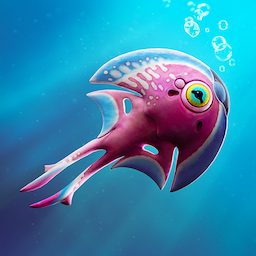
*Sporal duck*, sponge-coral moiety named for the color of a duck.
1. Reefbuilding In the teal sporal, the sponge component of the moiety has fully hardened, leaving it unable to breathe or feed. Nutrients are supplied entirely by coral polyp photosynthesis. The large hollow spaces created by the trapped sponges are feeding grounds and debris collectors for coral polyps that cannot see sunlight.
2. Evolutionary insight The teal sporal provides insight into how the partnership between predatory, optionally photosynthetic corals and filter-feeding sponges might evolve. The most probable scenario (given current information) is that the coral polyps were originally parasites or commensals, living in the sponges' jelly and feeding off microorganisms. Over time, sponges either hardened — providing shelter for polyps which could provide them with food and air — or ejected their coral guests and remained soft.
3. Twin species Remarkably, the sponge cells and coral polyp in the teal sporal moiety are genetically identical to those in the similar pebbled sporal. The distinction between pebbled and teal sporal may not be genetic at all, but the result of an ongoing negotiation between the environment and the two species in the moiety.
Assessment: interesting data point. No immediate applications.