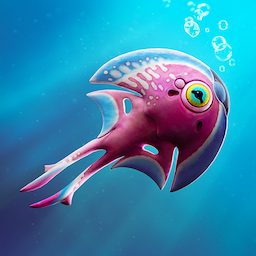
*Skythopterygion atropos*, the scythe-finned fate-ender. The male of a sexually dimorphic leviathan predator species which dwells in open water and attacks in packs (or shivers).
1. Death's head The ancestors of the shiver leviathan diverged from other Protean fish early. The armor-plated skull and long, highly developed limbs (resembling wings and claws) are defining traits of the clade. The closest living relative may be the foureye. The body plan is optimized for slow cruises through deep water interrupted by sudden, rapid attacks. An armored skull suggests that prey fight back.
2. Sexual dimorphism Male shiver leviathans are smaller and more agile than the large female. They also lack the female's distinctive tail organs, which may be a form of long-range 'towed array' sonar. Males depend on females for guidance and nourishment during long cruises in the open ocean.
3. Shiver attack Packs of males cooperate with a single female in hunts. Attacks are aggressive and comprehensive — and not limited to prey. Females will drive off or destroy any large challenger they encounter, while males engage smaller consorts or companions.
4. Partible paternity Spectrogenetic testing suggests that multiple males fertilize a female's brood. Females may compete to attract the most successful consorts to their shiver.
5. Your closest relative? On Earth, land tetrapods (including humans) descended from the lobe-finned fish. The shiver leviathan's complex wings are loosely similar to these ancestors' fins. In a sense, the shiver leviathan is the most humanlike organism so far discovered on Proteus.
Assessment: sophisticated, dangerous predator that will attack even large submarines. Avoid.