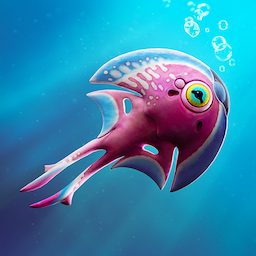
*Spraion flagon*.
Databank generation alert: known scientific theory inadequate to explain specimen. Interpretation and improvisation may lead to error.
1. Sponge-worm hybrid Like the raions, this is a sponge occupied by worms. The sponge pumps seawater, while the worms feed on meioafauna in the current. In this 'spraion' the two organisms have become genetically entwined: each can give birth to the other. This defies conventional evolutionary theory, which uses reproductive barriers to define species.
2. Alternating generations Some of the sponge's germ cells undergo a transformation into worm embryos. This transformation involves the activation and expression of stored genetic material from the worm genome. Adult worms leave the sponge, swim to a new anchor site, and die. Their bodies provide food to a newborn flagon sponge.
3. Possible explanations The simplest explanation is that these are two alternating generations of the same organism — like the polyp and medusa stages of the jellyfish life cycle. But spectrogenetic analysis suggest the flagon sponge and its resident worms evolved tens of millions of years apart. Exactly how the reproductive cells of one organism can yield an adult of another species is unknown.
Assessment: advise further investigation. May yield insight into genetic adaptations specific to this world. Await further updates.