*Gorgon thalamiskos*. A predatory soft coral named for its resemblance to Earth's gorgonians.
1. Sponge-coral moiety Like hard corals on this world, gorgons are sponges inhabited by cnidarian polyps — tiny jellyfish like organisms which live within the sponge and direct its growth. Unlike hard corals, they do not produce a limestone structure or host photosynthetic microbes. They are pure predators.
2. Caged friend The cage gorgon specializes in capturing and protecting a symbiotic partner, which attracts prey for the gorgon to sting and eat. The cage gorgon larva probably adheres to a partner (such as a cherimoya rotsac) and then grows around it, eventually fastening the partner to the seafloor.
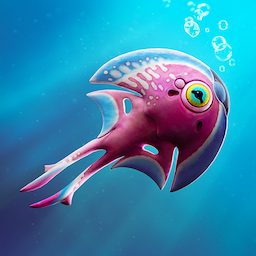
3. Duplex larva The free-swimming reproductive stage of the cage gorgon carries cells of a host sponge, like seeds. These seeds are genetically distinct from other sponges in the ecosystem, suggesting the cage gorgon is monogamous with only a single host sponge.
Assessment: cutting open the cage gorgon allows access to the symbiotic partner and carries no risk of inflicting pain or suffering. The cage may attract a new partner before healing, or survive while empty.