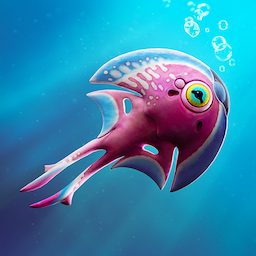
Surge Jelly
PDA databank
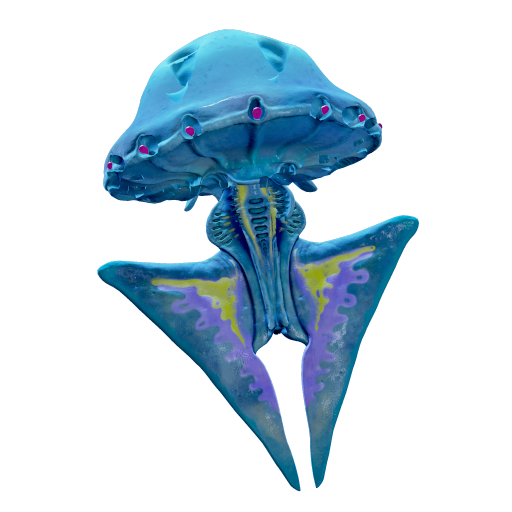
Surge jelly (tentatively Staurobrachia capacitor). Large, complex jelly that hunts with electric shocks.
1. Single animal
Unlike colonial organisms such as the Portuguese man'o'war, the surge jelly is a single animal with specialized tissues—far *more* specialized and complex than Earth jellies. Proposed class name: staurobrachia (pole arms).
2. Complex internal structure
Outer bell ringed with sense organs called rhopalia. A nerve net coordinates the bell's motions to swim and seek prey. The visible inner structure is the gut.
3. Feeding structure
The jelly retains its stalk — a remnant of its growth in a stack of clones. The stalk draws in nutrients for the gut.
4. Charged fins
Two rigid fins contain wirelike electrocytes, likely a development of ancestral tentacles. These organs build voltage to stun or kill prey. Measured power ranges from 400 to 1000 volts at 1 ampere: enough to kill a human.
5. Peculiar passengers
Traces of radioactivity, high-temperature waxes and sulfuric acid imply contact with a hydrothermal vent. Composition of the jelly's tissues suggest origins in the deep ocean.
6. Former domestics?
Jellies in close proximity communicate through their electric fields. Whether jellies have individual names or a grammatical language is purely speculative, but some patterns may be trained or learned—even passed down through generations of jellies.
Assessment: minor danger in close contact. Fascinating research prospect from a distance.
Behaviour
Profile: Herbivore · Large
Stats
Habitat distribution
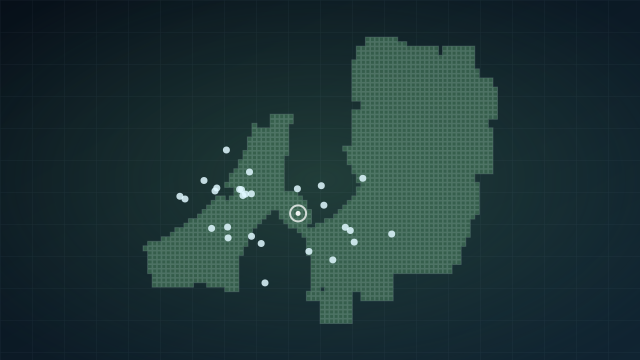
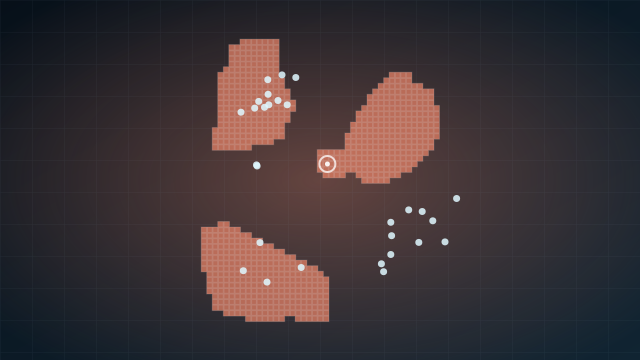
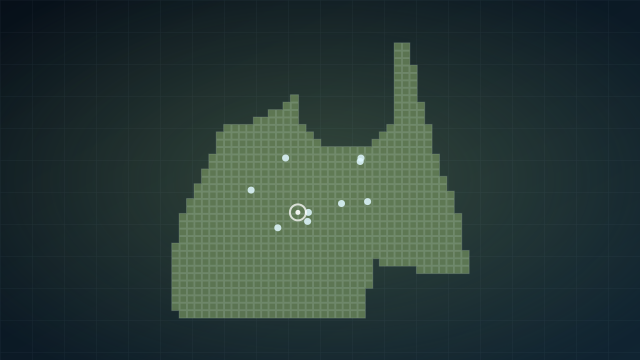
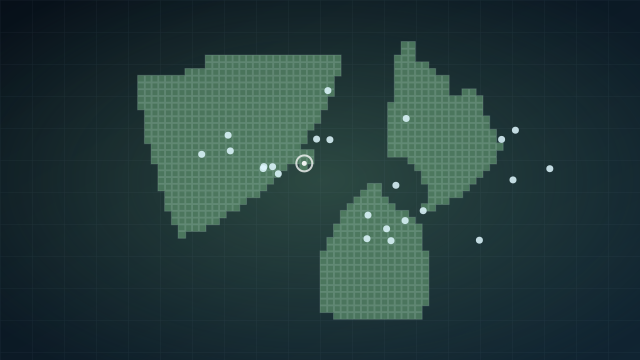
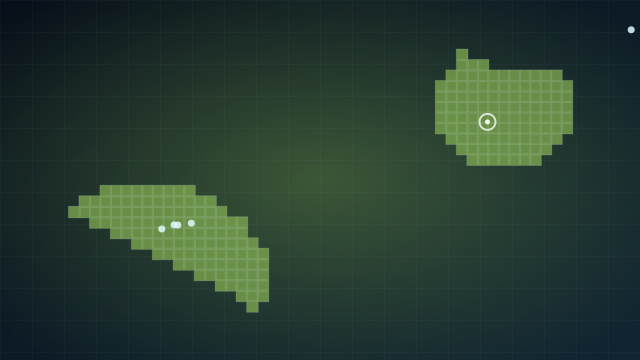
Spawn points · 138
See every spawn on the interactive map, with biome zones and zoom-to-fit.
View spawn points →